Cryptocoryne Essentials: Thrive & Aquascape Tips
General information
Cryptocoryne are a diverse group of freshwater plants prized for their durability, sculptural forms and ability to thrive in low-tech setups. If a planted tank needs a reliable midground or background anchor that tolerates gentle neglect, Cryptocoryne often fits the bill. Many aquarists choose Cryptocoryne for biotope recreations, community tanks with bottom-dwellers, and low-light aquascapes because these plants combine adaptability with interesting leaf textures and colors.
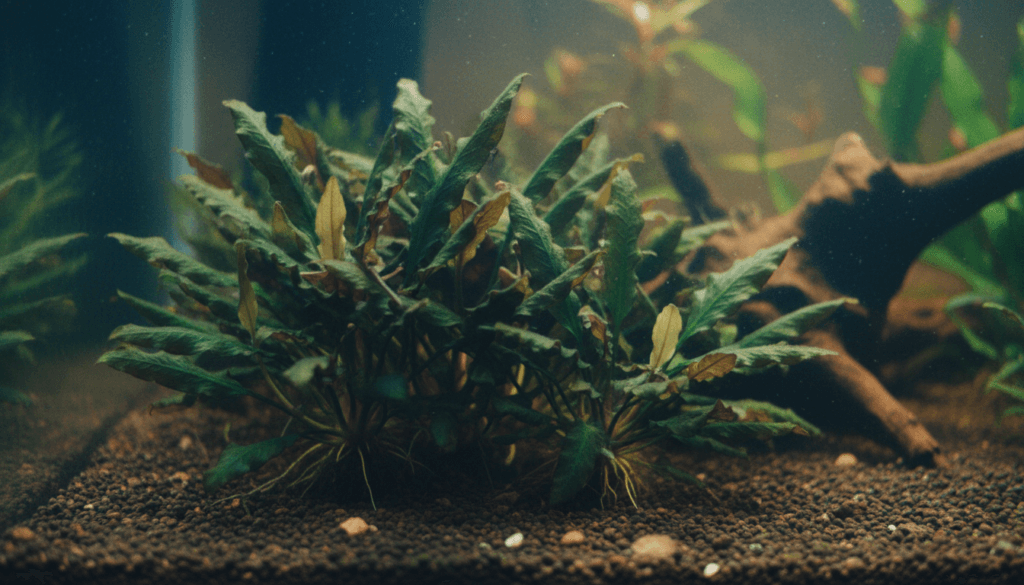
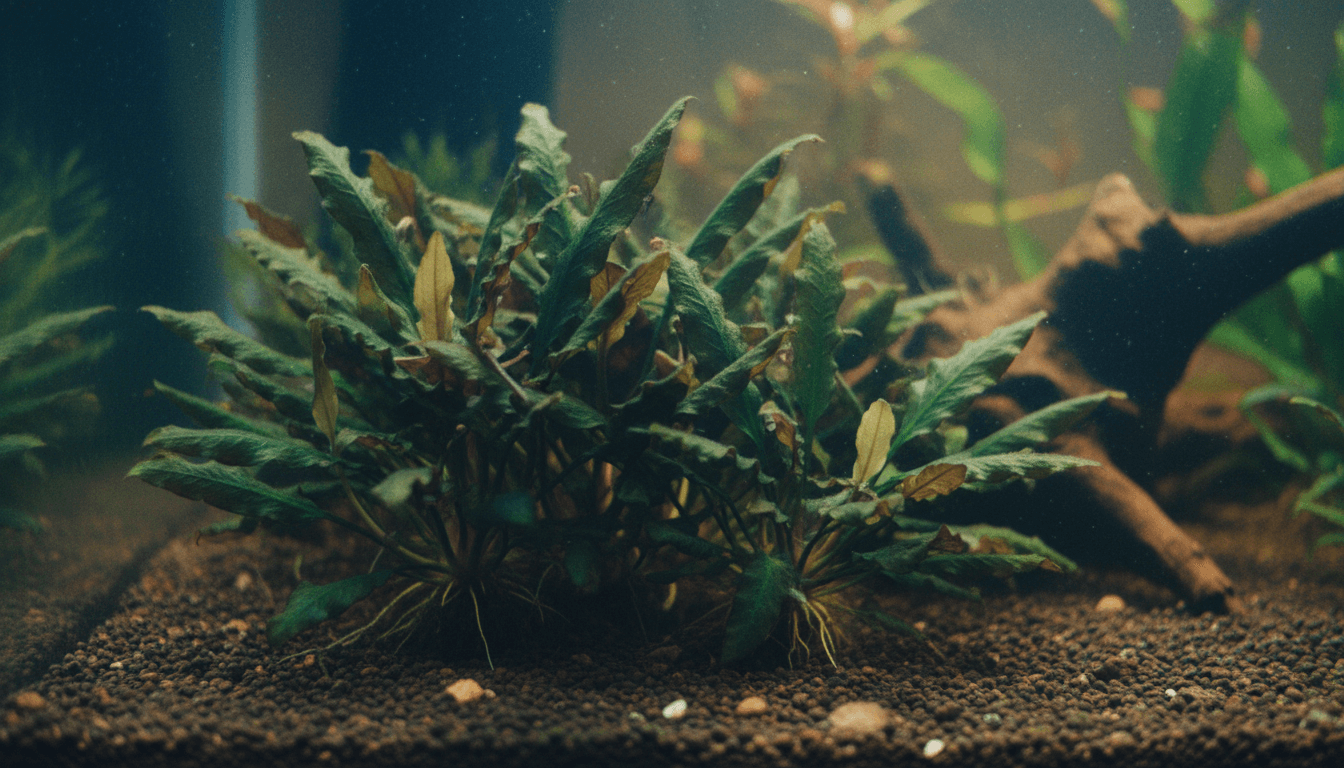
Expect a wide range of sizes and habits within the genus: some species spread slowly with creeping rhizomes, while others form tight rosettes that remain compact for years. Recognize that many Cryptocoryne display a period of adjustment after being moved; leaves may melt then resprout adapted to new conditions. That melting is normal and not an immediate cause for alarm, provided new growth follows. The genus includes both hardy staples and rarer collector pieces, so reading species-specific notes before purchasing is valuable.
Appearance
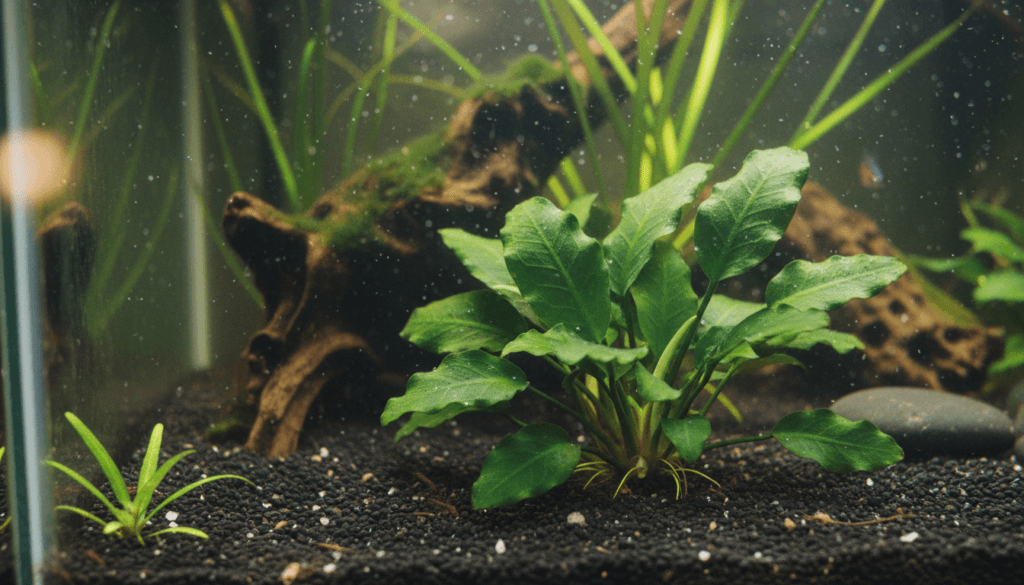
Cryptocoryne species present an astonishing variety of leaf shapes, textures and palettes. Leaves range from narrow, grass-like blades to broad, undulating paddles; surfaces can be glossy, quilted or heavily veined. Some species develop deep brown, maroon or reddish tones under stronger light or in softer water, while others maintain vivid green even in subdued setups. Flowering is modest and often occurs above water as a spring-like spadix; aesthetic interest is primarily foliage-based.
Pay attention to new leaf morphology when acclimating plants: thinner or translucent new leaves typically indicate a transition phase. Variegation is rare but present in a few cultivars; more commonly, vein contrast and subtle mottling provide visual richness. Because growth rates vary, plan aquascapes to allow slow-spreading types room without overcrowding faster neighbors. Pairing Cryptocoryne with textured foreground carpets or tall stem plants creates pleasing contrast.
Habitat
Cryptocoryne originate mainly from South and Southeast Asia, inhabiting streams, peat swamps, seasonal floodplains and riverbeds. In situ, they often grow in nutrient-rich, shaded conditions with soft, acidic water and a regular supply of leaf litter. Many species tolerate periods of drying or low water thanks to resilient rhizomes. Knowing the native habitat helps replicate realistic tanks: soft substrate, gentle flow, and shaded light mimic the environments where Cryptocoryne thrive.
Field notes frequently mention substrates layered with decomposing leaves and fine silt—elements that release tannins and create slightly acidic microhabitats. That explains why these plants often perform well in blackwater-style aquaria and why adding composted botanical material can stimulate health and color. Seasonal fluctuations in water level in the wild also account for the genus’s tendency to handle water-level changes better than some delicate stem plants.
Care and maintenance
Cryptocoryne maintenance is straightforward once the plant settles. Stability matters more than extremes: constant, predictable conditions beat aggressive tweaking. Focus on substrate quality, steady nutrient input and patient observation. Below are detailed, actionable recommendations to keep plants vigorous, limit melt episodes and promote steady spread without resorting to heavy-handed measures.
Water parameters
Temperature: Most Cryptocoryne are comfortable between 22–28°C (72–82°F); cooler temperatures slow growth, warmer can encourage spread but may stress some species. pH: Aim for slightly acidic to neutral water—pH 6.0–7.5 is where most species perform best. General hardness (GH): Soft to moderately hard water suits the genus; target 3–12°dGH. Some hardy species tolerate higher GH, but dramatic changes in GH or pH often trigger leaf melt.
Stability is crucial. Sudden swings—especially after water changes or tank moves—can cause melting. When adjusting parameters, make gradual shifts over days to weeks. If municipal water has very high hardness, consider blending with reverse osmosis water to bring GH into the preferred window. Testing kits for pH and GH are essential tools for maintaining a steady environment.
Substrate
Cryptocoryne thrive in nutrient-rich, fine-grain substrates. A loamy mix—combining aquarium soil or laterite with sand or fine gravel—encourages healthy root development and retention of dissolved nutrients. Many aquarists recommend a 2–3 cm nutrient layer beneath an inert cap to prevent head-spreading of rhizomes while still allowing root access to macronutrients.
Top-dressed mediums should be firm enough to anchor roots but loose enough to let new rhizomes spread. If using plain sand, supplement with root tabs placed near the root collar every 6–10 weeks. Avoid deep, compacted muck that may trap hydrogen sulfide unless the tank is mature and well-oxygenated. For emulating peat-swamp habitats, a thin layer of decomposed leaves or alder cones adds beneficial tannins and micro-nutrients.
Lighting
Intensity: Low to medium light typically suits Cryptocoryne—roughly 0.3–0.6 W/L in T5 equivalent terms or a PAR range of 20–50 at substrate level for many species. Duration: 6–8 hours daily is sufficient; longer photoperiods can accelerate growth but may also encourage algae. Spectrum: A full-spectrum LED in the 6500K–7500K range reproduces natural daylight and encourages color expression without overstressing the plants.
Shade-loving species appreciate subdued conditions; placing taller background plants or driftwood to filter direct light prevents bleaching. Avoid sudden changes in lighting intensity: ramp up new fixtures over several days to allow leaves to adapt. If lower-light setups show slow growth, resist increasing light too much—first check nutrient levels, as Cryptocoryne often respond better to added root nutrition than to high-intensity lighting.
CO2 supplementation
CO2 is not strictly required for many Cryptocoryne, but a modest CO2 boost can accelerate growth and deepen pigmentation. In low-tech tanks without injected CO2, expect slower, more compact growth—which suits many aquascapes. When using CO2 injection, maintain consistent levels (20–30 mg/L target) and monitor livestock for stress.
Excessively high CO2 or rapid fluctuations often provoke melt. For planted tanks with multiple fast-growing species, CO2 helps maintain balance and reduces nutrient competition. If choosing not to inject CO2, prioritize excellent substrate nutrition and steady dosing of liquid fertilizers; either approach can produce healthy Cryptocoryne with proper management.
Fertilization
Macronutrients: Nitrogen (N), phosphorus (P) and potassium (K) are essential. Cryptocoryne absorb a significant portion of their nutrients through roots, so root-targeted dosing matters. A schedule combining weekly root-tab placement (every 6–10 weeks per tab) and regular liquid dosing is effective.
Micronutrients: Iron, manganese, boron, copper, zinc and molybdenum influence leaf color and prevent deficiencies. Iron boosts red and brown tones; lack of iron often shows as chlorosis on new leaves. A reliable trace mix dosed weekly or according to bottle instructions prevents slow-onset problems.
Dosing schedule: For a typical medium-light community tank, dose a complete liquid fertilizer 2–3 times weekly, place root tabs near larger clumps every 6–10 weeks, and add iron-specific supplements if coloration seems weak. If CO2 is injected and light is higher, increase fertilization frequency to maintain balanced nutrients and avoid deficiency-driven melting.
Water changes
Frequency and amount: Weekly to biweekly changes of 20–40% work well for most setups. Larger, less frequent changes increase the risk of shock—more nuanced, smaller changes preserve stability. If tanks accumulate dissolved organics or nutrient spikes, a 30% weekly change keeps parameters in check without shocking plants.
Tip: Match new water temperature and pH closely to aquarium levels to reduce the chance of melting. When using RO or softened water, remineralize to the desired GH slowly. If Cryptocoryne show signs of stress after a change, reduce the percentage and increase frequency to maintain overall turnover while minimizing abrupt shifts.
Placement in the aquarium
Cryptocoryne are versatile in placement: many species function best as midground specimens, while compact rosette forms can serve foreground roles and larger types anchor the background. Choose species size based on tank depth and intended sightlines. For a layered aquascape, plant smaller Cryptocoryne at the front of a slope and larger varieties toward the back.
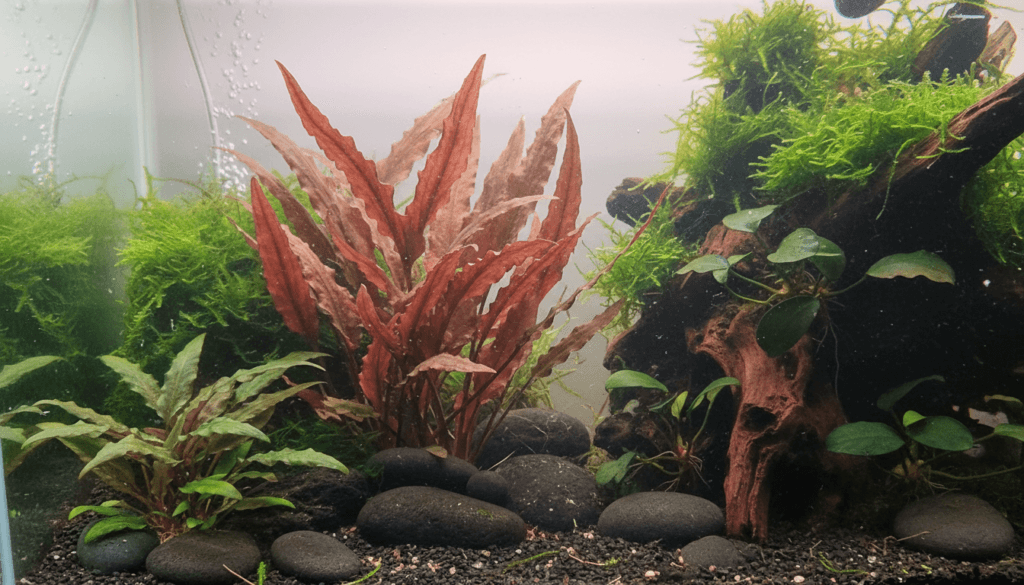
Placement tips: Leave a few centimeters between crowns to allow spreading rhizomes room to expand. Avoid burying the crown; rhizomes want to sit at or slightly below substrate level, but the growing tip should not be deeply buried. Use them near driftwood or rockwork to create naturalistic leaf-shadow textures—this mimics their shaded riverbank origins and reduces direct light stress.
Reproduction
Cryptocoryne reproduce primarily by vegetative propagation: runners, stolons or division of the rhizome produce new rosettes. In stable conditions many species slowly colonize the substrate by sending out short rhizomes that develop daughter plants. Encouraging this spread relies on steady nutrition, stable parameters and patience; rushing the process with sudden nutrient or light surges often triggers melt rather than healthy propagation.
Sexual reproduction through flowering is less common in fully submerged culture; many species flower when parts emerge above the surface. When flowers appear, pollination can yield seeds, but germination and seedling care are more demanding than vegetative propagation. For hobbyists, dividing mature clumps or encouraging runner formation is the most reliable method to increase stock. To divide, carefully separate rooted rhizomes during a transfer, ensuring each piece retains several leaves and a healthy root system; replant immediately to minimize stress.
Unusual fact: a few Cryptocoryne species enter a dormant state during dry seasons in the wild, retreating to a hardy rhizome. That same dormancy can be seen in aquaria after disturbances—leaves die back but the plant can resurface months later. Recognizing this pattern prevents premature disposal of plants presumed dead.
Practical troubleshooting and hacks: if a new Cryptocoryne melts repeatedly after introduction, try softer water, increased root fertilization and a period of reduced light to ease acclimation. For stubborn varieties that refuse to spread, place a warmed, slightly elevated nutrient tablet near the rhizome to stimulate new growth. When propagating for aquascaping, stagger plantings—place a mature mother plant beside younger offsets to create natural transitions in texture and height.
With patience and attention to substrate and stability, Cryptocoryne repays care with long-lived, sculptural foliage that anchors a tank both visually and ecologically. Use these plants to add contrast, create shaded midground pockets, and build low-maintenance biotope scenes that age gracefully over years rather than weeks.