Red Tail Shark Care Guide: Behavior, Diet, Tank
General information
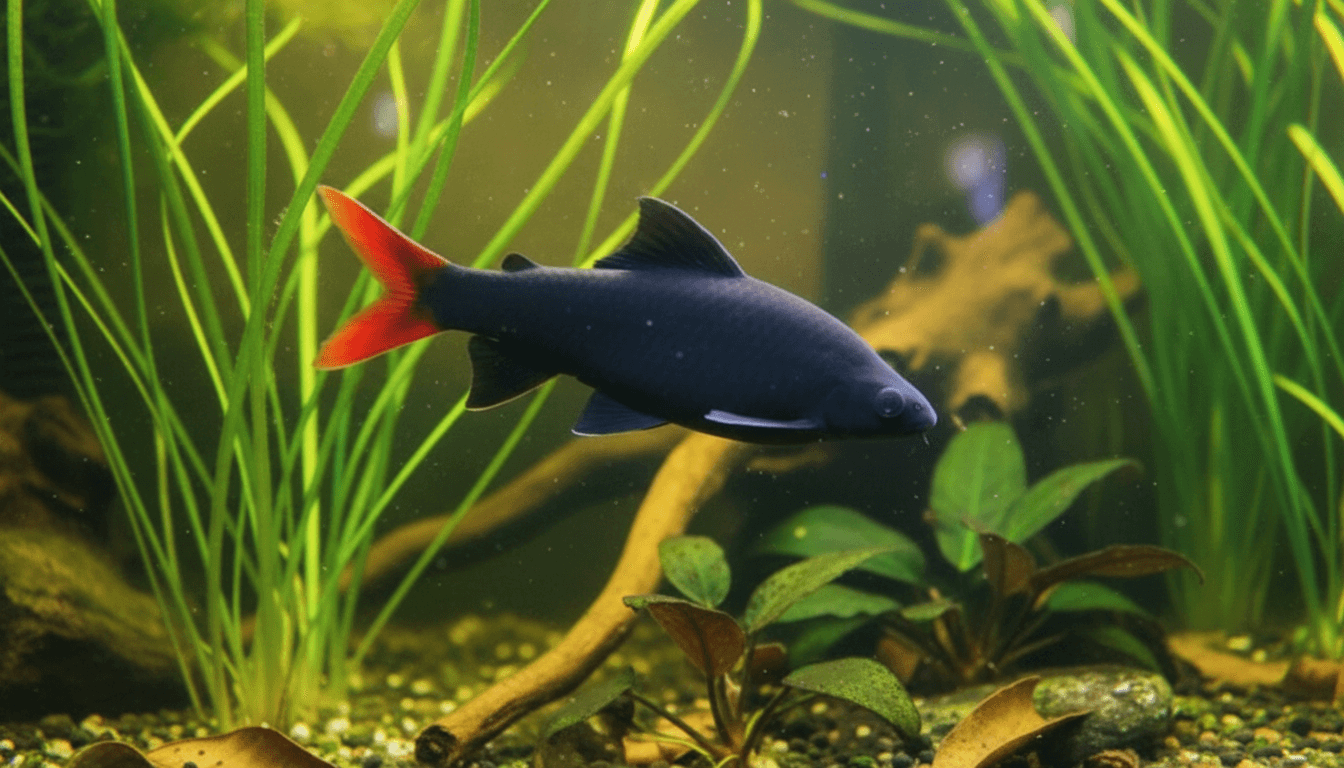
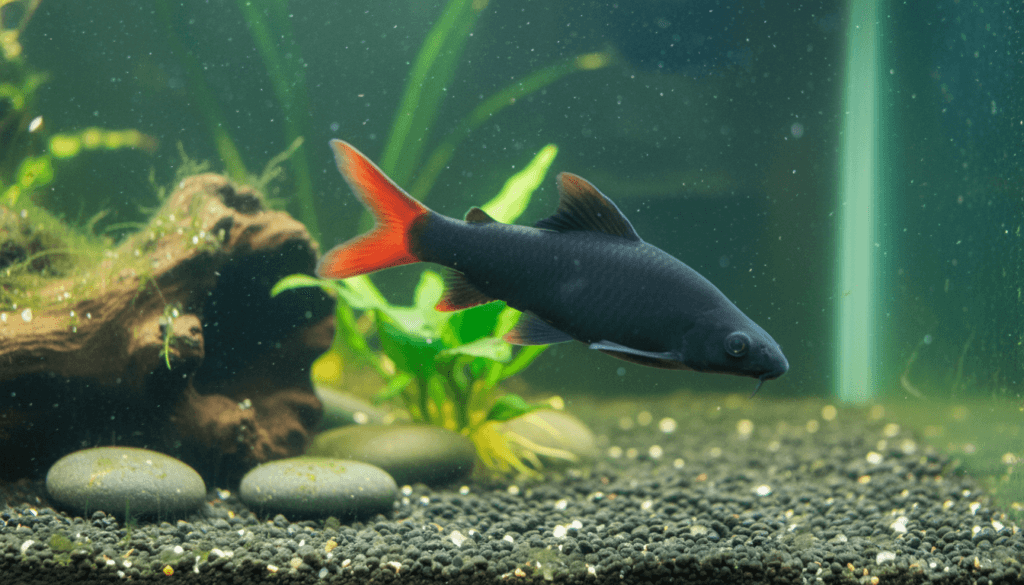
The Red Tail Shark (Epalzeorhynchos bicolor) is a compact, visually striking freshwater cyprinid prized for its black body and vivid red tail. Native to central Thailand river systems, this species reaches roughly 12–15 cm (4.7–6 in) total length in captivity and commonly lives 5–8 years with stable care. The fish is semi-territorial: bold around bottom and mid-level territories, but not a true predator.
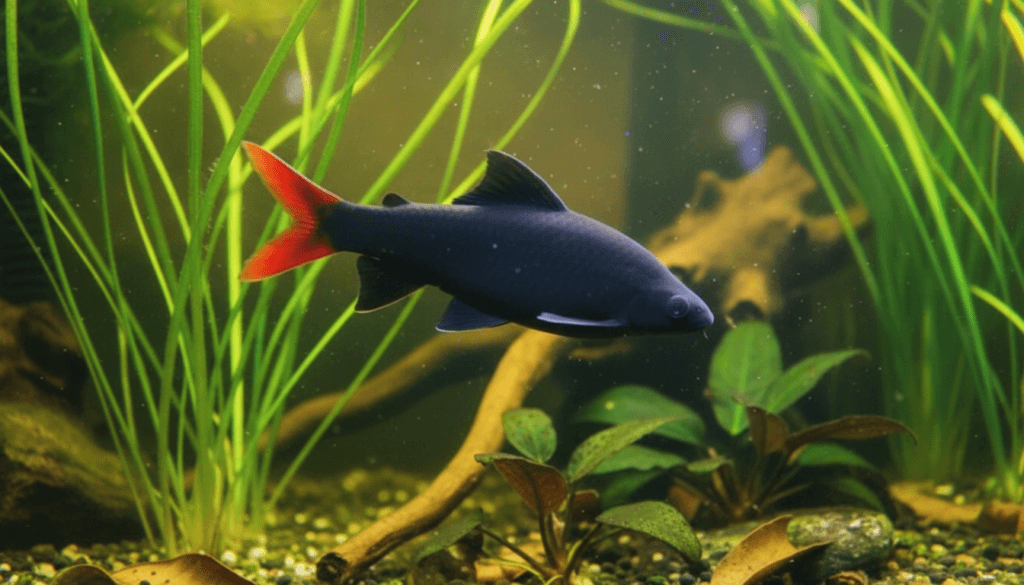
Keep in mind that wild-caught and captive-bred animals can behave differently; captive-bred individuals tend to be less stressed and adapt faster to aquarium life. The species is often confused with the Rainbow Shark (Epalzeorhynchos frenatum) — check the tail shape and body profile when buying to avoid mix-ups.
Appearance
Black to charcoal body with a razor‑sharp contrast of red on the caudal fin. The body is laterally compressed, with a blunt snout and a slightly upturned mouth adapted to grazing and picking at surfaces. Juveniles may show brownish tones before the black pigment deepens; the tail develops full red coloration by 2–4 cm of growth.
Standard dimensions:
- Adult length: 12–15 cm (4.7–6 in) total length.
- Sexual dimorphism: subtle — males can appear slimmer and slightly more intensely colored, but visual sexing is unreliable.
- Lifespan: 5–8 years with consistent water quality and diet.
Habitat
In nature, these fish occupy clear to moderately turbid streams and canals with moderate current, shaded banks, and plenty of submerged cover. You should mimic that: provide flowing water, shaded spots, and flat surfaces for grazing. Substrates in native ranges are usually sand or fine gravel with leaf litter and roots.
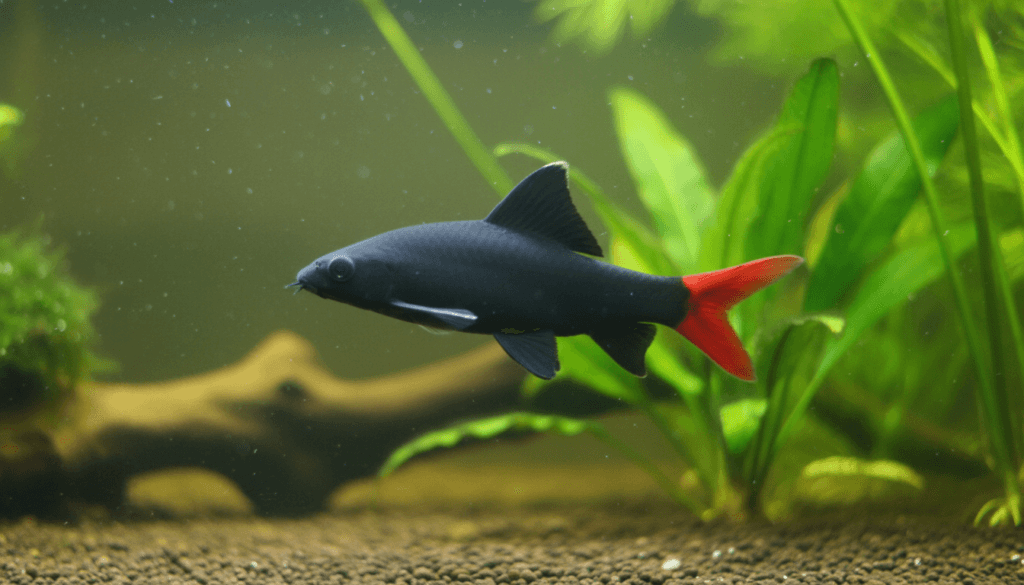
Temperature in native habitats tends toward warm tropical ranges and seasonal fluctuations are mild — steady warmth with oxygenated water will keep fish active and colorful.
Сare and maintenance
Water parameters
| Parameter | Value |
|---|---|
| Temperature | 24–28 °C (75–82 °F) |
| pH | 6.5–7.5 |
| General hardness (GH) | 5–12 °dGH |
Keep parameters stable — rapid swings in temperature or pH stress this species. Aim for 24–26 °C when keeping with tetras; raise to 26–28 °C for spawning attempts.
Tank size
| Minimum volume | Recommended dimensions |
|---|---|
| 100 L / 26 US gallons | Length ≥ 90 cm (36 in); height ≥ 30–35 cm (12–14 in) |
| Recommended for better behavior | 200 L / 52 US gallons; length ≥ 120 cm (48 in) |
Because this fish stakes out linear territories along walls and decor, length is more important than height. One adult per 100 L is the baseline; if keeping more than one, increase volume and provide clear visual breaks between territories.
Filtration and water flow
Use a canister filter or a powerful hang‑on‑back (HOB) filter with mechanical, biological, and chemical stages. Aim for turnover of 6–8× tank volume per hour. A spraybar or returned current creating moderate flow mimics natural conditions and helps oxygenation.
For smaller tanks, add a sponge filter to soften currents near the substrate and protect fry. Avoid violent, chaotic flows that push fish from cover; tune flow so pockets of calmer water exist behind driftwood and rockwork.
Substrate and decor
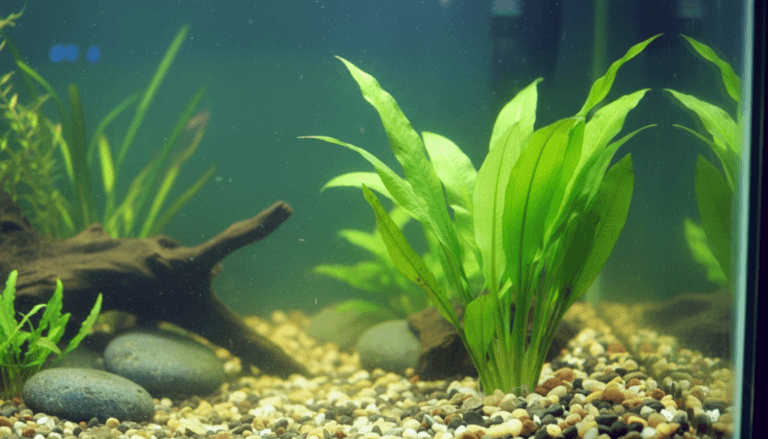
Choose dark sand or fine-grain gravel to enhance contrast with the fish’s colors and reduce glare. Provide:
- Driftwood and horizontal roots for territorial boundaries and grazing surfaces.
- Flat rocks and caves (slate, smooth river rock) for territorial markers and hiding spots.
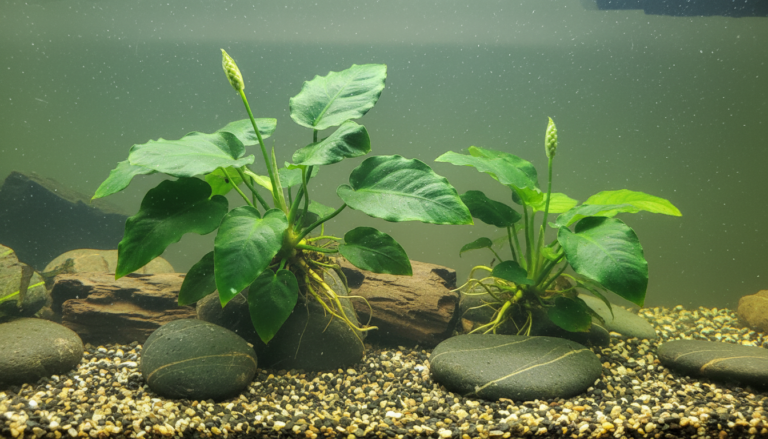
- Dense planting using low- to mid-light species: Anubias spp., Java fern (Microsorum pteropus), Cryptocoryne wendtii, Vallisneria gigantea for vertical cover.
- Floating plants (Salvinia natans, Pistia stratiotes) to create shaded areas and reduce bright lighting stress.
- Optional leaf litter (oak or Indian almond leaves) to add tannins and grazing surfaces for biofilm.
Lighting
Moderate lighting is best. Aim for 200–400 lux at the substrate or roughly 8–10 hours of light per day. Provide shaded pockets via floating plants or driftwood because intense direct light can increase aggression and force fish into constant motion.
Water changes
Perform regular water changes to keep nitrates low and maintain stable chemistry:
- Weekly: 20–30% for lightly stocked tanks.
- Weekly: 30–40% for densely stocked or heavily planted tanks, and during disease treatment.
Match temperature and pH of replacement water to tank values to prevent shock.
Social behavior and group size
Not a schooling species. Territoriality centers on bottom and mid‑level lanes. Social options:
- Single adult per community tank is safest.
- If keeping multiple, provide 150–200 L per fish and numerous visual breaks; same-sex aggression can occur.
- Introducing individuals as juveniles into large, planted setups can reduce long-term fighting but does not guarantee peace.
Additional behavioral care tips
Provide a consistent layout of hiding places. If aggression develops, move decor to break established territories — this forces a temporary reset and can reduce chasing. Monitor for fin damage and stress behaviors (constant hiding, listlessness). For tanks with visible bullying, separate the aggressor or move it to a species-only tank.
Compatibility
| Tankmate | Compatible or not | Note |
|---|---|---|
| Corydoras spp. | Compatible | Bottom-dwelling, peaceful; provide similar water parameters |
| Otocinclus spp. | Compatible with caution | Small and shy — watch for intimidation; plenty of cover recommended |
| Neon Tetra (Paracheirodon innesi) | Compatible | Fast, peaceful mid-level swimmers; prefer groups of 8+ |
| Rasboras (Harlequin, Chili) | Compatible | Good community choices; keep in schools |
| Peaceful Plecos (Bristlenose) | Compatible | Large plecos reduce territory overlap; ensure enough hiding spots |
| Gouramis (Dwarf) | Compatible with caution | Some gouramis are semi-aggressive; monitor interactions |
| Guppies, Fancy Livebearers | Compatible | Small, peaceful, but large shoals may stress the shark; avoid fin-nippers |
| Barbs (Tiger, Cherry) | Compatible with caution | Aggressive barbs can harass; choose less nippy species and keep in groups |
| Cichlids (Dwarf, Mbuna) | Not compatible | Many cichlids are territorial and more aggressive — avoid |
| Shrimp (Neocaridina) | Usually not compatible | Small shrimp may be eaten or harassed, especially in sparsely planted tanks |
| Small Snails (Nerite) | Compatible | Red Tail Sharks generally do not actively hunt snails; provide hiding places |
Feeding the Red Tail Shark
These fish are omnivores with a leaning toward herbivory and biofilm grazing. Offer a varied diet to maintain color and health:
- Sinking pellets or granules formulated for omnivores (use quality brands with spirulina for color enhancement).
- Algae wafers and spirulina tablets (Hikari or equivalent).
- Blanched vegetables: zucchini, cucumber, spinach — cut into manageable slices and secured with a clip if needed.
- Frozen/live protein occasionally: bloodworms, brine shrimp, daphnia (feed as treats 1–2× weekly).
- Occasional feeding of biofilm from rocks and wood; provide leaf litter to encourage natural grazing.
Feeding schedule and amounts:
- Feed once or twice daily. Offer only what the fish consumes within 2–3 minutes per feeding.
- For bottom feeding, place sinking food near the territories but not directly on hiding spots to prevent fouling.
Reproduction
Breeding Red Tail Sharks in a home aquarium is challenging but possible. Key points:
- They are egg scatterers. Spawning often requires a separate breeding tank to protect eggs from being eaten.
- Conditions that may trigger spawning: slightly softer, mildly acidic water (pH 6.5), temperature increase to 26–28 °C, and abundant hiding places made from flat stones and plants.
- Introduce a group of juveniles and allow pairs to form naturally; forced pairing is usually unsuccessful.
Breeding protocol (practical steps):
- Set up a 60–100 L breeding tank with sponge filter, heater, and dim lighting.
- Provide flat spawning surfaces (slate, broad leaves) and dense mops of Java moss to catch eggs.
- Feed conditioning diet high in protein (fresh/frozen foods) for 2–3 weeks before attempting to breed.
- After spawning, remove adults or transfer eggs to a separate egg-care tank. Eggs typically hatch in 24–48 hours depending on temperature.
- Feed fry with infusoria, liquid fry foods or rotifers for the first week, then microworms and newly hatched Artemia as they grow.
Note: Fry show territoriality early. Provide numerous small hiding places and separate grow-out tanks once juveniles reach sizes where aggression appears.
FAQ
Can a Red Tail Shark live with shrimp?
Small shrimp (Neocaridina spp.) are at risk in many setups: while not a guaranteed snack, shrimp can be harassed or eaten, especially in tanks without dense cover. Use shrimp-proof plantings and expect losses unless the tank is large and heavily planted.
How big do Red Tail Sharks get?
Typical adult length is 12–15 cm (4.7–6 in). Size depends on genetics, tank size, and diet. Crowded or stressed fish may stop growing to full potential.
Do they eat live plants?
They are not voracious plant eaters but may nibble soft-leaved species (Java fern and Anubias are usually safe; younger Cryptocoryne leaves can be chewed). Provide blanched vegetables to reduce interest in aquarium plants.
Are Red Tail Sharks aggressive?
Semi‑territorial and can be aggressive toward conspecifics or fish with similar body shapes and colors. One per tank is the simplest way to avoid chronic conflict; use decor to break lines of sight if keeping other bottom-dwelling fish.