Amazon Sword Care Guide: Thriving Aquatic Rosette
General information
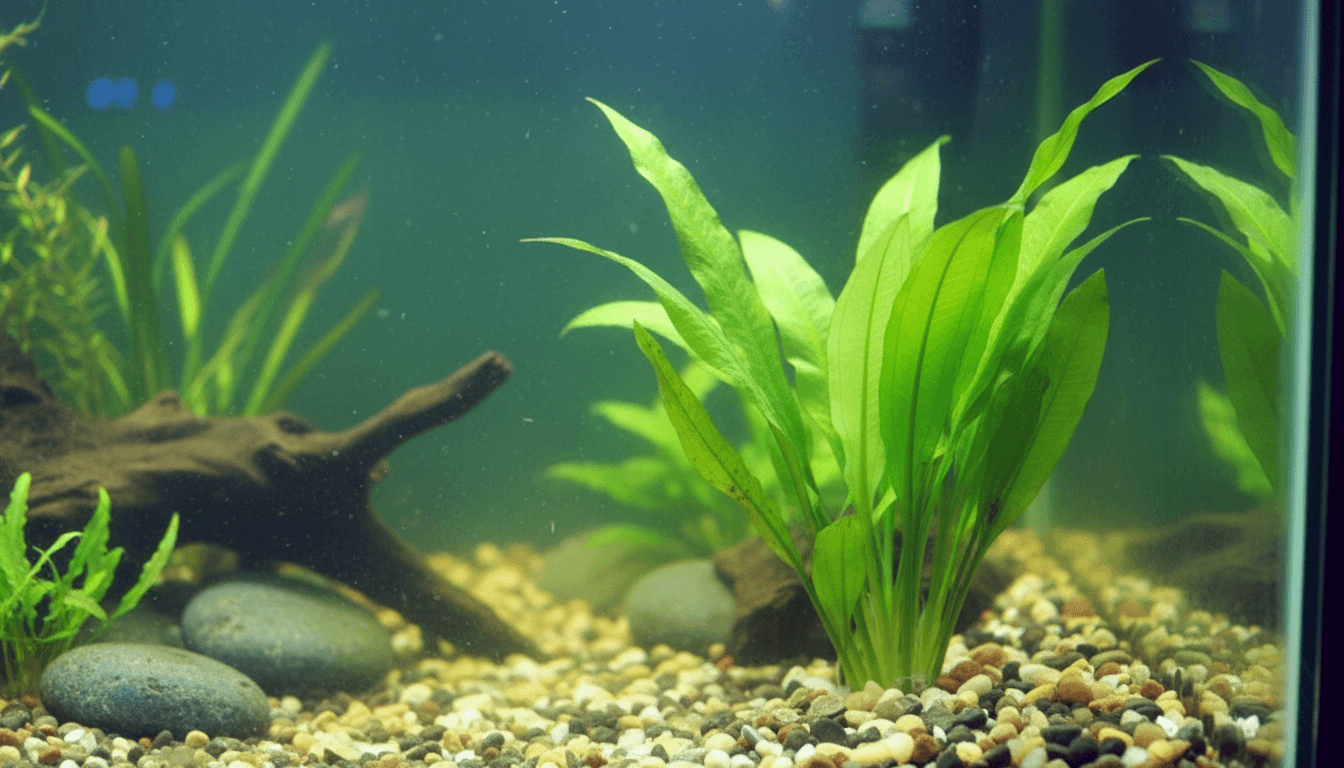
The Amazon Sword is a classic centerpiece plant in freshwater aquaria: large, sculptural leaves arise from a compact rosette and create an immediate focal point. Aquarists prize the Amazon Sword not only for size and form but for resilience — it tolerates a wide range of conditions while rewarding attention to roots and nutrients with lush, green growth. The common name covers several species in the Echinodorus genus (often Echinodorus bleheri, E. amazonicus and close relatives) that share the same rosette habit and root-fed growth pattern, making “Amazon Sword” a convenient shorthand when planning a midground to background planting.
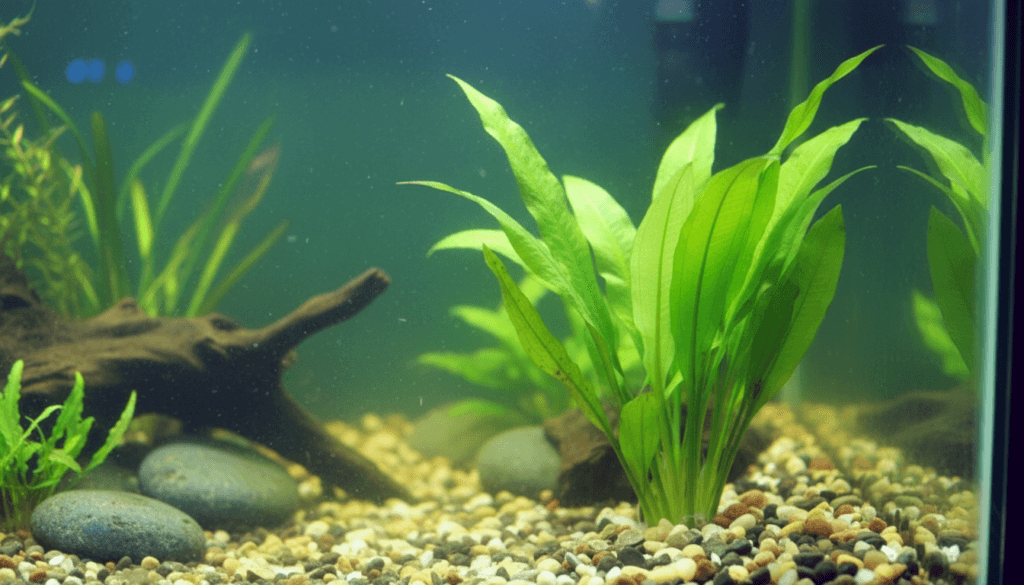
This plant is an excellent choice whether setting up a biotope that mimics Amazonian slow waters, a planted show aquarium, or a community tank with herbivorous mollies and corydoras. The Amazon Sword’s reputation as beginner-friendly is well-earned, but the best results come from focusing on substrate nutrition, consistent fertilization, and regular maintenance rather than hoping it will thrive on neglect.
Appearance
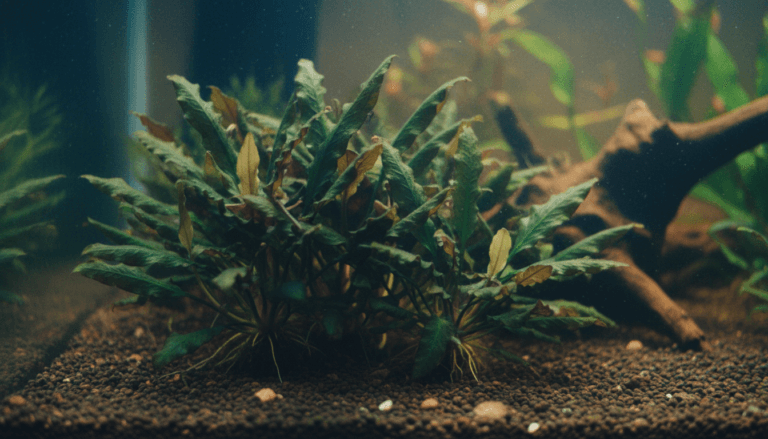
Amazon Sword leaves are typically long, lance-shaped, and emerge from a tight rosette. Leaf length ranges from a few centimeters in dwarf selections to over 50 cm in robust specimens; most common hobby varieties land in the 15–35 cm range. Leaf texture varies by species—some are thick and leathery, others thin and translucent—and color spans pale lime-green through deep emerald. Petioles are smooth and sturdy, anchored to a robust root mass that spreads horizontally beneath the substrate.
Smaller, younger plants form compact rosettes with short petioles and broad oval leaves. Older, well-fed plants develop elongated petioles that lift leaves toward mid- or upper water columns, providing vertical structure. The Amazon Sword may occasionally produce a flowering stalk above water when conditions encourage sexual reproduction, and some hobbyists find emergent blooms naturally occur if water levels drop and humidity remains high.
Habitat
Native to slow-moving rivers, floodplains, and marshy margins across South America, the Amazon Sword evolved in nutrient-rich sediment rather than nutrient-poor sand. Flood pulses and decaying leaf litter provide a steady source of organic nutrients; roots dig into soft substrate looking for macronutrients and micronutrients. In the wild, the Amazon Sword thrives in filtered light beneath floating vegetation and tolerates soft, slightly acidic water, though many cultivated strains accept a broader pH and hardness range.
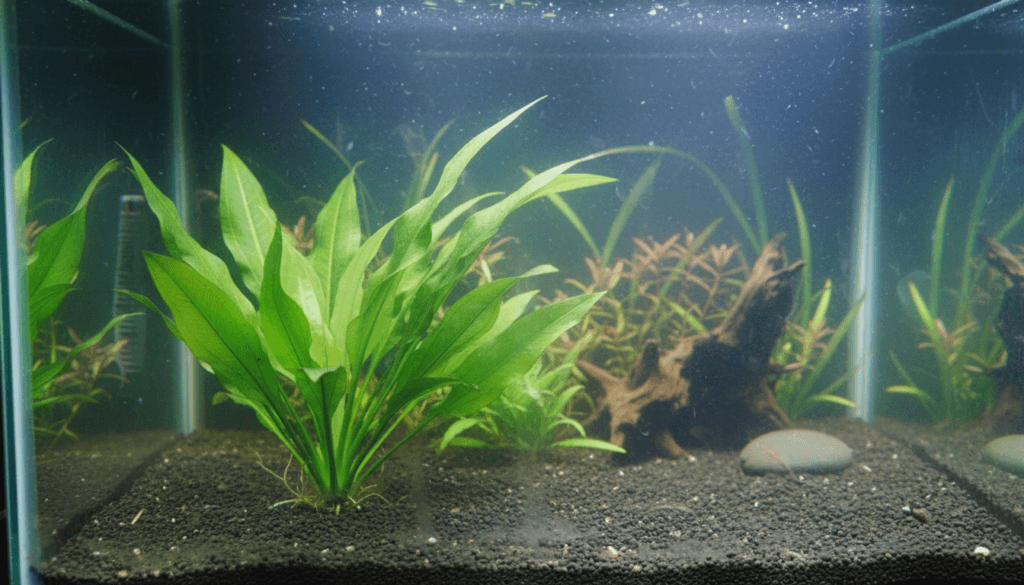
In aquarium terms, the natural habitat suggests two practical rules: feed the roots, and provide gentle current and some shading or diffuse light. Fast, turbulent flow is not typical for its native setting, so strong jets against leaves can cause tearing. Instead, aim to mimic quiet currents with gentle circulation that keeps water oxygenated but does not hammer leaf surfaces.
Care and maintenance
Water parameters
Amazon Sword accepts a broad window of water chemistry, but growth and leaf health respond to stable, moderate conditions. Target a temperature of 22–28°C (72–82°F). A pH between 6.0 and 7.5 suits most strains; slightly acidic water is closest to many natural populations, but neutral pH encourages robust growth in community setups. General hardness (GH) is best kept from 3–12°dGH; extremely soft water may slow growth and very hard water can lead to pale leaves if iron and trace elements are lacking.
Stability matters more than extremes. Rapid swings in pH, temperature, or hardness stress roots and invite algae, while minor fluctuations within the recommended ranges are usually tolerated. Monitor parameters weekly during the first months after planting and adjust slowly; steady conditions allow the plant to allocate energy to leaf expansion rather than stress responses.
Substrate
Roots are the Amazon Sword’s primary nutrient pathway, making substrate choice a top priority. Nutrient-rich, loamy substrates that retain root tabs well are ideal. Options range from commercial planted substrates loaded with minerals to a layered approach: a bottom layer of heavy, nutrient-dense substrate (clay-based or commercial aqua soil) capped with inert sand or fine gravel for aesthetics. A depth of 5–8 cm (2–3 inches) gives roots room to spread.
Root tabs are a common and effective method to supply macronutrients (nitrogen isn’t always needed in tablet form since roots absorb some nitrate from water) and micronutrients like iron and manganese directly to the rhizome. Replace root tabs every 8–12 weeks near the root ball and any actively spreading pups. For fast grow-out, mix a small amount of laterite or clay into the root zone during planting to act as a slow-release iron source.
Lighting
Light influences leaf size, thickness, and coloration. Aim for moderate to moderately high lighting. Practically speaking, that means roughly 30–50 µmol·m²·s⁻¹ at the substrate level or about 8–10 hours of quality full-spectrum light per day. Slightly longer photoperiods can be used if nutrient dosing and CO2 are balanced to avoid algae outbreaks.
Under low light the Amazon Sword will still survive but tends to produce larger, thinner leaves and slower overall growth. Under high, intense light the rosette compacts and new leaves are darker and sturdier—provided nutrients and CO2 are adequate. Use a timer to keep photoperiods consistent and consider adding floating plants if too much light causes algae or overheats the tank.
CO2 supplementation
CO2 supplementation is not strictly required for an Amazon Sword to live, but it is beneficial for compact growth, faster leaf production, and richer green coloration. In lightly stocked community tanks without injection, the plant will usually do fine if macronutrients and root nutrition are consistent. For aquascapes that demand dense, rapid growth or where medium to high lighting is present, injecting CO2 at stable levels (aim for 20–30 mg/L CO2) transforms growth quality and reduces the risk of thin, stretching leaves.
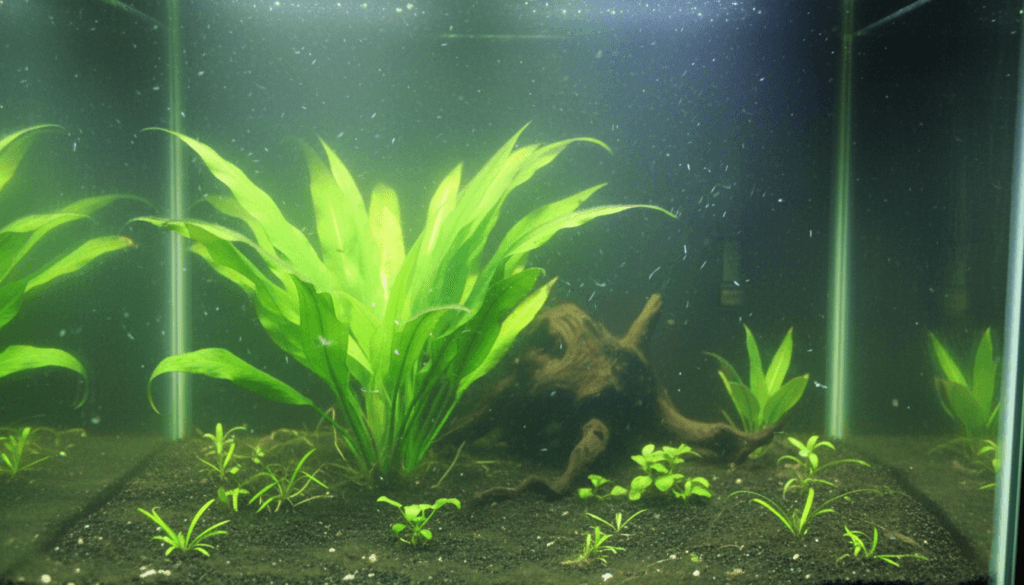
When adding CO2, pair injections with steady fertilization and larger weekly water changes to keep nutrient ratios balanced. Watch for pH drops and oxygenation concerns during the initial days after starting CO2—the goal is smooth, gradual changes that plants assimilate without stress.
Fertilization
Amazon Sword benefits from a disciplined fertilization routine that targets both root and column uptake. Macros to prioritize are nitrate (N), phosphate (P), and potassium (K). Micronutrients should include iron (Fe), manganese (Mn), boron (B), zinc (Zn), copper (Cu), and molybdenum (Mo). A two-pronged strategy is most effective: root-feeding and water-column dosing.
- Root feeding: Place root tabs containing iron, potassium, and trace elements near the base every 8–12 weeks. For heavy-feeding specimens or larger swords, add an extra tab per 3–6 months depending on observed growth.
- Water-column dosing: Use a balanced liquid fertilizer (complete macro + micro formula) dosed according to the product’s instructions, typically every 2–3 days for standard schedules or daily for lighter doses. For advanced tanks using EI (Estimative Index), dose macros (N-P-K) and micros on a regular schedule and perform larger weekly water changes to reset levels.
- Iron specifics: If leaf tips yellow but veins remain green, this often indicates iron deficiency; increase iron dosing moderately (watch for algae) or add additional root tabs.
Adjust dosing in response to growth and algae signals. Strong, fast growth usually means nutrient availability is adequate; rapid hair algae or diatom surges suggest an imbalance or that dosing outpaces biological uptake and requires larger water changes or reduced photoperiod.
Water changes
Regular water changes are crucial for the Amazon Sword because they maintain nutrient balance, remove dissolved organic waste, and replenish trace elements. A common practice is a weekly 25–50% water change. Heavily stocked tanks or those with high fertilization rosters may benefit from 30–50% weekly changes, while lightly planted and lightly stocked aquaria can lean toward the lower end.
When performing water changes, siphon gently around the root zone to remove detritus but avoid digging up the rhizome. If root tabs are freshly placed, wait at least a week before a deep substrate siphon to allow tablets to settle. Use dechlorinated, temperature-matched water and consider adding a small dose of trace minerals after very large changes to keep micronutrient levels steady.
Placement in the aquarium
Place the Amazon Sword in the midground to background of the aquarium depending on its mature size and the tank scale. In a large tank, a grouping of several swords slightly off-center creates a natural-looking stand; in smaller tanks, a single dwarf or juvenile specimen works well in the middle-back to avoid blocking sightlines. Use the plant to create vertical contrast: tall leaves behind low carpet plants, or flanking a driftwood focal point.
For design balance, avoid crowding with fine-leaved stems immediately in front, since the sword’s broad blades can overshadow delicate plants. Consider sightlines and maintenance: place swords where trimming and root-tab replacement are easily accessible without disturbing shy fish hideouts.
Reproduction
Reproduction in the Amazon Sword occurs primarily vegetatively. Healthy Amazon Sword plants produce lateral shoots or “pups” from the parent rhizome, which can be separated and replanted once their roots are established—this is the simplest and most reliable propagation method for aquarium keepers. Some species also send out stolons that form daughter plants at nodes; remove and pot these when they develop several true leaves.
Sexual reproduction—flowering and seed production—happens less often in aquaria but is possible. If an emergent flowering stalk forms, it may produce small white flowers above the waterline; successful seed set requires pollination, and many hobbyists hand-pollinate using a soft brush. Seed-grown plants can show interesting variation and are a path to developing unique cultivars, but seedlings are tiny and require careful nurturing under gentle light and clean water.
Practical propagation tips: when separating pups, ensure each division has a visible root system and at least two leaves. Replant immediately into nutrient-rich substrate and add a root tab to encourage establishment. If dealing with overly large or aging leaves, trim at the base to encourage new growth rather than cutting the crown into pieces—crowns can rot if damaged. For quick expansion in aquascapes, allow one robust parent to produce several pups over months, then stagger separations to maintain steady coverage and avoid creating bare patches.