Essential Acara Severum Gold Care Guide & Tank Setup
General information
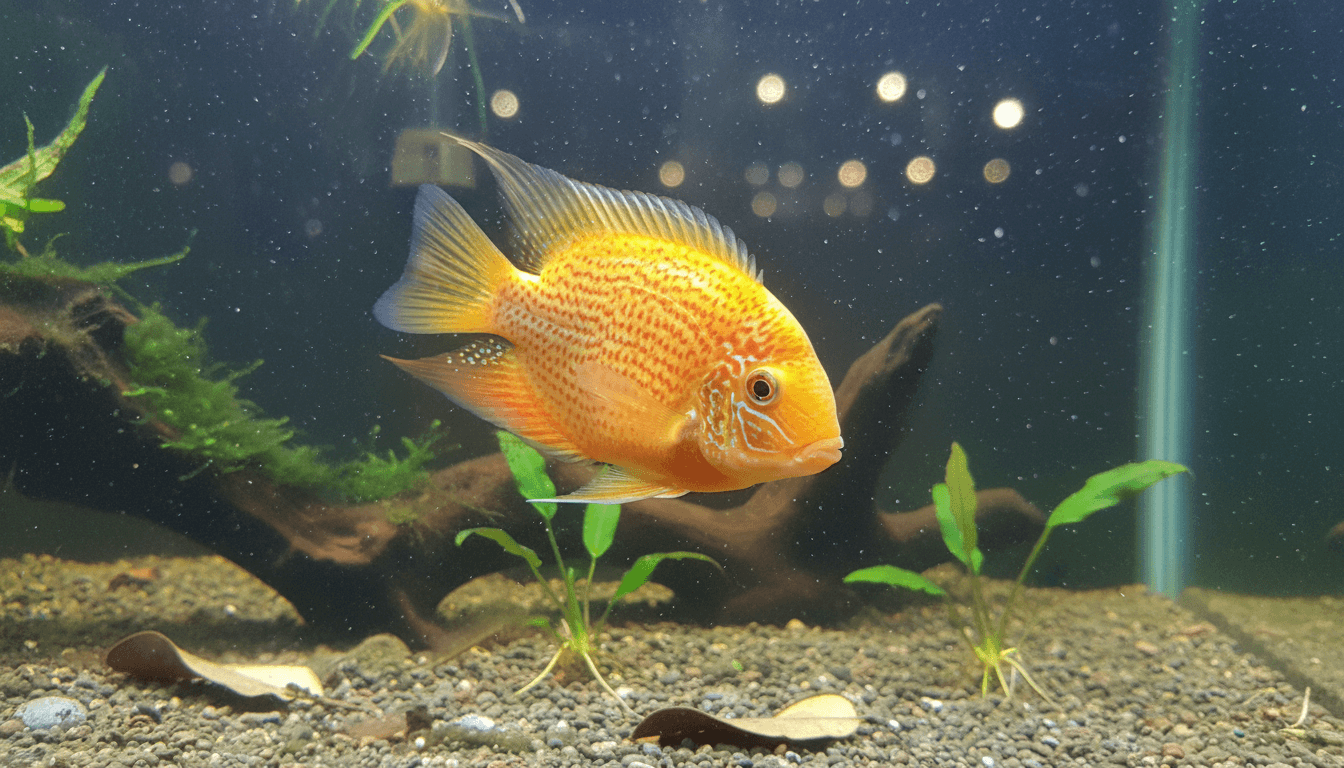
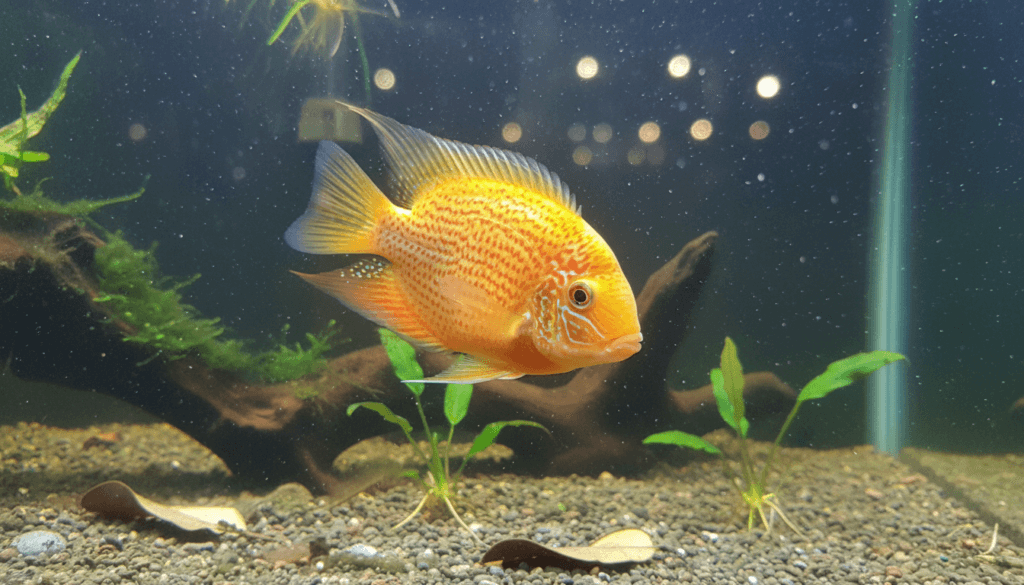
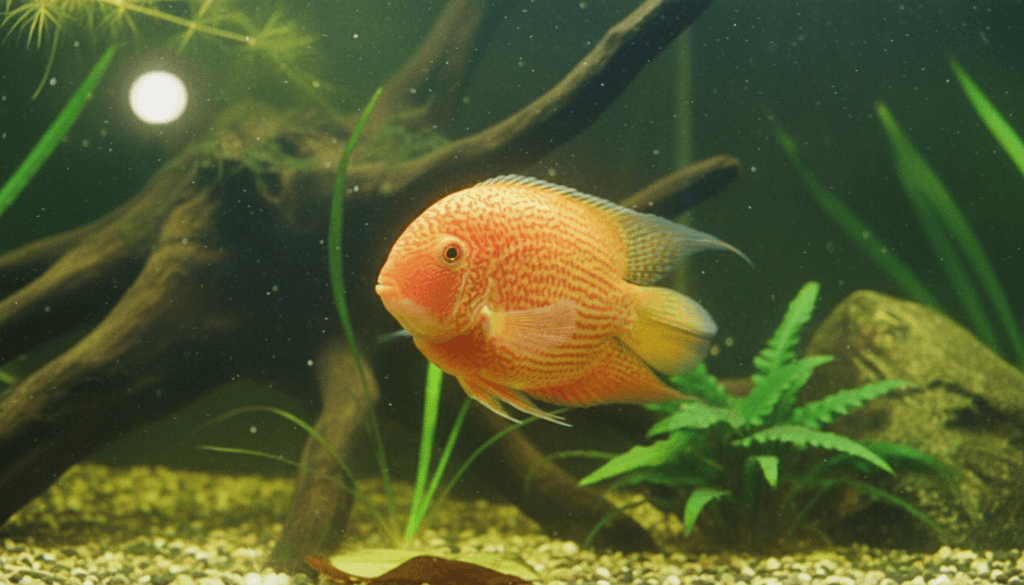
The Severum Gold (Heros severus), commonly sold under the trade name “Acara Severum Gold,” is a medium-sized South American cichlid prized for its calm presence and striking golden or yellow-orange coloration. Severum Gold reaches roughly 12–18 cm (5–7 inches) in captive conditions depending on genetics and tank size, and shows the classic laterally compressed, rounded body typical of Heros species.
Severum Gold is suitable for hobbyists who want a showy centerpiece fish without handling the intense aggression of large predatory cichlids. Expect a fish that prefers structured territories, slightly acidic to neutral water, and a mixed diet of meaty and vegetable foods.
Appearance
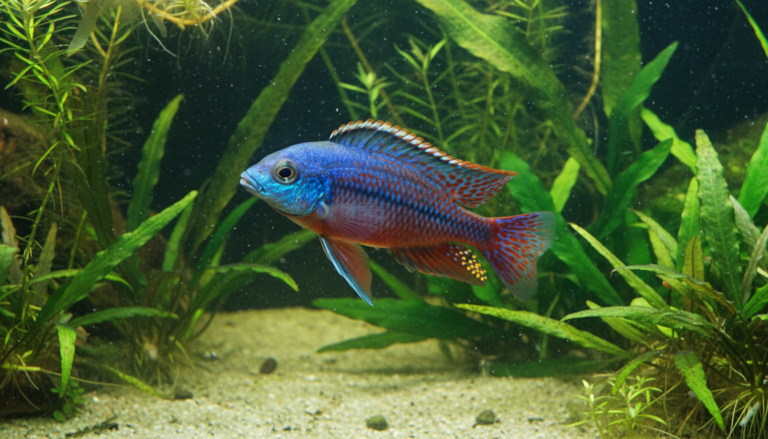
Gold variants display a warm palette: shades from pale yellow to deep orange-gold across the body, often with faint vertical banding that becomes more visible when the fish is stressed or during breeding. The body is tall and oval with a rounded dorsal and anal fin; adult males often have slightly more pointed dorsal fin tips and larger size than females.
Juveniles can show stronger vertical bars and less intense gold tone. Eye color tends to be amber to red. Fin edges are usually smooth; any ragged fins suggest aggression or poor water quality rather than natural variation.
Habitat
Native range: Amazon basin tributaries and similar slow-moving South American waterways. Natural habitat is characterized by warm, soft, tannin-stained water with abundant submerged wood, leaf litter, and dense plant stands. Water typically flows slowly, with plenty of shaded microhabitats and broad-leaf vegetation.
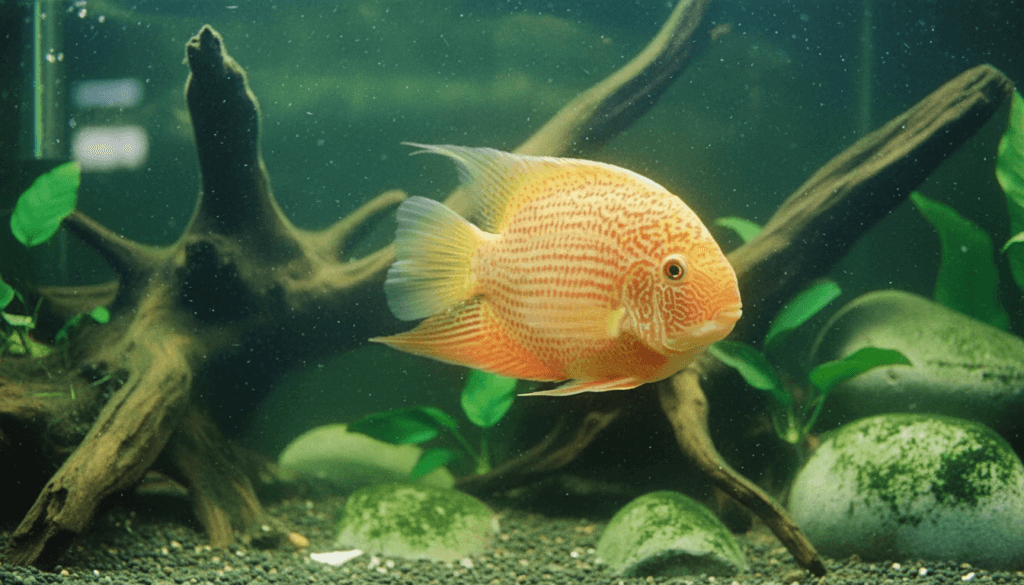
When replicating habitat in an aquarium, prioritize structure (driftwood, caves, and flat stones) and shaded zones created with floating plants or larger-leaved stem plants. A sandy substrate and some leaf litter reproduce the foraging environment and can improve fry survival when breeding.
Сare and maintenance
Water parameters
| Parameter | Recommended range |
|---|---|
| Temperature | 24–28 °C (75–82 °F) |
| pH | 6.0–7.5 |
| General hardness (GH) | 2–12 dGH |
Severum Gold tolerates a modest range but performs best toward the warmer, slightly acidic end of the table. Stable temperature and pH are important—rapid swings stress the fish. If source water is very hard, use reverse osmosis (RO) mixed with tap water or peat filtration to soften and add tannins.
Tank size
| Requirement | Minimum / Recommended |
|---|---|
| Minimum volume | 200 L (≈53 US gal) — single adult |
| Recommended for pair or community | 300–400 L (≈80–105 US gal) |
| Recommended dimensions (length over height) | ≥120 cm (48 in) length × 45–50 cm (18–20 in) height |
Severum Gold needs horizontal swimming space more than extreme height. A tank at least 120 cm long gives territory room and limits chasing. For a breeding pair or community with other medium-sized South American species, move to 300–400 L.
Filtration and water flow
Choose robust biological filtration: a canister filter with a mix of mechanical media (sponges), biological media (ceramic rings, K1/Kaldnes), and chemical media as needed. For a 200–400 L setup, select a canister rated for at least twice the tank volume per hour (e.g., 400–800 L/h) but moderate flow output is ideal.
Severum Gold prefers low to moderate water movement that mimics slow rivers. Use spray bars, return flow diffusers, or baffle outputs to reduce direct currents. Sponge filters are excellent in breeding tanks or fry rearing because they provide gentle flow and protect small fish.
Substrate and decor
Fine sand or very fine gravel works best: it allows natural sifting and protects soft mouth tissue. Add smooth driftwood (e.g., mopani, Malaysian driftwood), flat stones for spawning sites, and leaf litter such as Indian almond (Terminalia catappa) or oak leaves to increase tannins and microfauna.
Plant choice: hardy species that tolerate moderate root disturbance—Amazon sword (Echinodorus bleheri or E. sp. ‘Ozelot’), Anubias spp., Java fern (Microsorum pteropus). Use broad-leaf plants anchored to wood or rock. Floating plants like Salvinia, duckweed, or frogbit will create shaded zones.
Lighting
Moderate lighting is sufficient: aim for about 0.3–0.6 W/L with LED fixtures or 30–60 µmol·m−2·s−1 PAR for planted displays. Provide 6–8 hours of light daily. Use floating plants or adjustable LED intensity to create shaded retreats; direct bright light stresses the fish and can trigger hiding rather than showy behavior.
Water changes
Perform regular water changes to manage nitrate and organic load: 25–40% weekly depending on stocking and feeding. For heavily stocked tanks or growing fry, 30–40% twice weekly can be necessary. Always match temperature and pH of replacement water to avoid shock.
Social behavior and group size
Minimum group size: single adult or mated pair. Severum Gold is not a schooling species. If keeping multiple adults, provide a very large aquarium (300+ L), multiple territories, and abundant visual barriers to reduce confrontations.
Social structure: semi-territorial cichlid. Expect territorial defense during breeding; otherwise individuals are relatively peaceful with slower-moving, non-nippy tankmates. Males can display to establish dominance—separation or increased territory size resolves most disputes.
Additional behavioral care tips
- Avoid housing with very small schooling fish that fit in the severum’s mouth—those fish can become targets or stressed by attention.
- Provide at least one flat rock or broad-leaf plant per pair for spawning; this reduces territory competition.
- Keep consistent hiding spots—driftwood and caves reduce stress and interrupt lines of sight during disputes.
- Watch for fin-nipping from faster, boisterous species; pair off or remove problem tankmates early.
Compatibility
| Tankmate | Compatible | Note |
|---|---|---|
| Congo Tetra (Phenacogrammus interruptus) | Yes | Large, fast tetras work well; avoid tiny tetras under 4 cm |
| Angelfish (Pterophyllum scalare) | Conditional | Possible in large tanks; watch for territorial disputes and similar breeding behavior |
| Oscar (Astronotus ocellatus) | No | Too competitive and large; both species can bully each other |
| Common Pleco (Hypostomus plecostomus) | Yes | Good bottom cleaner; choose large plecos (20–40 cm species) to avoid being bothered |
| Corydoras spp. | Yes | Small, peaceful bottom dwellers that avoid adult severum territory |
| Ram Cichlids (Mikrogeophagus ramirezi) | No | Too delicate; severum may outcompete or stress them |
| Rainbowfish (Melanotaeniidae) | Yes | Active mid-level swimmers that usually coexist well |
Feeding the Acara Severum Gold
Diet should be omnivorous and varied. Offer a base of high-quality cichlid pellets or sinking granules formulated for South American cichlids (e.g., 48–54% protein for juveniles, 30–40% for adults). Add frozen or live items: bloodworms, brine shrimp, mysis shrimp, chopped krill. Rotate protein sources to maintain interest and balanced nutrition.
Include plant matter: spirulina flakes, blanched spinach, zucchini, and peas (skin removed). Vegetables help prevent constipation and provide roughage.
Feeding schedule: juvenile Severum Gold 2–3 small feedings per day; adults 1–2 feedings daily. Provide what the fish can consume in 2–3 minutes per feeding. Incorporate a fasting day once every 7–10 days to aid digestion and reduce waste.
Avoid overfeeding—these fish are prone to obesity and poor water quality if provided unlimited flakes. Monitor body condition: slight waistline indicates healthy weight; a noticeably rounded abdomen can mean overfeeding or internal parasites.
Reproduction
Severum Gold are substrate spawners and typically form monogamous pairs during breeding. Conditioning with live or frozen protein (e.g., mysis shrimp) and slightly warmer water (26–28 °C) encourages spawning.
Spawning site: flat stones, broad leaves (Echinodorus), or cleaned clay pots. A conditioned pair will clean the surface and lay several hundred eggs (commonly 200–600). Eggs hatch in about 48–72 hours depending on temperature.
Parental care: both parents usually guard eggs and fry. Fry become free-swimming roughly 6–10 days after hatching. Provide infusoria or liquid fry food initially, then move to freshly hatched brine shrimp (Artemia nauplii) and finely crushed high-quality fry powder as they grow.
If raising fry in a community tank, plan to separate parents and fry to a dedicated breeding tank to reduce predation from tankmates. Use gentle filtration (sponge) and frequent small water changes (10–20% every other day) during early development.
FAQ
How big do Severum Gold get?
Adults commonly reach 12–18 cm (5–7 in) in captivity; a well-fed, properly housed specimen may push the upper end of that range.
Are Acara Severum Gold aggressive?
They are semi-territorial rather than overtly aggressive. Expect occasional displays and territory defense, especially during breeding. Provide space and structure to reduce conflict.
Can Severum Gold live with angelfish?
Yes, under the right conditions: large tank (≥300 L), plenty of territories, and compatible sizes. Monitor interactions closely during introductions and breeding seasons.
What is the best diet for breeding conditioning?
High-protein frozen/live foods—mysis shrimp, brine shrimp, bloodworms—combined with high-quality cichlid pellets. Increase feedings to encourage condition but avoid overfeeding.


One Comment