
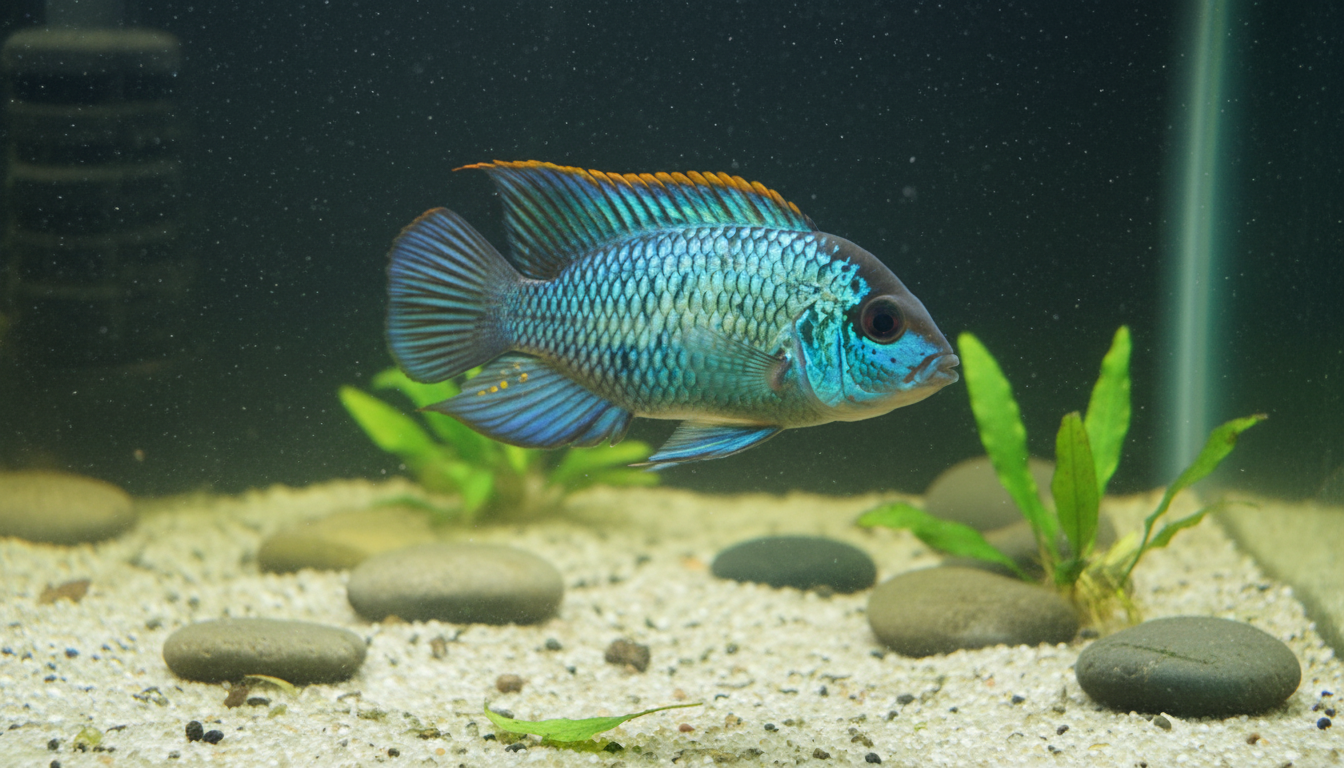
Blue Acara Care Guide: Tanks, Diet, Temperament
Introduction
If you like cichlids that combine personality, color, and a manageable size, the blue acara is one of those species that quickly becomes a favorite. In my years keeping aquaria, I’ve watched these fish go from shy newcomers to bold, curious residents that learn feeding routines and claim territories with surprising elegance. This guide will walk through everything I’ve learned about blue acara care — tank design, water chemistry, diet, behavior, breeding tips, health troubleshooting and compatible tank mates — with practical, experience-driven advice and a few unusual observations you won’t find on every checklist.
Blue Acara Basics and Origin
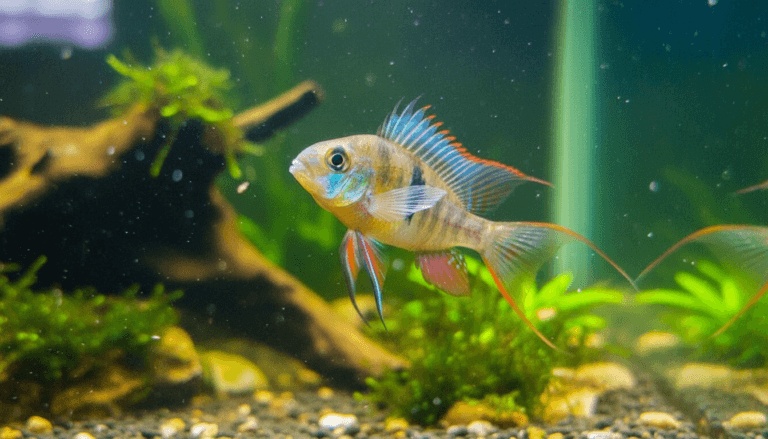
The blue acara (Aequidens pulcher) hails from slow-moving rivers and flooded lagoons of northern South America. They’re not as explosive in behavior as some Central American cichlids, and their temperate charisma is part of what makes them accessible to hobbyists. Most aquarium strains are selectively bred for deeper blues and subtle green sheens along the gill plates. A fun, slightly odd fact: wild blue acara sometimes display a faint violet throat patch during courtship — a detail I noticed while observing a breeder’s pair under full-spectrum lighting.
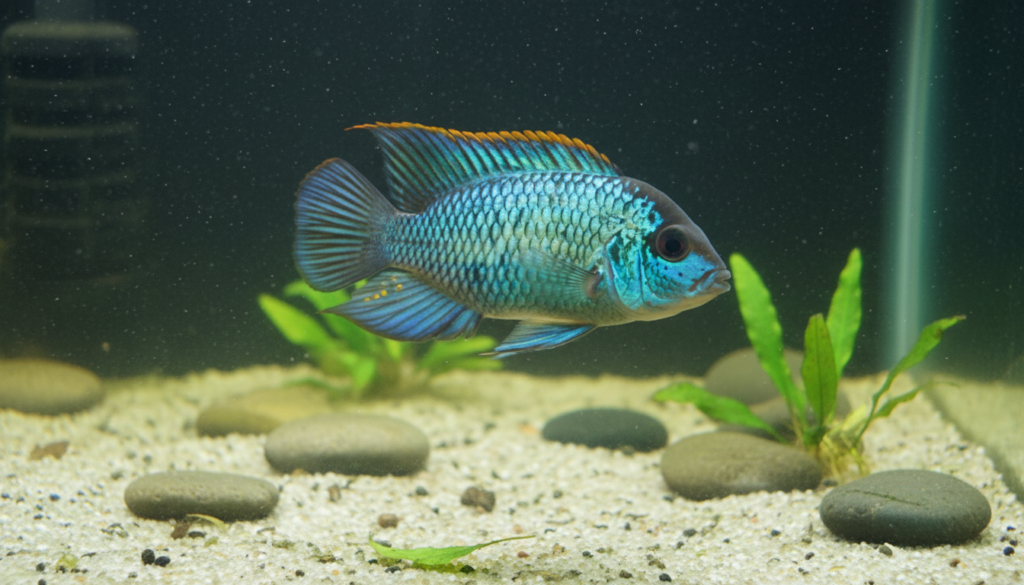
Blue Acara Tank Setup and Water Parameters
Setting up a stable home is the single most important thing you can do for long-term blue acara care. These fish appreciate a planted tank with hiding spots and open swimming space. A 55-gallon tank is a good starting point for a pair or a small group; for a community setup or multiple males, step up to 75–90 gallons to reduce territorial tension.
- Temperature: 72–82°F (22–28°C). I usually keep mine at 76–78°F for steady activity without stressing the fish.
- pH: 6.5–7.5. They’re adaptable but stable pH is better than chasing numbers.
- Hardness: 5–15 dGH. Moderate hardness emulates many parts of their native range.
- Filtration: Robust mechanical and biological filtration. Canister filters or a powerful HOB with a prefilter sponge work well; blue acara produce a moderate bioload.
- Substrate and décor: A sandy or fine gravel substrate encourages natural digging behavior. Provide caves, terracotta pots, driftwood, and root structures to break lines of sight and offer territories.
One practical trick: tie Java fern and Anubias to driftwood rather than planting them in substrate. Blue acara occasionally uproot plants while rearranging their beds; anchored plants are less likely to be turned into floating vegetation islands.
Blue Acara Behavior, Diet, and Tank Mates
Behaviorally, blue acara are semi-aggressive cichlids — they’re not bullies by default, but they will defend a chosen patch of the tank. You’ll see classic cichlid posturing: flared fins, head-down displays, and brief chases. They generally calm after hierarchies are established.
- Diet: Blue acara are omnivores and thrive on a varied menu. High-quality pellets or flakes are a base. Supplement with frozen foods (bloodworms, brine shrimp, mysis), occasional live foods, and some vegetable matter like blanched spinach or spirulina flakes. I feed twice daily: a morning protein-rich portion and a smaller vegetable-leaning meal in the evening.
- Feeding tip: Alternate a day of protein-rich feeding with a day heavier on vegetable foods to maintain color and reduce fatty liver risk.
- Tank mates: Choose robust, mid-to-upper level swimmers that can handle a semi-territorial neighbor. Good matches include Bristlenose plecos, Synodontis catfish, larger tetras like Congo tetras, and hardy rainbowfish. Avoid tiny, long-finned species that can be seen as easy targets or highly aggressive Central American cichlids. Remember, individual temperament varies — I’ve had a particularly serene blue acara that tolerated angelfish for months, but yours may differ.
Breeding Blue Acara: Practical Steps
Breeding blue acara is rewarding and approachable. They form monogamous pairs and both parents typically guard eggs and fry.
- Conditioning: Isolate a potential pair or keep them in a large community with visible pair bonding. Feed high-protein live/frozen foods for several weeks to encourage spawning.
- Spawning site: Flat rocks, slate, or the inside of a terracotta pot are preferred. Provide a shallow cave and slightly reduced flow to mimic calmer waters and give fry a break from strong currents.
- Water: Slightly warmer water around 78–80°F can stimulate spawning. Perform regular small water changes to maintain pristine conditions during incubation.
- Fry care: Parents will guard fry; if you remove them, provide freshly hatched brine shrimp and finely crushed high-quality fry food. Live infusoria during the first few days is excellent for the smallest fry.
Personal note: once, after a late-night feeding, I found the pair “trading” fry custody — one parent would take the brood to a different corner and the other would guard the nest. It was an unexpectedly cooperative parenting strategy.
Common Health Issues and Prevention
Blue acara are generally hardy, but they’re susceptible to common freshwater maladies if the environment is neglected.
- Ich and external parasites: Signs include flashing, white spots, and lethargy. Prevent with stable temperature and reduced stress. Quarantine new fish for at least two weeks.
- Fin rot and poor condition: Often a symptom of water quality decline. Maintain weekly 20–30% water changes and vacuum detritus from the substrate.
- Internal parasites: Can manifest as weight loss or stringy feces. A freshwater praziquantel course or metronidazole protocol can help, but diagnosis is best done with a vet or experienced aquarist if possible.
Routine: I do a 25% water change every 7–10 days on a stocked blue acara tank and test ammonia/nitrite weekly. Prevention beats cure — a tidy aquarium is the best medicine.
Decor, Lighting, and Planting Tips
When I arrange a blue acara tank I aim for balanced sight-lines: open swimming corridors interrupted by tasteful caves and taller plant midgrounds. Lighting should be moderate. Strong light often causes algae on driftwood; too low, and plants like Hemianthus suffer. Choose hardy plants like Anubias, Java fern, and Vallisneria. For a different look, use peat-filtered water and driftwood to deepen coloration slightly and mimic tannin-rich habitats.
Advanced Tips and Unusual Observations
- Color boosting: Occasional high-carotenoid foods (krill, spirulina blends) can intensify reds and blues. Don’t overdo it — balance remains crucial.
- Personality: Blue acara recognize feeders. I swear mine come to the same patch of glass when they hear the lid click. They’ll learn routines quickly and can be hand-fed pellets after trust is built.
- Hybrid caution: Blue acara can hybridize with close relatives if kept with other Aequidens species. If you’re breeding pure lines, avoid shared tanks with similar cichlids.
FAQ
- Q: What minimum tank size do blue acara need?A: For a single pair, start at 55 gallons. If you want a group with multiple males or a community tank, go up to 75–90 gallons to reduce stress and territorial disputes.
- Q: Are blue acara suitable for beginners?A: Yes, they’re a great beginner cichlid because of their hardiness and tolerant water preferences, but they do require stable water quality and sensible tank mates.
- Q: How often should I feed blue acara?A: Twice daily is a good rhythm — a protein-rich meal in the morning and a vegetable-focused meal in the evening. Adjust portion sizes to avoid overfeeding.
- Q: Can blue acara live with angelfish?A: They can, in larger tanks with careful monitoring, but compatibility depends on individual temperament. Avoid mixing with very small or long-finned fish that might be harassed.
Conclusion
Blue acara care blends straightforward husbandry with rewarding behavioral observation. They’re adaptable, personable, and colorful without demanding the constant attention some cichlids require. By providing a stable environment, varied diet, and appropriate tank mates, you’ll see your blue acara flourish and show personality that turns a basic aquarium into a lively centerpiece. Keep records of water parameters, watch behavior closely during introductions, and enjoy the slow, satisfying process of getting to know these smart little cichlids.
One Comment