Pearl Gourami Care Guide: Secrets for Thriving Fish
General information
The Pearl Gourami is a graceful, labyrinth-bearing centerpiece that adapts well to planted tanks and calm community setups. If this fish is on the shopping list, expect a species that’s peaceful, display-worthy, and surprisingly expressive: males flare fins and perform bubble-nest rituals that reward close observation. When keeping Pearl Gourami, watch for their surface-oriented breathing pattern and shy tendencies around sudden movement—both are tied to their labyrinth organ and natural habits.
Native to slow, tannin-stained waters of Southeast Asia, the Pearl Gourami offers a combination of attractive patterning and gentle temperament that makes it an enduring favorite. Properly understood, this species is forgiving, but subtle environmental mistakes—bright harsh light, aggressive tankmates, or erratic water chemistry—lead quickly to stress. The following sections cover appearance, habitats, and detailed husbandry essentials so that every keeper can provide a stable, enriching home.
Appearance
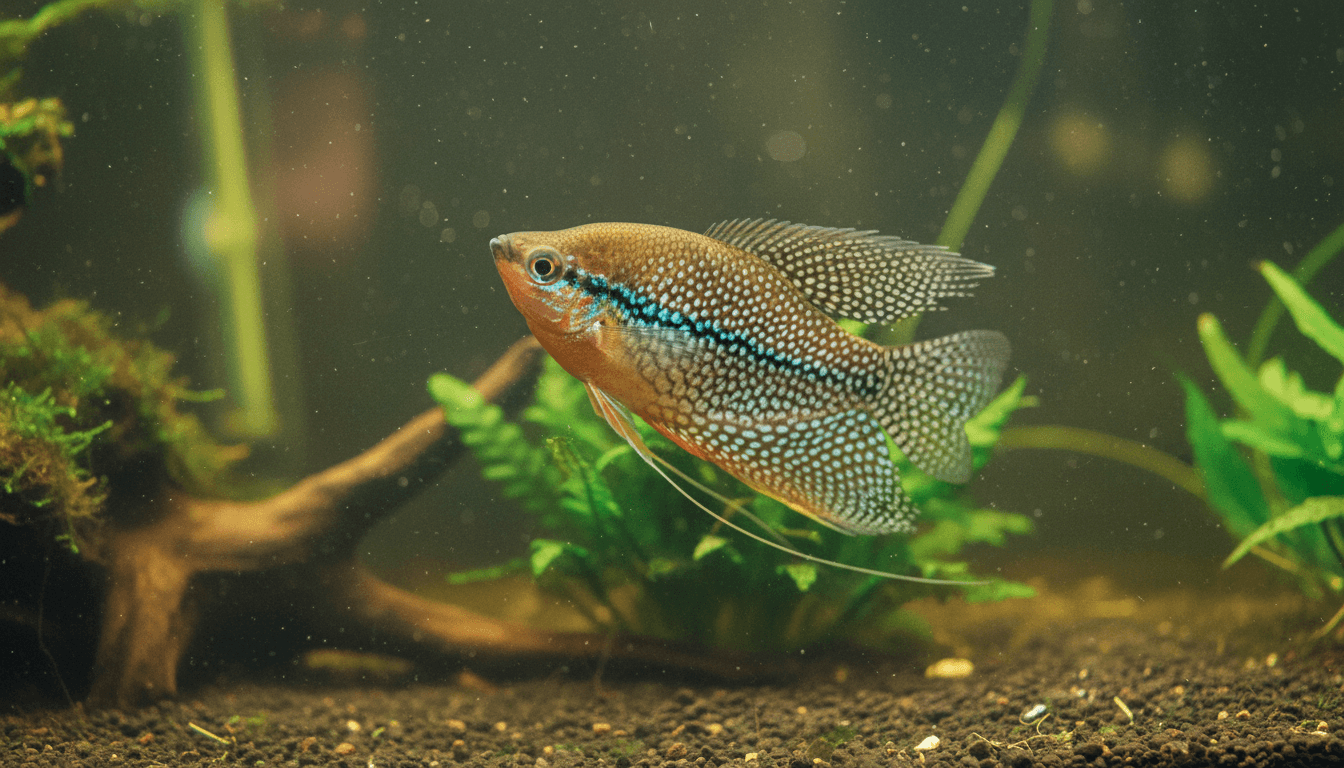
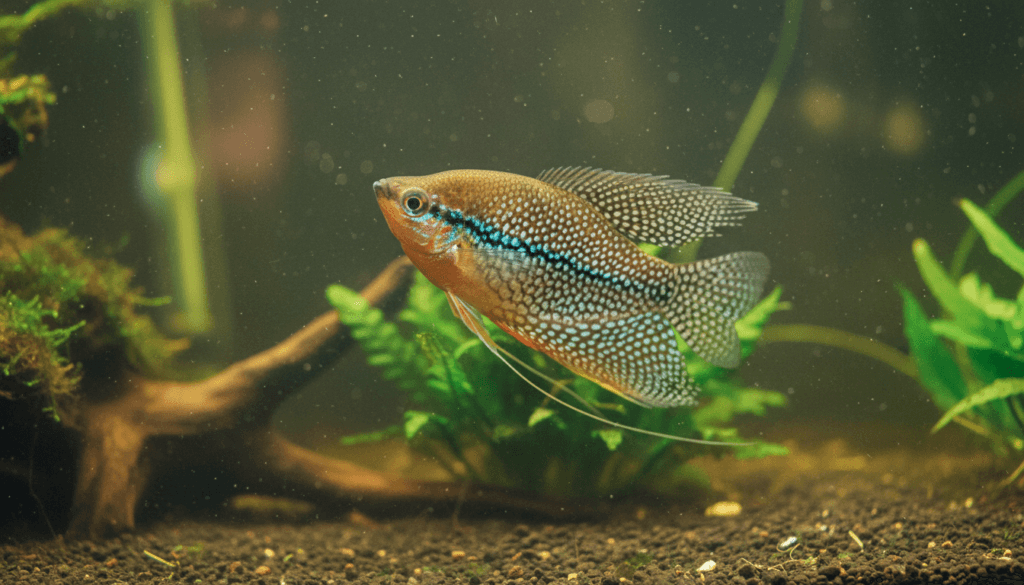
The Pearl Gourami presents a distinct pearl-speckled pattern that gives the species its common name. A net-like reticulation of cream or silver dots overlays a brown-to-olive background, producing a pearlescent sheen that catches aquarium light. The male develops a pronounced, deepened throat and extended dorsal and anal fins during courtship; these fins often show more intense coloration and a faint orange or red wash at the edges.
Eye placement and a slightly upturned mouth reflect surface-feeding behavior. Body shape is laterally compressed and elegant rather than chunky—perfect for gliding between stems. Some captive-bred varieties include the gold and opaline forms; these retain the characteristic speckling but shift the palette toward warmer tones. When comparing individuals, look for vibrant, evenly distributed pearl patterning and a lack of frayed fin edges, which indicates good health and minimal aggression in the tank.
Habitat
In the wild, Pearl Gourami prefers heavily vegetated floodplains, slow-moving streams, and shaded backwaters rich in leaf litter. These fish thrive in tannin-rich, tea-colored water with soft mineral content. To emulate that, include driftwood and Indian almond leaves in the aquarium; both release tannins and create a microhabitat similar to native locales. The labyrinth organ allows survival in oxygen-poor waters, so surface access must remain unobstructed.
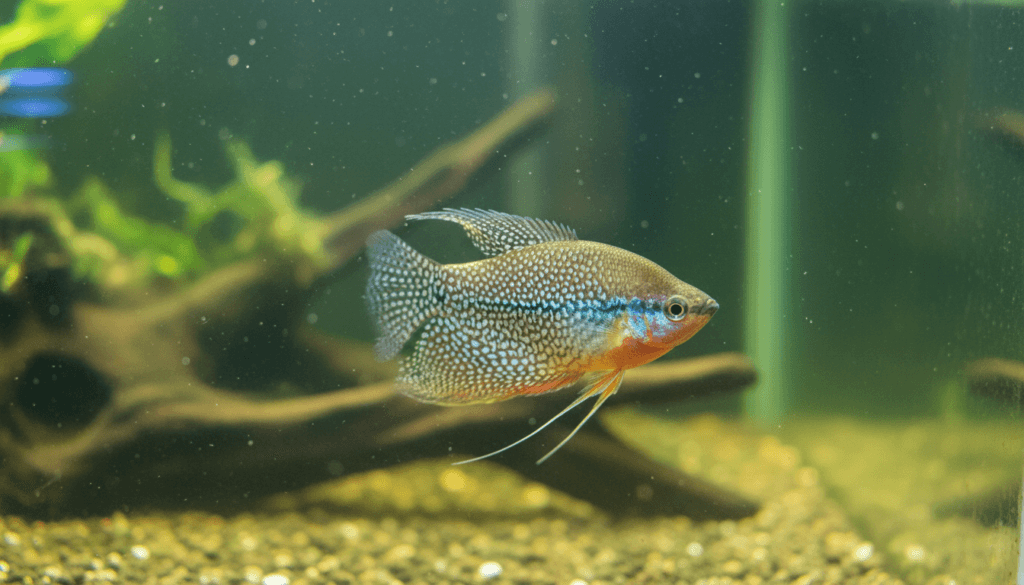
Recreate a layered environment: floating plants to diffuse light, mid-height stem plants for cover, and open areas for foraging. Substrate can be dark sand or fine gravel to highlight body colors and to offer a natural look. A slight current is acceptable, but avoid high-flow filter outlets—this species prefers calm, slow eddies. When designing a biotope or planted display for Pearl Gourami, prioritize dimmed lighting, gentle flow, and plenty of surface access.
Сare and maintenance
Water parameters
Temperature: 24–28°C (75–82°F). pH: 6.0–7.5, with slightly acidic (6.5–7.0) being optimal for long-term coloration and breeding. General hardness (GH): 2–10 dGH; softness tends to mimic natural conditions. Maintain stable parameters—Pearl Gourami reacts poorly to large, sudden swings. Use a reliable heater and weekly tests for pH and ammonia as standard practice.
Tank size
Minimum volume: 75 liters (20 US gallons) for a small group. Recommended dimensions: longer length over height—ideally 90–100 cm (36–40 inches) long and 30–45 cm (12–18 inches) tall. The lateral swimming preference and need for territory make a longer footprint more valuable than extra height.
Filtration and water flow
Filter type: hang-on-back (HOB), canister, or sponge filter with gentle outflow. Preferred flow intensity: low to very low; aim for subtle surface movement rather than strong currents. Sponge filters are excellent for fry protection during breeding and for maintaining oxygen levels without creating disruptive flow.
Substrate and decor
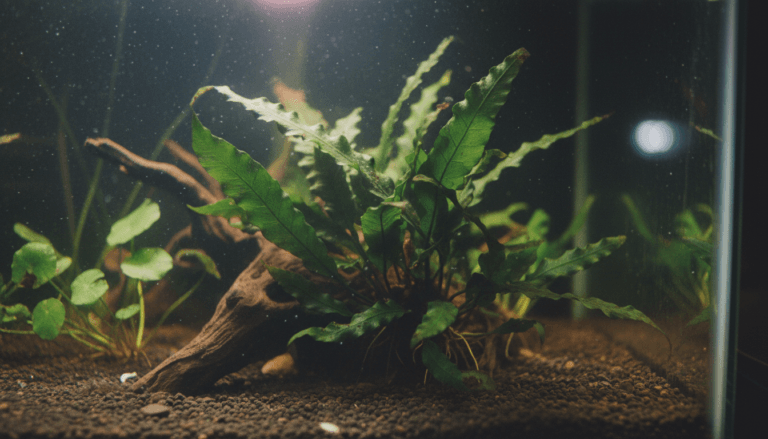
Substrate: fine sand or dark gravel to show off patterning. Add driftwood, smooth rocks, and leaf litter to replicate tannin-stained environments. Dense plantings of Java fern, Cryptocoryne, and floating species like Amazon frogbit create shaded zones. Provide horizontal branches or broad-leaved plants near the surface for resting and spawns.
Lighting
Intensity: low to medium. Use dimmable LED fixtures or indirect lighting strategies. Duration: 6–8 hours daily, with subdued lighting in the morning and evening to mimic dawn and dusk. Shade is needed—floating plants or overhangs reduce stress and encourage natural activity cycles.
Water changes
Frequency: weekly or every ten days. Percentage: 20–30% per change for stable nitrate control. In densely planted tanks, 15–20% may suffice, but maintain vigilance for ammonia and nitrite spikes. Always match replacement water temperature and, when possible, pH to avoid shock.
Lid or cover
These fish can make short, exploratory jumps. A tight-fitting lid is recommended to prevent escapes and to retain surface humidity for the labyrinth organ. Gaps should be small; add a mesh-covered ventilation gap to improve gas exchange while keeping the tank secure.
Social behavior and group size
Minimum group size: 4–6 individuals to allow natural social interactions. Social structure: loosely schooling with male hierarchy during breeding; males will display but rarely become dangerously aggressive in well-planted tanks. Keep no more than one dominant male per smaller aquarium to reduce territorial displays.
Additional behavioral care tips
Provide vertical and horizontal cover to let timid individuals escape attention. Males that flare excessively often do so when there is insufficient cover or when a rival is present; rearranging decor occasionally disrupts established territories and reduces constant conflict. Introduce them into a mature, planted tank where cover and stable bioload are already established to minimize stress.
Compatibility
Pearl Gourami pairs well with peaceful mid- and top-dwelling species. Good tankmates include small Rasboras, peaceful tetras, Corydoras catfish, and some dwarf cichlids that respect territorial boundaries. Avoid fin-nippers and large, aggressive cichlids; they stress and mutilate the long fins of male gouramis. When choosing companions, prioritize calm personalities and similar water parameter needs.
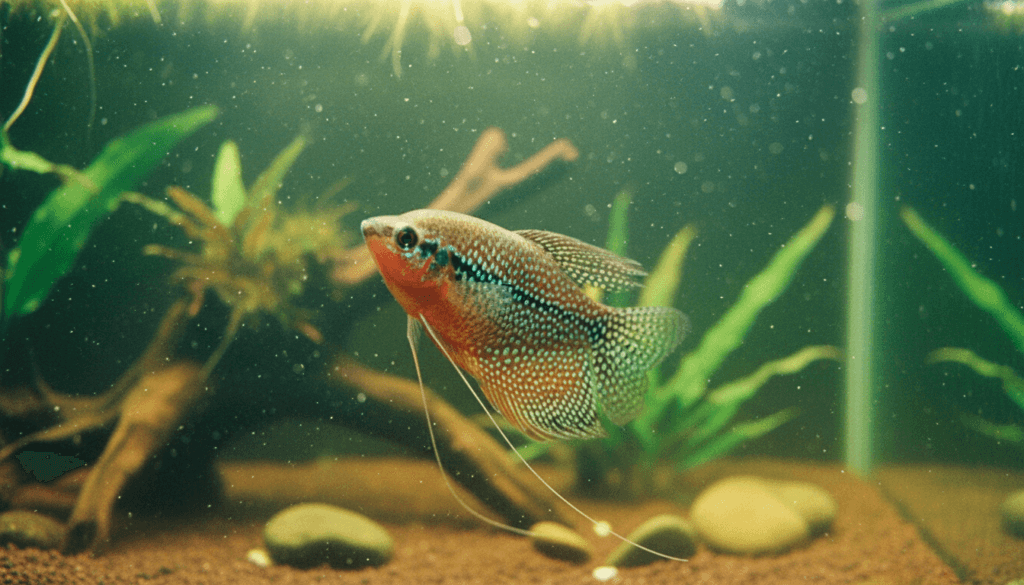
Territorial disputes usually stem from overcrowding or poorly structured aquascapes. If keeping multiple males, use a larger tank with abundant hiding spots or opt for a single male with several females to keep aggression manageable. For nano setups, select one or a pair only and populate with very small schooling fish that won’t harass the gourami.
Feeding the Pearl Gourami
Pearl Gourami is omnivorous and displays a clear preference for surface and mid-water feeds. A varied diet supports health and coloration: a base of high-quality flake or pellet food formulated for omnivores, supplemented with frozen and live items such as bloodworms, daphnia, and brine shrimp. Rotating protein sources weekly prevents nutritional gaps and sharpens breeding condition when required.
Feeding frequency: small portions twice daily that they can consume in 2–3 minutes. Avoid overfeeding; leftover food increases nitrates and invites fungal growth on the skin. Periodic vegetable matter—blanched zucchini, spirulina flakes, or algae wafers—provides fiber and supports gut health. Observing how the fish approach food will reveal hierarchy and health: lethargic or disinterested individuals may be stressed or ill.
Reproduction
Breeding Pearl Gourami is an engaging process centered on male-built floating bubble nests. To trigger spawning, adjust water slightly acidic and softer (pH ~6.5, GH 2–5 dGH) and raise temperature to the upper comfort range (around 28°C/82°F). Males will construct a nest of bubbles and plant detritus beneath floating cover. A courtship display includes fin flaring and head-down nudging; the male wraps his body around the female during egg release.
After spawning, the male tends the nest, retrieving stray eggs and guarding fry. It is advisable to remove the female after spawning if aggression is observed, or to move the pair into a dedicated breeding tank beforehand. Fry become free-swimming after about 5–7 days; feed them infusoria, microworms, or powdered commercial fry food until large enough for newly hatched brine shrimp. A gentle sponge filter and tight lid are essential in the rearing tank to protect the labyrinth-dependent fry and to maintain oxygenation without imposing strong current.
Unusual fact: in some captive pairs, males will rework the bubble nest multiple times a day—an energy-intensive behavior that indicates good water quality and male fitness. Watching nest-building frequency offers a non-invasive method to assess breeding readiness.