Java Fern Mastery: Care, Propagation, and Tricks
General information
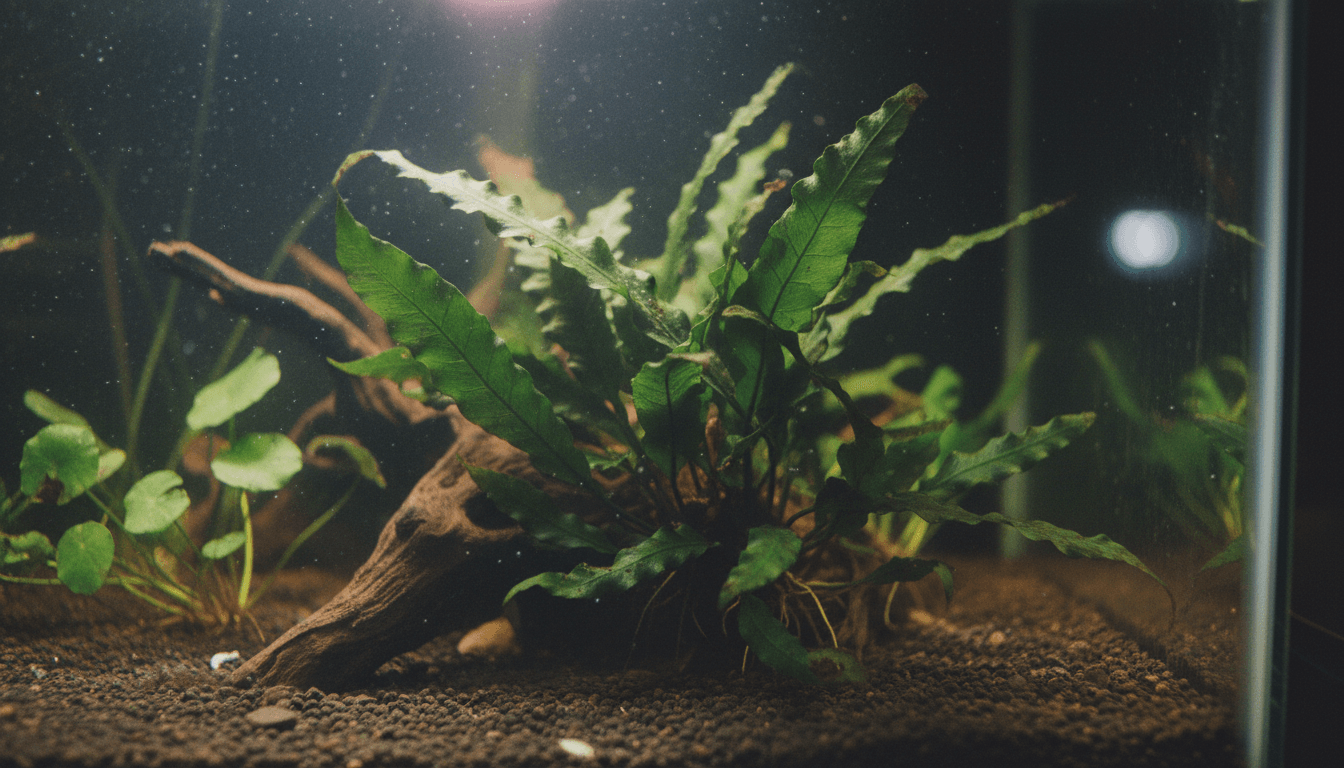
Java Fern is a stalwart of the aquarium hobby: tough, adaptable, and strikingly versatile. If this plant is chosen for a new tank, expect long-lived growth with minimal fuss as long as a few basic needs are met. Java Fern (Microsorum pteropus and several cultivars) lives comfortably attached to wood, rock, or hardscape rather than rooted deeply in substrate, which sets it apart from many aquatic plants. This ability to be epiphytic makes Java Fern an ideal pick for low-tech setups, shrimp tanks, and aquascapes where natural driftwood or stone is the focal point.
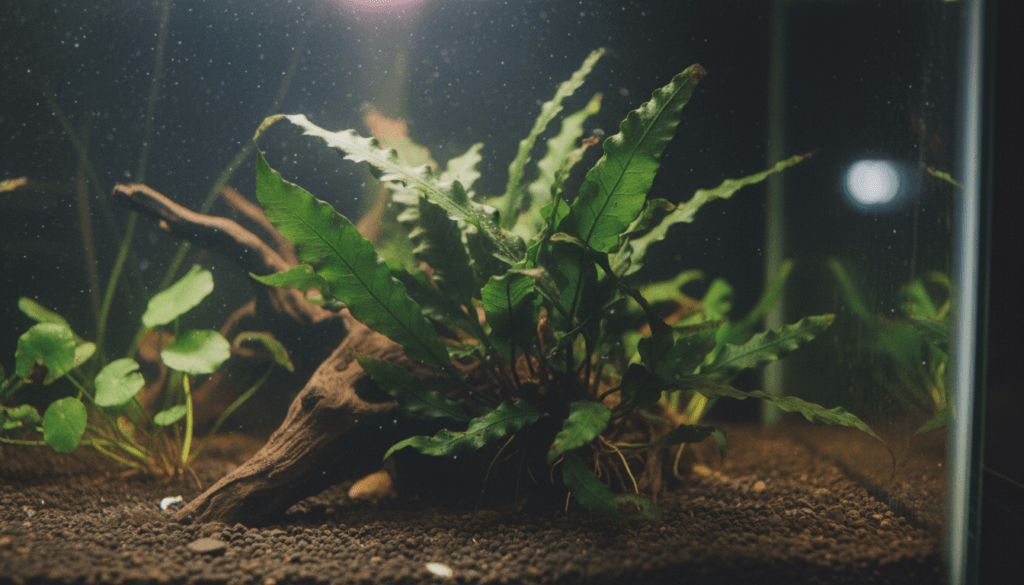
Many aquarists prize Java Fern because it tolerates a wide temperature and pH range, resists most common herbivores, and propagates easily. Expect slow but steady leaf production, occasional plantlets forming along older leaves, and strong tolerance to low light. Unusual facts: some varieties develop tiny spore cases (sori) on leaf undersides, and plantlets sometimes form even when the parent leaf appears damaged — an evolutionary quirk that encourages survival in shady, debris-strewn habitats.
Appearance
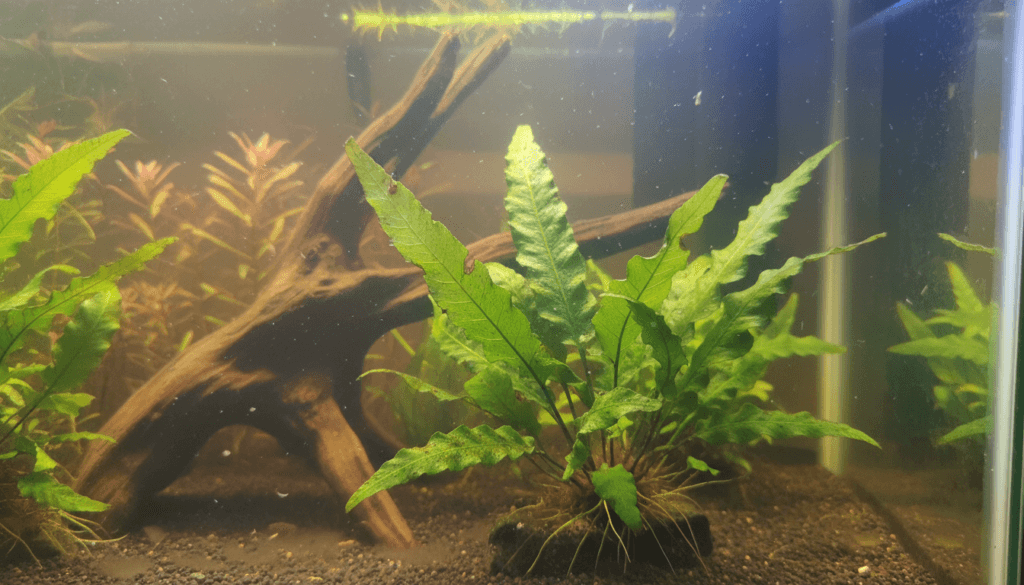
Java Fern displays leathery, elongated leaves that vary by variety: broad and undulating in Windelov forms, narrow and lanceolate in Narrow Leaf types, and forked in Trident selections. Leaf color typically ranges from medium to dark green; older leaves can develop a translucent or papery appearance before new growth replaces them. Roots are wiry and designed for anchoring rather than nutrient uptake from dense substrate. The rhizome is a short, thick horizontal stem that must remain exposed, since burying it often triggers rot.
Texture and growth habit provide both function and visual interest. Leaves can develop natural holes, splits, or serrations that add a primitive, jungle-like look to the aquascape. In aquaria with high biofilm or periphyton, leaves become miniature ecosystems that attract shrimplets and juvenile fish seeking microfauna. Varietal choices give creative freedom: Windelov creates soft, feathery crowns; Trident provides architectural structure; broad-leaf forms offer bold midground coverage.
Habitat
Native to Southeast Asian rivers, streams, and flooded forests, Java Fern thrives in slow-moving water with dappled light and plenty of submerged wood and leaf litter. Natural populations cling to rocks and tree roots where organic matter drifts past, delivering nutrients across leaf surfaces. This natural epiphytic lifestyle explains why Java Fern prefers attachment to hardscape rather than deep burial in nutrient-rich substrate.
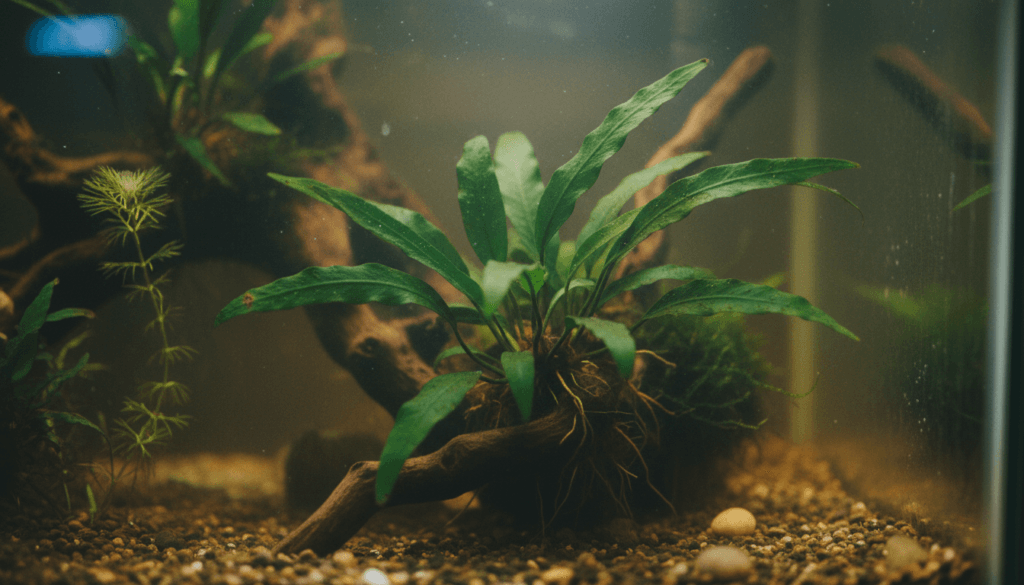
In the hobby, this plant performs well in biotope-style tanks mimicking blackwater or jungle rivers, but it also adapts to planted community tanks and shrimp setups. Salinity tolerance exists; Java Fern can survive light brackish conditions for short periods, which makes it useful in transitional tanks or for hobbyists experimenting with low-salinity peat-filtered systems.
Care and maintenance
Water parameters
Java Fern tolerates a broad band of conditions, which explains its popularity. Aim for a temperature range between 22–28°C (72–82°F), keeping fluctuations gradual. pH should be roughly 6.0–7.8, with most specimens doing well in slightly acidic to neutral water. General hardness (GH) in the range of 3–12 dGH suits most Java Fern varieties; excessively soft water can be tolerated but may slow growth. Stability beats perfection — consistent parameters reduce stress and discourage algae outbreaks that can smother leaves.
Substrate
Classic advice for Java Fern: do not bury the rhizome. Substrate type is not critical for this plant because roots specialize in anchoring, not nutrient mining. Use sand or fine gravel for aesthetics, but keep the rhizome above the substrate or attached to wood or stone. For planted tanks where bottom-dwelling species require substrate feeding, Java Fern can be tied above the substrate layer. If nutrient supplementation is needed, root tabs placed nearby will offer little benefit; instead, focus on water column fertilization.
Lighting
Lighting should be moderate to low. Aim for 20–40 µmol·m²·s⁻¹ PAR at the leaf surface (approximately 0.5–1.5 watts per gallon depending on your fixture), and provide a photoperiod of 6–8 hours daily. Java Fern tolerates lower output than stem plants, so shorter, dimmer regimes can reduce algae risk while supporting steady growth. Avoid intense, prolonged light that accelerates epiphytic algae; if light is high for other plants, provide shaded pockets where Java Fern is placed to mimic its natural woodland canopy.
CO2 supplementation
CO2 is not required for healthy Java Fern growth. The plant performs reliably in low-tech aquaria without pressurized CO2, making it a top choice for beginners. That said, supplemental CO2 can boost growth rate and leaf robustness in high-light systems, provided macronutrients and micronutrients are balanced. If CO2 is added, monitor growth to avoid fuzzy or hair algae on new tissue; higher CO2 increases metabolic demand and can exacerbate nutrient imbalances if dosing is neglected.
Fertilization
Since Java Fern absorbs nutrients primarily via leaves and small rootlets, focus on water-column fertilization. Include macronutrients such as nitrate (NO3) and potassium (K) and ensure micronutrients like iron (Fe), manganese (Mn), and trace elements are present. Suggested targets and routines:
- Nitrate: maintain 5–20 ppm for steady growth; very low NO3 (near 0) can slow leaf production.
- Potassium: keep 5–10 mg/L K for cell function and stress resistance.
- Iron: aim for 0.05–0.2 mg/L Fe to support dark green leaf color and prevent chlorosis.
- Micronutrients: provide a full trace mix including Mn, Zn, Cu, B at manufacturer-recommended microdoses.
A common practical schedule is low-dose daily or moderate-dose weekly fertilization. For example, use a liquid trace and micro blend at small daily amounts to maintain steady availability, or dose a complete fertilizer once or twice weekly in low-tech tanks. Observe leaf color and growth: yellowing of new leaves often indicates iron or micronutrient deficiency, while slow overall growth with dark, stiff leaves can indicate low nitrogen.
Water changes
Regular water changes keep nutrients balanced and remove dissolved organics that feed nuisance algae. A solid rule is 20–30% weekly in planted community tanks; for heavily stocked or shrimp tanks, 25–40% weekly may be preferable. In low-light, slow-growth setups, even biweekly 20% changes can work, but avoid long stretches between changes. When doing water changes, gently rinse leaves that have heavy biofilm to prevent suffocation of new growth. If using RO/DI water, remineralize to maintain GH in the recommended range.
Placement in the aquarium
Java Fern is flexible in placement. Position it in the midground for most aquascapes where leaf height and texture complement foreground carpets and tall background stems. In nano tanks and low-profile layouts, smaller Java Fern varieties or trimmed crowns can serve as foreground accents. Attach to driftwood or rock near flow sources to benefit from nutrient delivery across leaves. Avoid placing directly beneath intense lights or directly in the fastest flow that causes tearing; moderate flow helps prevent algae buildup and delivers nutrients effectively.
Reproduction
Propagation is straightforward and rewarding. Java Fern reproduces vegetatively through rhizome division and by producing plantlets atop mature leaves. To propagate via division, locate a healthy rhizome and cut it so each piece has several leaves and rootlets; reattach divisions to new wood or rock. To use plantlets, wait until small rosettes form along the parent leaf and develop visible roots — these can be gently separated and tied or glued to hardscape. Avoid breaking immature plantlets off too early; allow them to form a few true leaves and several fine roots for the best survival rate.
Reproductive quirks to watch for: some plantlets pop off and float until finding a suitable anchor; collecting and reattaching these is a quick way to spread Java Fern across an aquascape. If leaves display black slimy patches or the rhizome looks mushy, perform a sanitary trim: remove infected sections back to healthy tissue, ensure the rhizome is exposed to water flow, and attach the remaining healthy piece to fresh substrate or hardscape. With consistent care, expect steady multiplication over months — a single small plant can colonize an entire piece of driftwood in a year under favorable conditions.
Practical tips that make a difference: when attaching Java Fern, use fine nylon thread, cotton thread, or dab a small amount of aquarium-safe cyanoacrylate gel to secure the rhizome until roots take hold. For shrimp tanks, position leaves low to create grazing surfaces; shrimp will harvest biofilm and help keep leaves clean. If algae becomes a chronic problem, trial a reduced photoperiod, spot-clean with a toothbrush during water changes, and check nutrient balance rather than removing the plant — Java Fern often recovers quickly once conditions stabilize.
Finally, experiment with variety placement to create contrast: pair narrow-leaf Java Fern behind low-growing moss or foreground rosettes, and use Windelov or Lace types as midground focal points. With correct placement, stable water, and modest fertilization, Java Fern will remain one of the most forgiving and aesthetically flexible plants in the aquarium — a reliable choice whether assembling a beginner setup, a shrimp-focused nano, or a carefully curated aquascape.