Pigeon Blood Discus Care: Keeping the Red Jewel
General information
Pigeon Blood Discus are a prized variety of discus cichlid known for intense red pigmentation and a calm, deliberate temperament. If considering one of these as a centerpiece, expect a fish that rewards attention with vivid color and graceful movement. The Pigeon Blood Discus name refers to a lineage selected for deep, saturated red and orange hues on a compact, round body. These fish are not an entry-level species in terms of husbandry, but with the right tank setup and feeding schedule, they become one of the most rewarding show fish in a freshwater community.
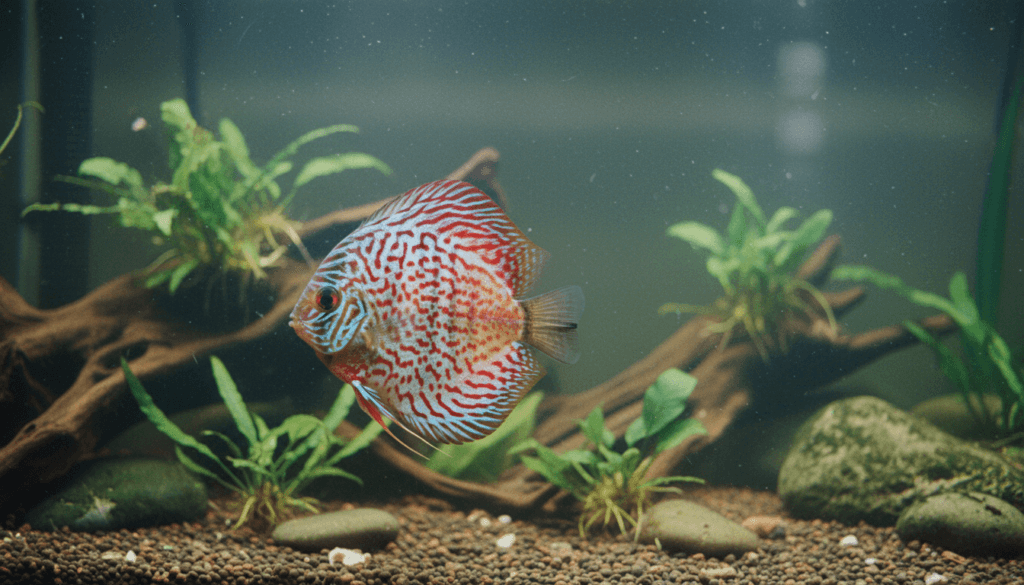
Origins trace back to selective breeding of wild Symphysodon species native to the Amazon basin. Modern Pigeon Blood Discus varieties owe their color to careful line breeding, which makes understanding genetics useful when buying or breeding. Health, temperament, and color intensity can vary between breeders and strains, so look for well-conditioned specimens that display bright eyes, rounded fins, and consistent color rather than patchy, stressed hues.
Appearance
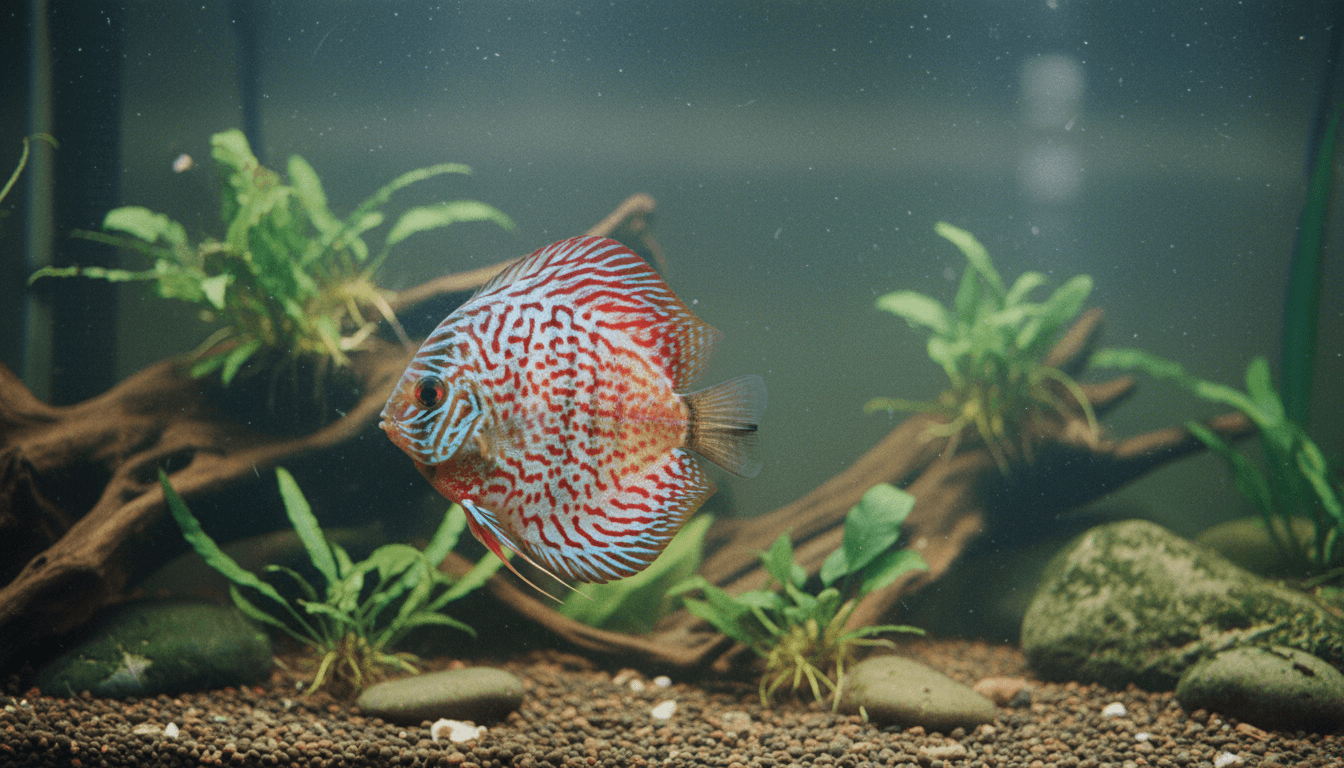
Pigeon Blood Discus display a distinctive round, laterally compressed body with a short snout and tall dorsal and anal fins that form a pleasing oval silhouette. Color ranges from pale salmon to blazing cardinal red, often with subtle mottling or faint vertical bars on younger fish. Mature birds—or rather fish—develop a deeper, almost glassy red that seems to glow under soft, warm lighting.
Scale texture on Pigeon Blood Discus is smooth and close-set, producing a satin sheen when water parameters and diet are optimal. Fin edges are usually rounded rather than sharply pointed; damaged or torn fins can be a sign of poor water quality or aggression. Eye color often complements body color—reddish-orange irises heighten the overall look. Size typically reaches 12–15 cm (4.5–6 inches) in well-kept adults, though some show strains appear slightly taller-bodied.
Habitat
Pigeon Blood Discus thrive in quiet, planted tanks that mimic slow-moving Amazon tributaries. Best results come from an aquascape with soft substrates, scattered driftwood, and floating cover to filter bright light—this creates the dappled, shaded conditions discus prefer. A gentle current simulates natural conditions without stressing the fish; avoid high-flow pumps that force constant swimming.
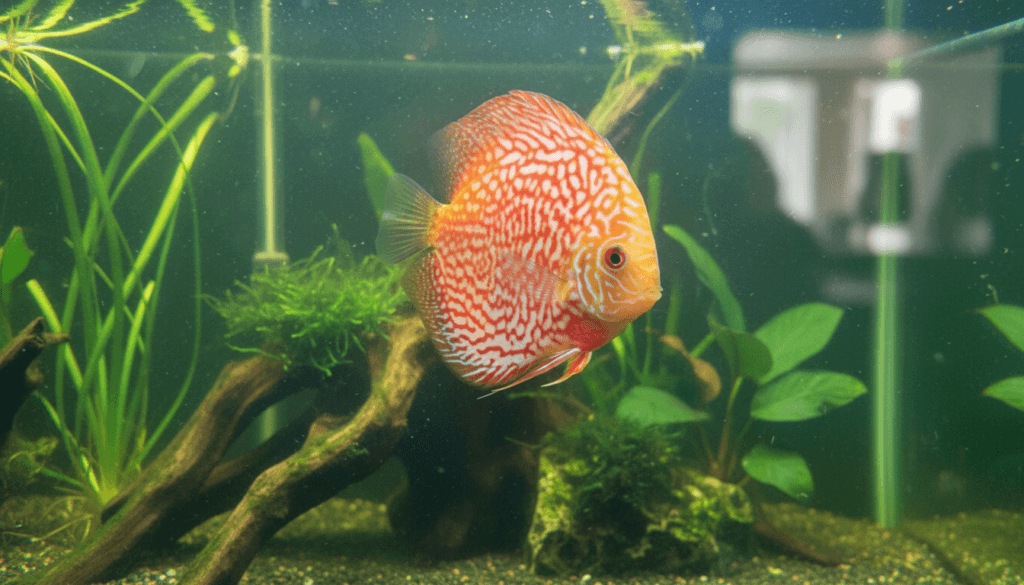
Water chemistry matters: slightly acidic, soft water replicates rainforest streams. Temperature is on the warm side for tropical fish, which increases metabolism and aids digestion. Stable conditions are critical—frequent spikes or drops in temperature, pH, or hardness will dull color and encourage disease. Many aquarists craft a dedicated discus biotope with tannin-stained water, leaf litter, and Amazonian plants to give these fish the security they need to show full coloration and natural behaviors.
Сare and maintenance
Water parameters
Temperature range: 28–31°C (82–88°F). pH: 5.5–6.8 for ideal color expression; up to 7.2 is tolerated if stable. General hardness (GH): 1–6°dGH (very soft). Keep carbonate hardness (KH) low to maintain pH stability in softer water. Use a reliable heater with an external thermometer and consider a second backup thermometer to prevent unnoticed drift. Regular testing for ammonia, nitrite, nitrate, and pH is essential; discus respond rapidly to poor water quality.
Tank size
Minimum volume: 200 liters (50 gallons) for a small group. Recommended dimensions: length over height—at least 120 cm (48 inches) long with a taller profile (height around 50–60 cm / 20–24 inches) to allow vertical swimming and display. Larger tanks (300–500 liters / 80–130 gallons) are significantly better for stable water and social dynamics, especially if breeding or keeping multiple breeding pairs.
Filtration and water flow
Filter type: canister or high-capacity hang-on-back with biological media; many discus keepers prefer canister filters or external sumps. Include sponge pre-filters to protect fry and reduce suction. Preferred flow intensity: low to moderate—gentle, diffused movement rather than violent currents. Incorporate a spraybar or adjustable outlet to spread flow across the tank and avoid channeling a single strong current.
Substrate and decor
Substrate type: fine sand or smooth, dark aquarium gravel to accentuate color and protect delicate ventral fins. Driftwood: medium sized branches to create sheltered zones and tannin release; choose aquarium-safe woods like mopani or Malaysian driftwood. Rocks: smooth river stones only, placed to form caves or resting ledges. Plants: sturdy Amazonian species—Amazon swords, cryptocorynes, anubias, and floating plants like salvinia or frogbit for shade. Leaf litter: Indian almond leaves release tannins and create microbial films that encourage natural foraging.
Lighting
Intensity: low to moderate—avoid high-intensity LEDs that wash out color and stress the fish. Duration: 8–10 hours per day with a gradual ramp-up and ramp-down to simulate dawn and dusk. Shade: floating plants or partial shading are recommended so discus can choose dimmer areas; dramatic color shows up best under softer light rather than bright, white illumination.
Water changes
Frequency: 25–50% weekly. For heavily stocked or breeding tanks, 30–50% every 3–4 days often yields the best health and color. Use aged, dechlorinated water matched for temperature and pH to the tank; sudden changes in chemistry stress discus. Investing in a small mixing container to prepare water batches avoids temperature or pH drift during exchanges.
Lid or cover
Discus are not jumpers by nature, but a tight-fitting lid is still advisable to maintain stable temperature, reduce evaporation, and prevent cautious jumping during loud disturbances. A secure cover with openings for filtration and feeding helps retain humidity and heat—both important when keeping water warm for these tropical fish.
Social behavior and group size
Minimum group size: 5–6 individuals to allow natural schooling dynamics and reduce stress. Social structure: semi-social and hierarchical—pairs will form but full territorial aggression is uncommon when kept in proper group sizes and spacious tanks. Discus often establish subtle leader-follower behavior; isolating a single fish can lead to chronic stress and poor color.
Additional behavioral care tips
Observe for shy or reclusive behavior after tank changes—this usually indicates water instability or bullying. Provide multiple hiding spots and maintain stable feeding routines; discus appreciate a predictable environment. Rotate feeding locations and vary diet textures to stimulate natural foraging. Watch for gill-flaring or frequent surface gasping—this can signal low oxygen, high nitrates, or disease and should prompt immediate water checks.
Compatibility
Pigeon Blood Discus are best kept with peaceful tankmates that tolerate warm, soft water. Good companions include certain tetras, dwarf corydoras, and peaceful larger schooling species that won’t nip fins. Avoid boisterous, territorial, or fast-moving fish such as large barbs, cichlids from African rift lakes, or aggressive catfish that demand similar space.
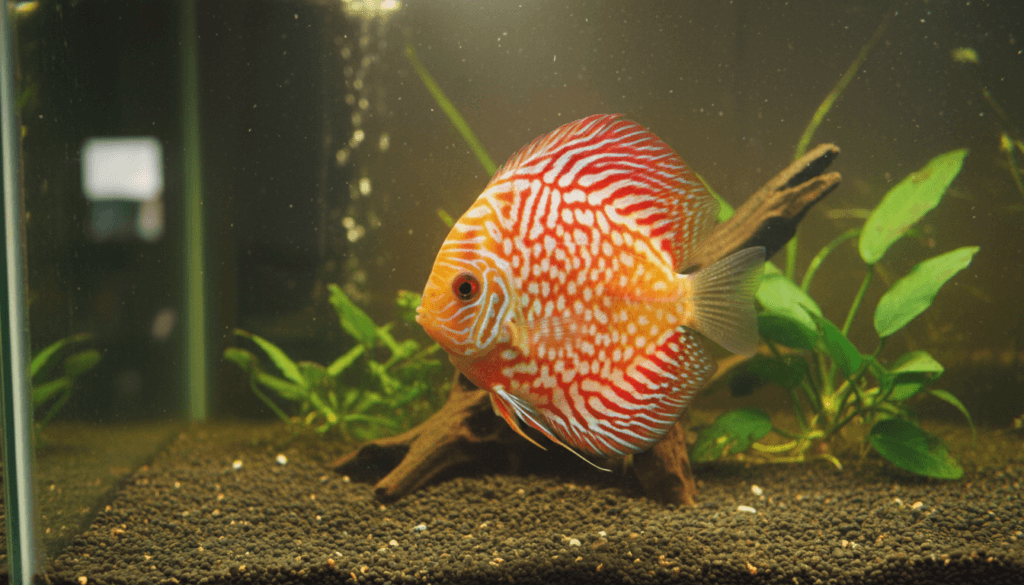
When choosing tankmates, consider water parameter overlap and dietary needs. Small characins like cardinal tetras or rummy nose tetras adapt well to discus conditions. Otocinclus and small corydoras species help control algae and detritus without challenging discus for food. Introducing tankmates slowly and after establishing a stable discus group reduces stress and prevents pecking order problems.
Juvenile Pigeon Blood Discus may be bullied by overly active species; keep juveniles in species-only tanks or with similarly sized peaceful fish until they mature. Pay attention to temperature tolerance—many common community fish prefer cooler water than discus, so pick companions known to thrive at 28–31°C.
Feeding the Pigeon Blood Discus
Pigeon Blood Discus respond to a varied, high-protein diet that supports vibrant color and steady growth. Start meals with a base of quality prepared foods—pellets or granules formulated specifically for discus or other high-protein cichlids. Complement staples with frozen and live foods such as bloodworms, brine shrimp, black soldier fly larvae, or chopped earthworms to boost color and condition.
Feed frequency: 2–3 times per day for adults, with smaller, more frequent portions for juveniles (3–4 times daily). Remove uneaten food within a few minutes to maintain water quality; discus are messy eaters and leftovers lead to ammonia spikes. For color enhancement, occasional use of carotenoid-rich foods and spirulina can deepen red and orange pigmentation, but avoid over-supplementation that may cause digestive upset.
When conditioning for a show or spawning, increase high-protein live food and perform more frequent water changes to offset the increased bioload. Monitor growth and body condition—overfeeding leads to fat accumulation that dulls color and shortens lifespan. Offer variety: freeze-dried options are convenient but should not replace frozen or live items entirely.
Feeding tips that many experienced keepers pass on: introduce new foods slowly, use feeding rings to concentrate pellets and reduce waste, and occasionally fast for 24 hours to clear digestive tracts. Also, feed during dimmer periods when discus feel secure and more likely to come out and eat in view of the aquarist.
Reproduction
Breeding Pigeon Blood Discus requires careful preparation—pair formation, pristine water, and slightly warmer temperatures encourage spawning. Many breeders condition potential pairs with live foods and multiple small feedings daily, aiming for plump, energetic adults. A separate breeding tank of 100–200 liters (25–50 gallons) with a vertical slate or broad-leaf plant for egg laying gives the best chance for fry survival.
Pairs are often monogamous and will clean a chosen surface thoroughly before depositing eggs in a neat, vertical line. After spawning, parents guard and fan the eggs to prevent fungus; these eggs hatch in about 48–72 hours at 29–30°C. Fry initially feed on sticky mucus secreted by parents for the first 7–10 days—this unique behavior demands that parents remain healthy and undisturbed during brooding.
If parents eat eggs or fry, separate eggs into a hatching chamber with gentle aeration or remove adults until fry are free-swimming. Once fry begin free-swimming, provide microscopic first foods such as infusoria or commercial liquid fry foods before transitioning to newly hatched brine shrimp and finely crushed high-protein powder.
Genetics matter: breeding two intensely colored Pigeon Blood Discus often produces stronger red expression in offspring, but recessive traits can cause unexpected patterning. Keep lineage records and avoid close inbreeding if possible. Rearing fry requires frequent small water changes, very clean conditions, and careful attention to water temperature and softness for optimal growth and pigment development.