Albino Guppy Care: Stunning White Livebearer Guide
General information
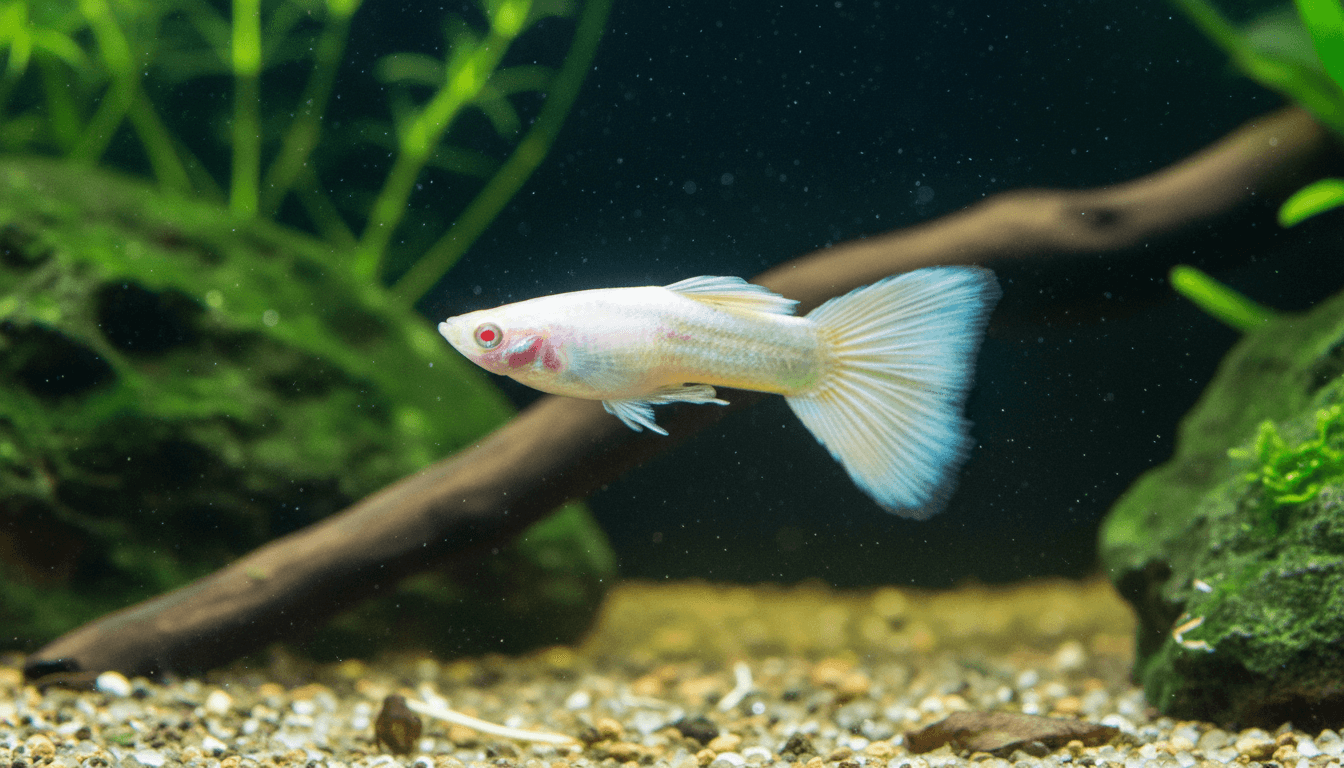
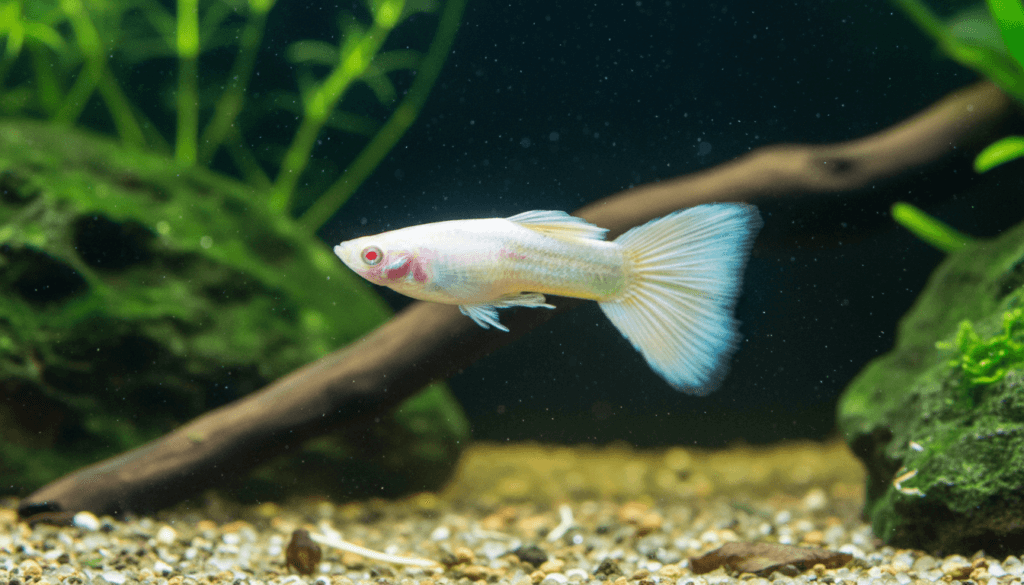
Albino Guppy are a visually striking mutation of the common guppy that strip away melanin to reveal pale, translucent bodies and often red or pink eyes. You will notice that these fish catch light differently than colored guppies; they appear almost luminous under aquarium lighting. Albino Guppy are popular with beginners and experienced aquarists alike because of their dramatic look, active behavior, and relatively straightforward care requirements.
Albino Guppy originate from selective breeding of Poecilia reticulata stock rather than a separate wild species. Their genetics remove dark pigments, so scales, fins, and eyes reflect underlying tissues and carotenoid pigments. This makes color variations like albino mosaic, albino pastel, and albino cobra particularly eye-catching. Many aquarists breed Albino Guppy intentionally to fix traits, but that comes with special responsibilities regarding inbreeding and health monitoring.
Albino Guppy are livebearers, meaning eggs develop internally and fry are born fully formed. That reproductive strategy translates into higher fry survival in properly managed community tanks. However, Albino Guppy can be slightly more sensitive to poor water quality than darker guppy strains because their reduced pigmentation can correlate with more delicate skin and light sensitivity. With thoughtful husbandry, Albino Guppy thrive and reward you with constant activity and frequent, colorful displays.
Appearance
Albino Guppy display a range of looks despite the single “albino” label. Typical traits include a pale ivory to pearly-white body, translucent fins, and eyes that range from pink to red due to visible blood vessels. Fins may carry remaining carotenoid-based colors—yellows, oranges, and reds—so Albino Guppy showing bright tail patterns are common.
Sexual dimorphism remains obvious: males are slimmer with longer, ornate tails and more flamboyant patterns, while females are rounder, larger, and more muted. Albino Guppy males often show elaborate finnage (delta, veil, or lyre tails) and small mosaic markings. Females may exhibit subtle dorsal markings or a faint gravid spot; when pregnant, the gravid spot becomes darker and more prominent against the pale body.
Unusual facts: albino strains sometimes display slightly different behavioral cues because lack of melanin affects visual contrast and mate recognition. This may lead to altered courtship intensity or changes in how males display fins. Observant keepers can notice that Albino Guppy males sometimes court more gently, relying on movement and fin flares rather than bold color flashes.
Habitat
Albino Guppy thrive in planted, calm-water aquaria that mimic slow-moving tributaries. In the wild, guppy ancestors inhabit shallow streams with plenty of cover and moderate plant growth. Recreating that environment helps Albino Guppy feel secure and reduces stress, which is particularly important because pale fish can be more prone to skin abrasions and parasitic infections when stressed.
Think of a habitat with dense marginal plants, floating cover, and open swimming lanes. Live plants such as Java moss, hornwort, and floating water sprite provide shelter for fry and break sightlines to reduce aggression. Driftwood and leaf litter simulate tannin-rich waters that many guppy strains enjoy; the resulting soft, slightly stained water can make Albino Guppy colors look warmer and less stark under aquarium lights.
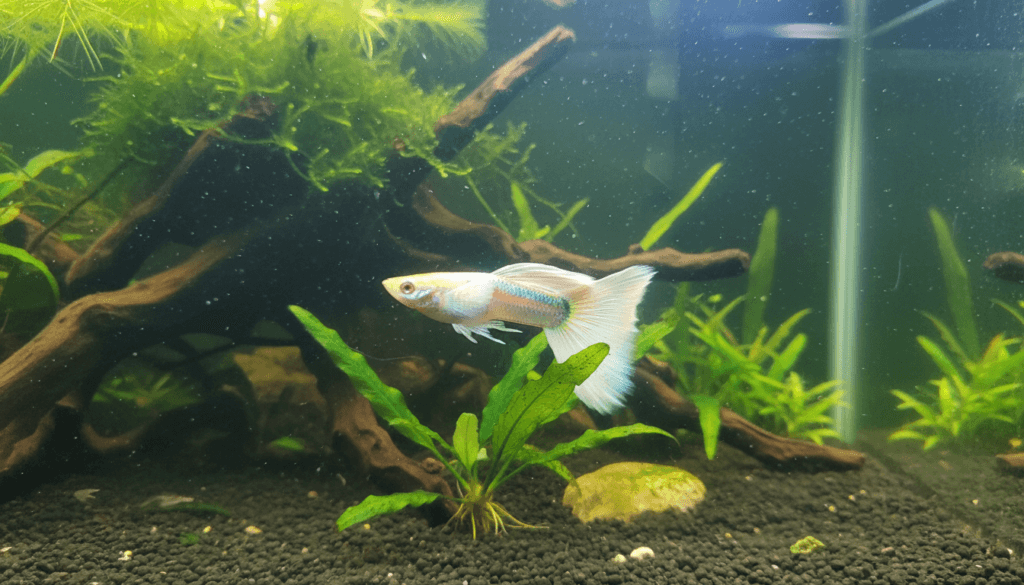
Temperature gradients and gentle currents will be appreciated. Positioning a sponge filter near the rear of the tank creates a localized slow flow while keeping surface agitation light. Albino Guppy will use mid-water and upper zones frequently, so allow room for males to display and for females to find quiet corners when carrying fry.
Сare and maintenance
Water parameters
Temperature range: 22–28°C (72–82°F). pH: 6.8–7.8. General hardness (GH): 5–15 dGH. Keep parameters steady; Albino Guppy tolerate a range but sudden swings in temperature or pH stress them. Slightly softer, mildly acidic water suits many strains, but many Albino Guppy have been bred in moderate-hard conditions—aim for the mid-point of the ranges and adjust slowly.
Tank size
Minimum volume: 40 liters (10 gallons). Recommended dimensions: longer tanks preferred over tall—length should exceed height so that horizontal swimming lanes exist for displays and schooling. For a small group, a 60 cm (24 in) long tank with a low profile is ideal. Bigger is always better if breeding or keeping more males.
Filtration and water flow
Filter type: sponge filter recommended for fry safety; canister or hang-on-back filters are fine if intake is covered. Preferred flow intensity: low to moderate. Avoid strong currents that flatten fins and exhaust Albino Guppy; gentle circulation keeps detritus suspended for filtration while maintaining calm pockets where fish can rest.
Substrate and decor
Substrate type: fine gravel or sand for ease of cleaning and plant rooting. Driftwood: small pieces provide cover and tannins. Rocks: smooth river stones for visual contrast. Plants: dense marginal plantings and floating species. Leaf litter: Indian almond leaves or oak leaves add microhabitat and promote biofilm for fry food.
Lighting
Suggest intensity: low to medium. Duration: 8–10 hours daily. Shade: partial shade appreciated, provided by floating plants. Albino Guppy can be light sensitive; harsh bright lights may stress them or bleach delicate fins. Use dappled lighting or adjustable LEDs to simulate morning and afternoon light cycles.
Water changes
Frequency: weekly. Percentage: 20–30%. Increase to 30–40% during heavy feeding or when fry are present. Regular changes maintain stable chemistry and reduce nitrates, which Albino Guppy handle poorly when levels climb. Vacuum substrate corners to prevent detritus buildup without disturbing plants.
Lid or cover
Yes, Albino Guppy jump. A tight-fitting lid or hood is necessary to prevent escapes. Small gaps can allow nimble guppies to leap out, especially when startled by predators or sudden movements.
Social behavior and group size
Minimum group size: 6 individuals. Social structure: livebearers with a peaceful, harem-style dynamic. Keep one or two males per several females to reduce male harassment. Too many males in a small tank causes constant chasing; balance male-to-female ratio to preserve fin integrity and reduce stress.
Additional behavioral care tips
Offer visual barriers and plant thickets for females to retreat from persistent males. Introduce new fish slowly to the community and quarantine to limit disease transfer. Rotate decorations occasionally to refresh territories and reduce repetitive chasing. Use dim red or warm light in the evenings when exercising fry to prevent overexposure.
Compatibility
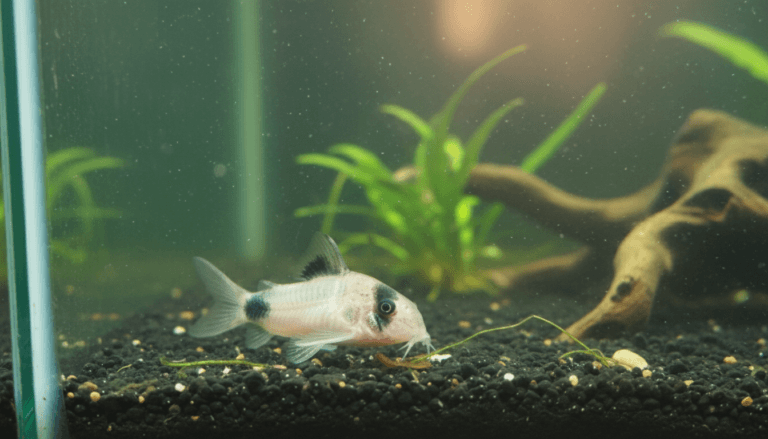
Albino Guppy make excellent community residents when paired with similar-sized, peaceful species. Suitable tankmates include small tetras, rasboras, peaceful dwarf cichlids, and small catfish like Corydoras. When selecting companions, choose species that occupy different vertical space or are similarly peaceful so that Albino Guppy are neither bullied nor become bullies themselves.
Avoid large or aggressive fish, fin-nippers (such as some barbs), and predatory species that will see guppies as snacks. Albino Guppy fins can be tempting targets; long-tailed varieties especially suffer when kept with boisterous tankmates. Also, avoid overly competitive feeders that outcompete guppies at the surface.
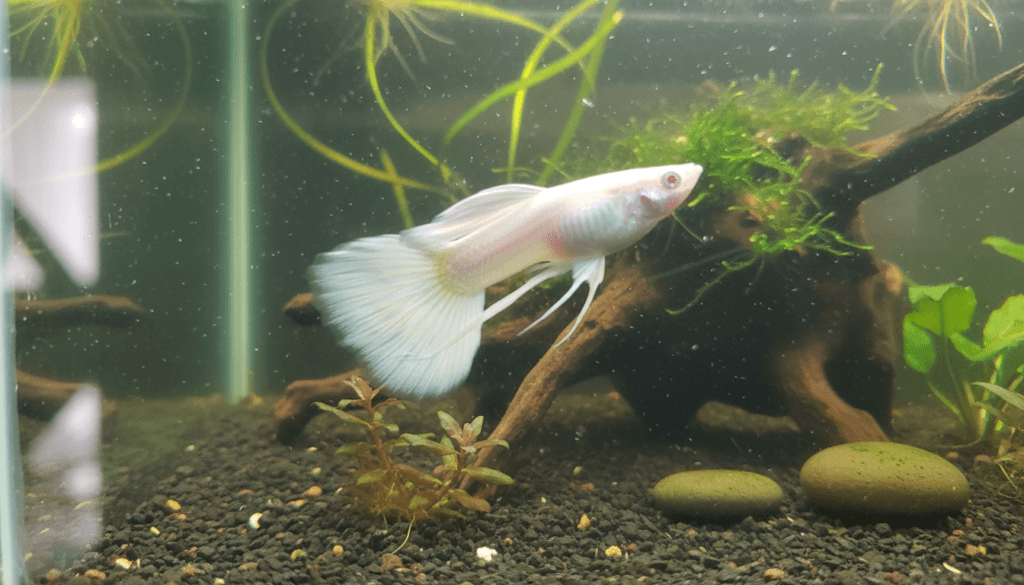
Compatibility with invertebrates is generally good: cherry shrimp and mystery snails often coexist peacefully, though shrimp populations may be reduced if dense plant cover and hiding spots are lacking. Adding floating plants and moss mats helps fry escape predation from adult tankmates, improving coexistence and success when keeping mixed communities.
Feeding the Albino Guppy
Albino Guppy are omnivores with hearty appetites. A varied diet keeps color and health strong: high-quality flake or micro-pellet as a staple, supplemented with frozen or live foods like daphnia, brine shrimp, and bloodworms. Feeding small amounts 2–3 times daily prevents overfeeding and nutrient spikes that compromise water quality.
Specific tips: pulse-feeding with live foods once or twice weekly intensifies breeding readiness and enriches fry nutrition. Grind pellets for fry and offer infusoria or powdered fry foods in the first days after birth. Rotate vegetable matter—spirulina flakes, blanched zucchini, or blanched peas—to provide fiber and maintain digestive health.
Watch for picky eaters: Albino Guppy can sometimes prefer live foods and ignore dried options. Training them gradually to accept a quality pellet reduces cost and simplifies nutrition. Feed no more than your fish can consume in two minutes to avoid fouling the tank.
Reproduction
Albino Guppy breed readily under good conditions. As livebearers, females hold fertilized eggs internally and release free-swimming fry about every 21–30 days, depending on temperature and food. Males are eager and will attempt to mate frequently; maintaining a ratio of at least one male to three females preserves female condition and increases fry output without excessive harassment.
Recognizing pregnancy: females develop a rounded belly and a darker gravid spot near the anal fin. Timing a breeding setup: provide dense plantings, spawning mops, or a separate breeding tank with a sponge filter and warmer water near 26–28°C to accelerate development. When fry appear, immediate removal of adults or provision of ample cover helps fry survival—Albino Guppy adults may eat offspring if hungry or densely stocked.
Genetics and variability: albino is a recessive trait. Breeding two Albino Guppy typically produces 100% albino offspring if both parents are homozygous for the gene. Crossing an albino with a wild-type will yield carriers rather than visible albinos. Selective line breeding can fix fin shapes and pattern types but watch for reduced vigor from inbreeding. Many aquarists maintain multiple unrelated albino lines and rotate breeders to preserve health.
Raising fry: feed tiny meals frequently—infusoria, microworms, or finely crushed flakes—then graduate to baby brine shrimp as they grow. Provide charcoal-filtered or lightly tannin-stained water and frequent partial water changes to sustain water quality during rapid population increases. Marking juveniles by color intensity and tail shape helps choose future broodstock while avoiding accidental sibling pairings that reduce genetic diversity.