Betta Fish Mastery: Complete Care Guide for Bettas
General information
Betta Fish have won the hearts of aquarists and casual hobbyists alike thanks to their dramatic fins, expressive faces, and hardy baseline temperament. If curiosity struck and a Betta Fish is under consideration, expect a fish that balances striking spectacle with manageable care—when given the right environment. Many aquarists appreciate that Betta Fish are labyrinth fish, meaning they can breathe atmospheric air through a specialized organ; that trait changes how they behave and what setup helps them thrive.
Unusual facts that often surprise newcomers: Betta Fish are not a single uniform species in the wild but belong to a genus with several species, many of which display different color palettes and behaviors. Selective breeding has produced hundreds of color and fin-type varieties, from halfmoon to plakat to candle tail. Also, Betta Fish can recognize their keepers and learn simple routines, such as feeding times or responding to tapping, although tapping is not recommended as a training method.
Appearance
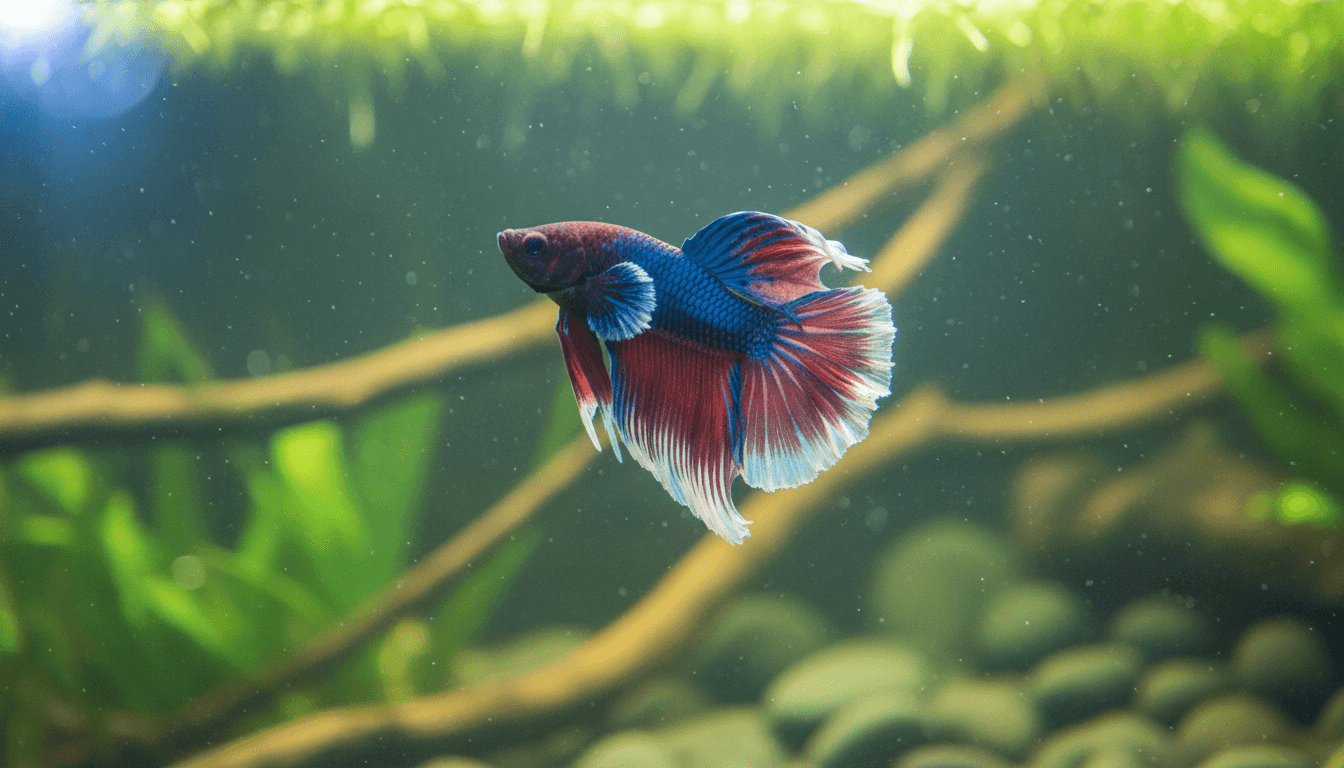
Betta Fish show a remarkable range of visual forms. Wild-type fish tend to be more muted—olive, brown, and iridescent green—while captive-bred varieties can be electric blues, deep reds, bi-colors, and multi-hued iridescent patterns. Fins range from short and functional (plakat) to elaborate veils, crowns, and double-tails. Scale types include metallic and marble patterns created by genetic mosaics. When selecting specimens, look for clear eyes, intact fins without fraying, and smooth scales that shimmer without dull patches.
Betta Fish coloration can change temporarily with mood, stress, breeding condition, or water quality. Blues and reds often intensify during courtship and peak health, while dulling or clamped fins suggest a need to check water parameters and behavior. Tail damage near the base is more serious than frayed edges and can indicate bacterial or fungal issues. For collectors seeking rare patterns, marble genetics are unpredictable: individual fish may flip colors throughout life, sometimes providing dramatic mid-life transformations.
Habitat
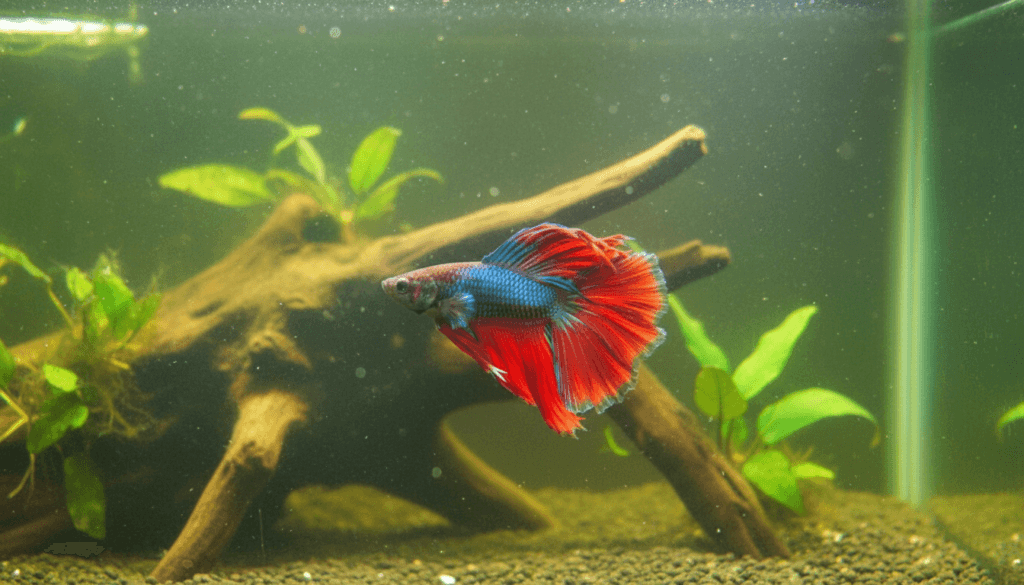
Betta Fish thrive in habitats that mimic slow-moving tropical waters—shallow streams, flooded rice paddies, and dense vegetation zones. Recreating that environment means focusing on warm water, a gentle current (or none), plenty of cover, and access to surface air. Plants—real or high-quality silk—offer both hiding places and resting spots near the surface. Driftwood, leaf litter, and smooth stones create tactile complexity and enrich natural foraging behaviors.
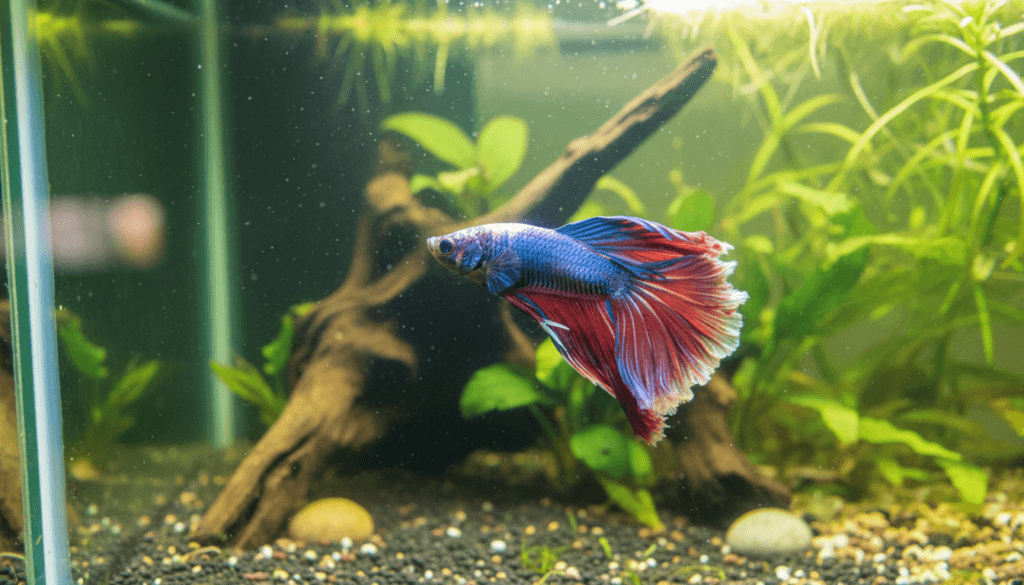
An authentic micro-biotope approach yields rewards: include tannin-rich driftwood and Indian almond leaves to soften water chemistry and release gentle humic acids that enhance natural coloration and reduce pathogen loads. Leaf litter also provides microhabitats for biofilm and microfauna, which Betta Fish explore and pick at—an enriching supplement to prepared diets.
Сare and maintenance
Water parameters
Water parameters that suit the majority of Betta Fish are: temperature 24–30°C (75–86°F), pH 6.0–7.5, and general hardness (GH) 3–12 dGH. Stability is more important than exact numbers: sudden swings stress gill tissues and the labyrinth organ. If local tap water skews hard or alkaline, mixing reverse-osmosis water with tap water can create softer water within the recommended GH range. Use an aquarium heater with a thermostat for steady temperatures and a reliable test kit for pH, ammonia, nitrite, nitrate, and GH measurements.
Tank size
Minimum volume recommendations: a solitary Betta Fish should have at least 15 liters (4 US gallons), but 20–40 liters (5–10 US gallons) is strongly recommended for comfort and stability. Preferred tank dimensions emphasize length over height: a long footprint (for example, 60 cm length × 30 cm depth × 30 cm height) allows horizontal swimming and creates space for territorial demarcation. Avoid tall, narrow bowls; they limit horizontal territory and reduce usable water volume.
Filtration and water flow
Choose a gentle filter—sponge filters, low-flow hang-on-back filters with adjustable outlets, or small canister filters with spray bars oriented to reduce current. Betta Fish prefer slow to minimal flow because strong currents can damage long fins and make surface access difficult. A sponge filter powered by an air pump offers biological filtration with very low flow and removes the risk of fry or shrimp being sucked into intakes. Keep flow intensity adjustable so flow can be dialed back during molting, illness, or for fry-raising.
Substrate and decor
Substrate choices range from fine sand to smooth gravel; avoid sharp substrates that can nick delicate fins. Include driftwood pieces, smooth river rocks, caves sized for retreat, and dense plant coverage. Indian almond leaves or oak leaves replicate natural detritus, releasing tannins and providing surfaces for biofilm development. Floating plants offer shady surface coverage and resting spots for Betta Fish. When arranging décor, aim to create multiple micro-territories: a shaded corner, a surface rest near leaves, and an open swim lane for exercise.
Lighting
Light intensity should be moderate; avoid glare and intense full-spectrum lights that stress shy fish. A daily photoperiod of 8–10 hours is ideal for plant health and Betta Fish circadian rhythm. Provide dim zones or shaded areas using floating plants or overhang décor. For color-enhancing effect, low to medium-output LED fixtures with adjustable intensity work well—reduce intensity if fin clamping or hiding increases.
Water changes
Water change frequency and volume: weekly partial changes of 20–30% are a solid baseline for established tanks with live plants and low bioload. For nano setups or tanks without robust biological filtration, perform 30–50% weekly changes. When starting a new tank, more frequent smaller changes help stabilize cycling: 20% every other day until ammonia and nitrite are zero. Always condition replacement water to remove chlorine and chloramines and match temperature closely to avoid shocking fish.
Social behavior and group size
Betta Fish are commonly solitary and territorial, especially males. For community-style setups, a single male per tank is the safe choice; multiple males will fight unless partitioned. Females can be kept in small groups called sororities, but a minimum of four to six females is essential to spread aggression; provide ample hiding places and taller tanks with horizontal visual barriers. For mixed-species tanks, prioritize peaceful, non-fin-nipping companions; avoid mid-water schooling fish that outcompete for food or fin-nippers like some barbs.
Additional behavioral care tips
Enrichment keeps Betta Fish mentally active: introduce floating target training, rearrange décor occasionally to stimulate exploration, and provide live or frozen micro-foods that resemble natural prey. Watch for excessive flaring, which becomes stressful when continuous; brief flares are normal as territory defense or display. If a Betta Fish stops using the surface, check for poor water quality or respiratory distress; the labyrinth organ often prompts surface visits, so absence of surface breathing can be an early warning sign.
Compatibility
When pairing tankmates, prioritize calm species that inhabit different water columns and lack an urge to nip. Compatible companions often include small peaceful catfish (Corydoras, though some species prefer cooler temps), certain tetras (choose larger, non-nippy types and avoid fin-nippers), and bottom-dwelling shrimp or snails if the Betta Fish is not excessively predatory. Avoid aggressive or fin-nipping species (e.g., tiger barbs, many danios) and brightly colored or long-finned fish that may trigger territorial attacks.
Introducing tankmates requires observation: first, place all fish in sight of each other in a quarantine or adjacent tank to watch for stress reactions. Provide visual barriers and escape routes in the main tank. If keeping shrimp or snails, add hiding places and dense plant cover; some Betta Fish will ignore them, while others view them as snacks. For community tanks, maintain at least 80–100 liters (20–25 US gallons) to reduce territorial overlap and give room for clear territories.
Feeding the Betta Fish
Diet quality drives color, fin condition, and longevity. Betta Fish need protein-rich diets because they evolved as insectivores and surface hunters. High-quality pellets formulated for bettas provide balanced nutrition and convenient portion control. Supplement pellets with frozen or live foods—daphnia, artemia (brine shrimp), bloodworms, and black soldier fly larvae—to stimulate natural hunting behaviors and enrich coloration.
Feeding routine: offer small portions 1–2 times daily, matching what the Betta Fish can consume in 2–3 minutes. Avoid overfeeding; uneaten food degrades water quality rapidly. A practical hack is to use a blink feeding schedule: fast for 24 hours once per week to aid digestion and reduce bloating risk. For picky eaters, alternate pellet brands, mash frozen foods with a fork, or use feeding tweezers to hand-feed and create a bond that helps detect appetite changes early.
Reproduction
Breeding Betta Fish is rewarding but demands planning. Betta Fish are bubble-nest builders: males build nests of saliva-coated bubbles at the surface to house eggs and guard fry. To prepare, quarantine potential breeders and condition them with high-protein foods for 2–3 weeks. Set breeding tank parameters slightly softer and warmer (26–28°C / 79–82°F), maintain low water flow, and add floating plants or a densely planted area for nest anchoring.
The staged process: introduce a conditioned female in a clear divider or container so the male can display without direct contact; watch for vertical barring on the female and increased fin-flaring—signs she is receptive. When both show readiness, a supervised introduction may result in a courtship embrace; eggs are released and collected in the male’s bubble nest. After spawning, remove the female promptly to avoid aggression; the male will tend the nest and retrieve falling eggs.
Post-spawn care: the male guards the nest for 48–72 hours until fry become free-swimming, at which point remove the male to prevent predation. Feed fry infusoria, microworms, or commercial liquid fry foods initially, progressing to baby brine shrimp and finely crushed pellets as they grow. Maintain impeccable water quality—very small fry are sensitive to ammonia and nitrite spikes. Raise fry in shallow, heavily planted tanks or use partitions to protect slower-growing individuals; water changes of 20–30% daily may be required during intensive rearing stages.
For hobbyists aiming to preserve unique color morphs, keep meticulous records: record parent combinations, date of spawn, water conditions, and any genetic oddities. Marble and gummy phenotypes may arise unpredictably; isolating and documenting these lines helps control outcomes in future breedings.
Throughout the care journey, attentive observation yields the best outcomes. Watch for appetite shifts, fin condition changes, or altered activity that signal adjustments in husbandry are needed. With thoughtful habitat design, consistent water chemistry, and variety in diet, Betta Fish will showcase their full repertoire of color and personality—rewarding keepers who invest in their health and enrichment.