Panda Corydoras Care: A Friendly Guide for Hobbyists
General information
Small, active, and unmistakable, Panda Corydoras are a favorite among aquarists who want peaceful bottom dwellers that add personality without demanding constant fuss. Panda Corydoras arrive from South American streams and rivers and adapt readily to home aquaria when kept in proper groups. The species name is often used to describe Corydoras panda, a compact catfish known for its black eye patches and dorsal spot. If planning a tank with Panda Corydoras, expect energetic digging, frequent social interactions, and a fish that rewards careful observation with charming behaviors.
Appearance
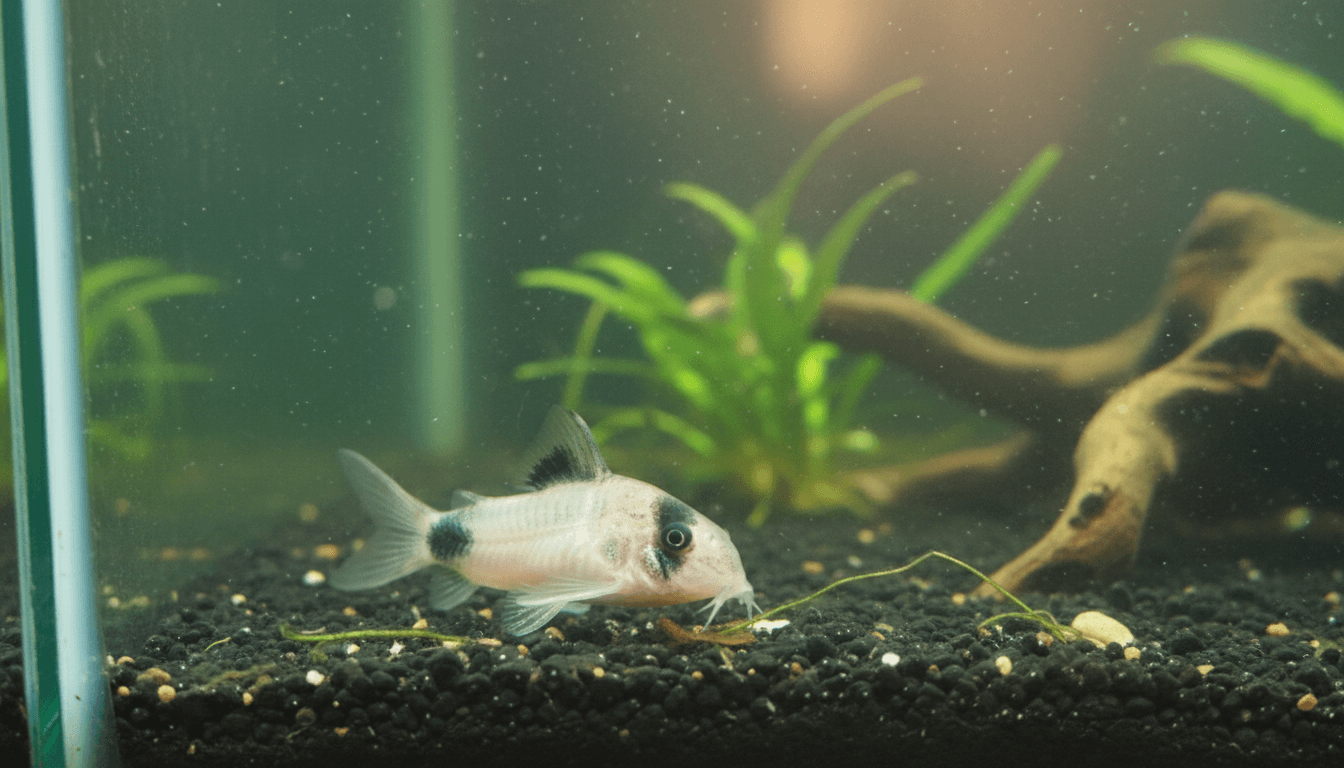
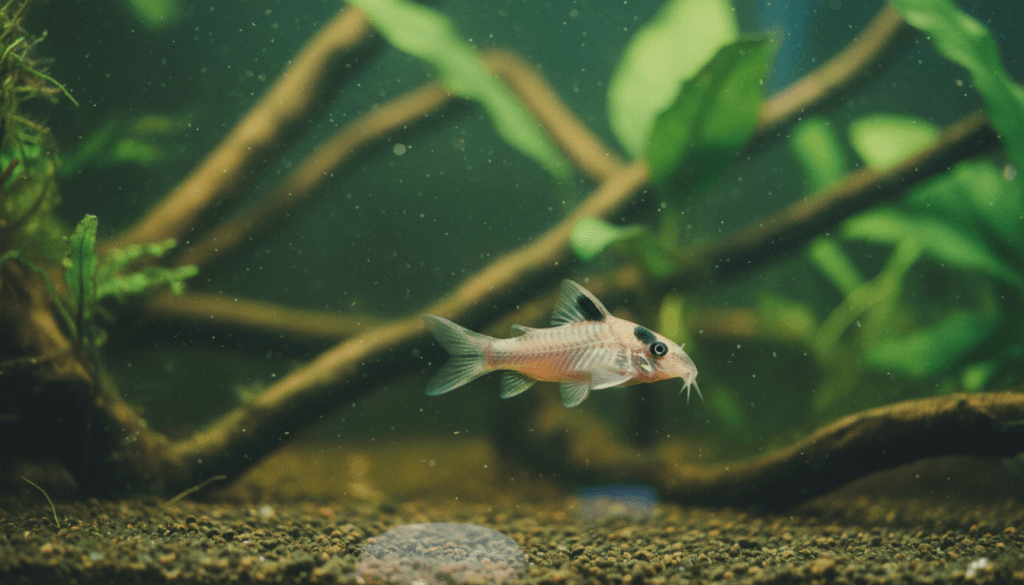
Panda Corydoras present a striking black-and-white pattern that makes them easy to identify: a black mask across the eyes, a black dorsal patch, and a dark tail spot against a silvery-beige body. Adults remain compact, typically 4–5 cm (1.5–2 inches) in length. Their body is armored with overlapping bony plates rather than scales, and barbels around the mouth are constantly probing the substrate. During courtship or mild stress, colors may deepen slightly; healthy Panda Corydoras often display glossy blacks and a faint olive sheen along the back. Juveniles show a similar pattern but with softer contrast and more translucent fins.
Habitat
In the wild, Panda Corydoras inhabit slow-moving tributaries with sandy or fine-gravel beds, leaf litter, and scattered roots. The natural waters are often shaded by riparian vegetation, creating dappled light and abundant detritus as a food source.
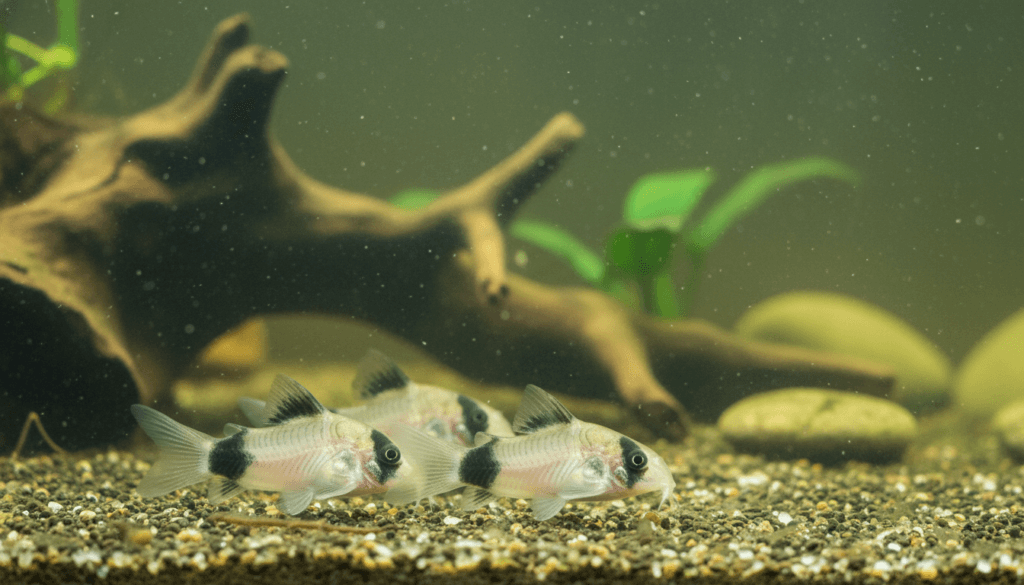
Recreating parts of that habitat in the aquarium helps trigger natural behaviors: soft substrates to sift through, plenty of hiding spots, and subdued lighting. While comfortable in a variety of planted setups, Panda Corydoras show a clear preference for aquaria that mimic the quiet, sheltered places of their native range.
Сare and maintenance
Water parameters
Maintain temperature between 22–26°C (72–79°F). Keep pH slightly acidic to neutral, ideally 6.0–7.2. General hardness (GH) should be soft to moderately hard: 2–12 dGH. Stability matters more than hitting exact numbers; gradual shifts stress Panda Corydoras. When setting up a new system for them, aim for steady conditions and allow enough cycling time to establish a reliable nitrogen cycle. If tap water is hard or alkaline, consider reverse osmosis or mixing with softer water to reach preferred softness.
Tank size
Minimum volume: 40 liters (10 gallons) for a small group, but 60–80 liters (15–20 gallons) is recommended for comfort. Prioritize length over height—an aquarium with at least 60–80 cm (24–32 inches) of horizontal swimming space is ideal. Panda Corydoras are bottom-oriented and appreciate extended footprints for foraging and social swimming; a long shallow tank mimics their natural environment better than a tall, narrow one.
Filtration and water flow
Use a gentle hang-on-back (HOB) or canister filter with mechanical and biological media. Sponge prefilters are excellent because they protect small barbels and fry while providing low flow refuge. Preferred flow intensity is low to moderate—enough to oxygenate and move detritus into the filter without creating strong currents that disrupt the fishes’ bottom foraging. Ensure outflow is diffused if using powerheads; direct high-speed jets make Panda Corydoras uncomfortable.
Substrate and decor
Fine sand is the best substrate; it protects barbels and supports natural sifting behavior. Smooth, rounded fine gravel can work if sand isn’t available, but avoid sharp-edged substrates. Add pieces of driftwood, smooth river stones, and plenty of broad-leaved plants like Anubias or Cryptocoryne for cover. Include leaf litter—Indian almond leaves or beech leaves—not only for aesthetics but also to supply tannins and microfauna that Panda Corydoras will pick through. Caves and overturned pots create resting and breeding sites.
Lighting
Moderate to low lighting suits Panda Corydoras. Aim for about 6–8 hours of light daily and provide shaded zones with floating plants or taller stems. A dimmer schedule in the morning and evening reduces stress and more closely matches their crepuscular activity pattern. Avoid intense, direct light on the substrate; shade helps maintain natural behavior and keeps colors from looking washed out.
Water changes
Perform 20–30% water changes weekly. For heavily stocked tanks or planted systems with frequent feeding, increase to 30–40% weekly, or two 20% changes per week. Fresh water should match temperature and general chemistry to reduce shock. Regular partial changes keep nitrate levels low and help maintain the subtle tannin balance Panda Corydoras prefer.
Lid or cover
Panda Corydoras are not strong jumpers but may occasionally leap during active moments or if startled. Use a tight-fitting lid with small ventilation gaps to prevent escapes and maintain humidity for plants. Ensure any openings are too narrow for tiny catfish to slip through, and avoid strong surface agitation that could force fish upward.
Social behavior and group size
Minimum group size: 6 individuals. Panda Corydoras are schooling catfish that display more confidence, vibrant behavior, and reduced stress when kept in modest groups. Social structure is non-territorial in a peaceful community; dominance shows as minor positioning at favored hiding spots, not aggressive chases. Groups of 8–12 show the most natural schooling choreography and allow shy individuals to integrate comfortably.
Additional behavioral care tips
Introduce new tankmates slowly to avoid bullying; rearrange decor slightly when adding new fish to distribute territories. Provide feeding stations and varied foods so dominant eaters don’t monopolize meals. Observe barbels for signs of digging wear or fungus; a healthy barbel set remains intact and active. During breeding or stress, Panda Corydoras may become more reclusive—extra hiding places and leaf litter will keep them comfortable.
Compatibility
Panda Corydoras get along with many peaceful community fish. Ideal tankmates include small tetras, rasboras, dwarf cichlids (non-aggressive species), and peaceful shrimp. Avoid large, boisterous, or fin-nipping species; heavy mid-water predators stress bottom dwellers. When mixing with larger fish, watch for competition at feeding time and consider separate feeding zones. For nano tanks, choose small schooling mid-level species and keep a group of Panda Corydoras small but social—remember that space for bottom foraging remains crucial.
Feeding the Panda Corydoras
Feeding Panda Corydoras requires variety and attention to behavior. Offer high-quality sinking pellets or wafers as staple foods, supplemented with live or frozen items like bloodworms, daphnia, and brine shrimp. Small amounts of blanched vegetables—zucchini or peas—add fiber. Because Panda Corydoras are bottom feeders, target-feed sinking foods and scatter small morsels so shy individuals can access meals. Rotate protein sources to avoid nutritional deficiencies; feeding 1–2 times daily in small amounts prevents excess waste. Occasional live foods stimulate natural foraging and can enhance breeding readiness.
Reproduction
Breeding Panda Corydoras is accessible to aquarists who replicate seasonal cues and provide suitable spawning surfaces. Many hobbyists trigger spawning by performing cooler, slightly softer water changes over several days, then restoring warmer temperatures to simulate the rainy season. A separate breeding tank with a fine sandy substrate, flat stones or java fern leaves, and low current helps eggs adhere and fry survive. During spawning, observe the classic “T-position” courtship where the male clasps the female; eggs are often glued to the underside of leaves or aquarium glass. Remove adults after eggs are laid to avoid egg predation in smaller setups.
Incubation lasts about 3–5 days depending on temperature. After hatching, feed fry infusoria or commercially prepared liquid fry foods for the first days, then graduate to newly hatched brine shrimp and finely crushed sinking foods. Keep excellent water quality with gentle filtration; sponge filters are ideal. Growth is steady with good care—expect juvenile patterns to deepen over several months as adults reach full coloration.
Unusual facts about Panda Corydoras: they possess a low oxygen tolerance thanks to a modified intestine that can gulp atmospheric air and absorb oxygen—this does not replace proper aeration, but it explains why they survive in low-oxygen microhabitats. Also, their barbels host a micro-ecosystem of beneficial microbes that help process detritus; keeping barbels clean through proper substrate choice is more important than it appears. Observing subtle postures—like slight lateral shimmies during foraging—reveals social cues and can help identify when a fish is unwell long before obvious symptoms appear.
Quick practical checklist for success with Panda Corydoras: keep them in groups of six or more, use fine sand, provide gentle filtration, perform regular partial water changes, offer a diverse diet with sinking options, and include leaf litter and shaded areas. With these core practices, Panda Corydoras will display lively schooling, healthy barbels, and regular breeding behaviors in most well-managed community tanks.
For aquarists wanting a charismatic, manageable, and educational addition to a planted or community aquarium, Panda Corydoras represent a top choice. Their small size and engaging group dynamics make them especially suitable for beginners and advanced hobbyists alike—provided the key environmental needs are met and social groups are respected. Watching a healthy school of Panda Corydoras sift through sand and exchange quick glances becomes one of the most rewarding low-maintenance experiences in the hobby.