Lemon Tetra Care: Bright, Peaceful Schooling Fish
General information
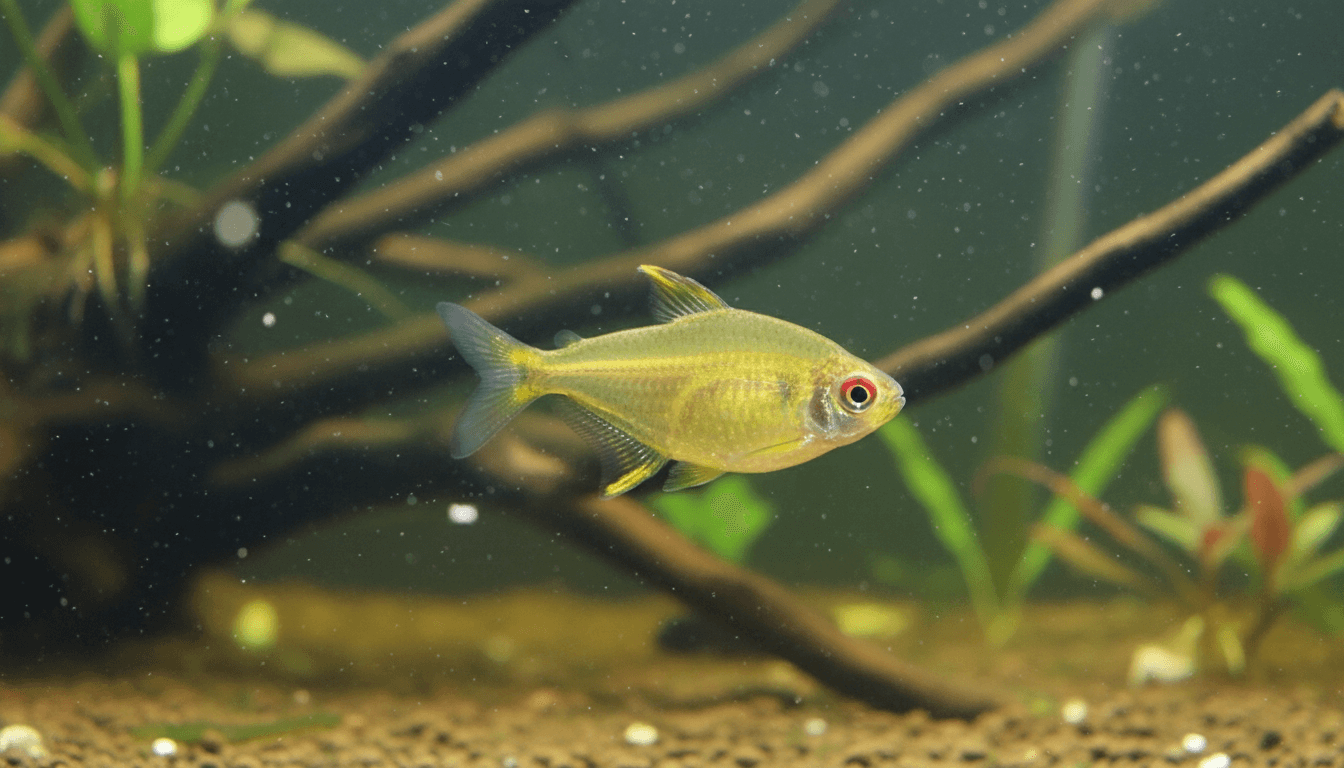
If a compact, sunny splash of color is wanted in a planted community tank, the Lemon Tetra is an outstanding choice. Lemon Tetra are small characins prized for their lemon-yellow wash, peaceful temperament, and lively schooling behavior. Native to slow-moving freshwater systems in northern South America, these tetras adapt well to planted aquaria when basic needs are met.
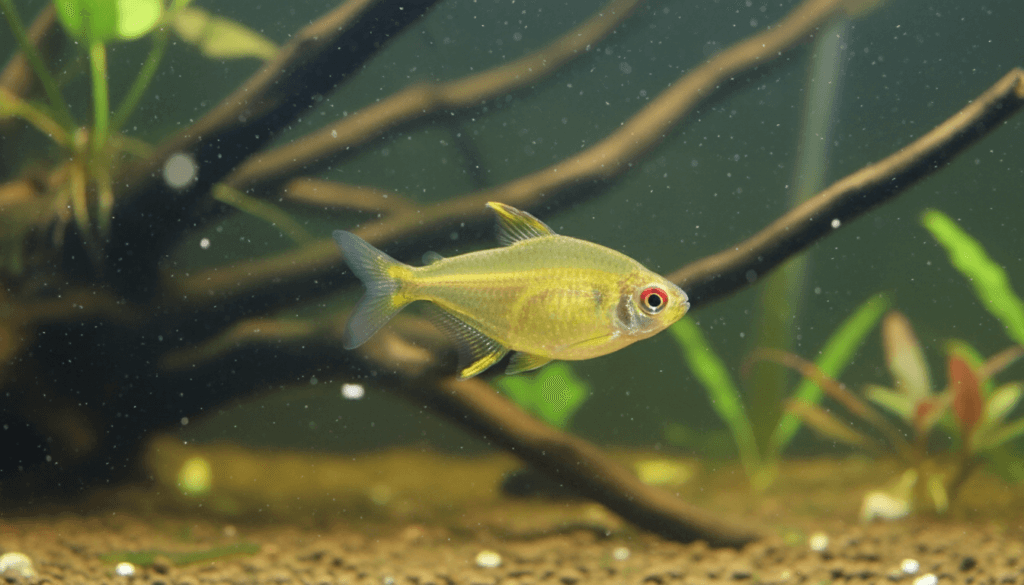
Expect adult Lemon Tetra to reach roughly 3–4.5 cm (1.2–1.8 inches) in most captive-bred populations, live for 3–6 years under consistent care, and respond strongly to water quality, social groupings, and lighting. Many aquarists favor captive-bred Lemon Tetra because they are hardier, less stressed, and often show brighter color than recently wild-caught specimens.
Appearance
Lemon Tetra wear a delicate lemon-yellow body that can range from pale gold to a vivid citrus glow depending on mood and water conditions. The body is typically semi-translucent with a silvery sheen on the flanks; fins are mostly clear with subtle yellow highlights. Males are generally slimmer and may present sharper dorsal fin tips, while females often appear fuller-bodied, especially when gravid. Some strains show a faint darker patch near the dorsal area or a tiny black spot on the dorsal fin edge — not a disease, but a natural variation. Observing a healthy school of Lemon Tetra reveals a shimmering, cohesive movement pattern that helps display individual color at its best.
Habitat
In the wild, Lemon Tetra inhabit shaded, tannin-stained streams and tributaries with lots of leaf litter and slow currents. Recreating that environment in the home aquarium does wonders for coloration and behavior. A soft, slightly acidic environment with dimmer light and plenty of plant cover mimics the natural habitat and reduces stress.
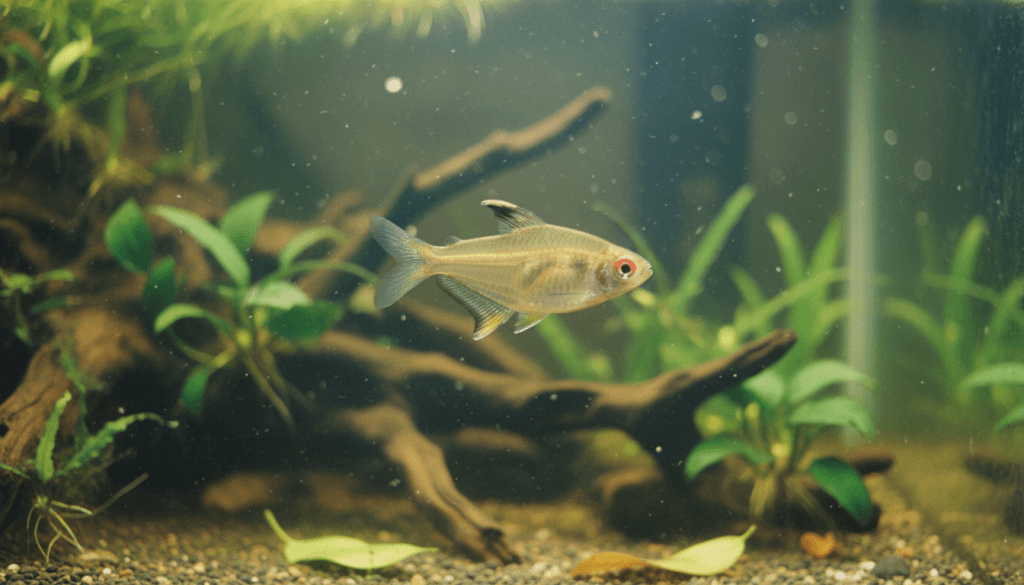
Floating plants and overhanging vegetation are common in their natural range and provide comfort as well as surface shade. Fallen leaves, submerged roots, and driftwood not only create microhabitats but also slowly release tannins that produce a warm, tea-colored water column favored by many Lemon Tetra.
Сare and maintenance
Water parameters
Temperature: 22–28°C (72–82°F). pH: 5.5–7.0 is ideal, though Lemon Tetra will tolerate slightly neutral conditions up to 7.5 with acclimation. General hardness (GH): 1–10 dGH is preferred; very hard water dulls color and can impair breeding. When breeding, many hobbyists lower pH to around 5.5–6.5 and keep GH near 1–4 dGH to encourage spawning and egg viability.
Tank size
Minimum volume: 60 L (15 US gallons) for a small school of 6–8 fish. Recommended tank dimensions: prioritize length over height — aim for at least 80 cm (31 inches) in length with a height of 30–40 cm (12–16 inches) for comfortable swimming space and natural schooling patterns. For larger groups (10–15 individuals), increasing to 100–150 L (26–40 US gallons) is far better for water stability and social health.
Filtration and water flow
Choose a filter that provides reliable biological filtration with gentle to moderate flow. Sponge filters, canister filters with adjustable outlets, or hang-on-back units with flow diffusers work well. Lemon Tetra prefer low to moderate currents that mimic slow streams; avoid strong jets that push them into corners. A gentle surface agitation is helpful for oxygen exchange without stressing schooling behavior.
Substrate and decor
Fine sand or dark, smooth gravel enhances their color and reduces stress compared with bright substrates. Add driftwood and smooth rocks to create hiding lanes and visual breaks. Dense planting with stem plants, rosette plants, and floating plant mats offers shade and vertical structure. Incorporate leaf litter, such as Indian almond leaves, to provide tannins, microfauna, and natural foraging spots. Java moss or spawning mops also serve as refuge and breeding sites.
Lighting
Moderate light intensity works best; aim for 6–8 hours daily. Too-bright lighting can make Lemon Tetra skittish and reduce color contrast, so plan for areas of shade created by floating plants or taller stem plants. A programmable light schedule that ramps up and down helps mimic dawn and dusk, making fish feel secure and more likely to display natural behaviors.
Water changes
Perform regular water changes of 20–30% weekly. For smaller tanks or heavily stocked groups, consider 25–30% twice weekly. Routine partial changes help maintain stable parameters, reduce nitrates, and refresh dissolved organic matter that contributes to natural coloration when using leaf litter.
Lid or cover
Use a tight-fitting lid. Lemon Tetra are not notorious jumpers but can leap during feeding frenzies or if startled, so a secure cover prevents losses and keeps humidity stable for tank fixtures.
Social behavior and group size
Minimum group size: 6 individuals; recommended group size: 8–15 for best schooling behavior. Lemon Tetra are schooling, peaceful fish that gain confidence and display color more strongly in larger groups. They show no significant territorial aggression as adults; social dynamics rely on schooling cohesion and occasional mild hierarchy during feeding.
Additional behavioral care tips
Offer varied microhabitats inside the tank such as midwater plant columns and open swim lanes. Keep a calm feeding routine to reduce skittishness. When introducing new tankmates or rearranging decor, do so gradually — sudden changes provoke hiding and skittering. Long-term exposure to stable conditions produces calmer schooling and more vivid Lemon Tetra coloration.
Compatibility
Lemon Tetra make excellent members of peaceful community tanks. Compatible tankmates include other small characins, rasboras, dwarf Corydoras, Otocinclus, peaceful dwarf cichlids like Apistogramma (choose peaceful species), and small peaceful rainbowfish. Avoid large or aggressive fish, fin-nippers such as some barbs, and predatory cichlids that view small tetras as prey.
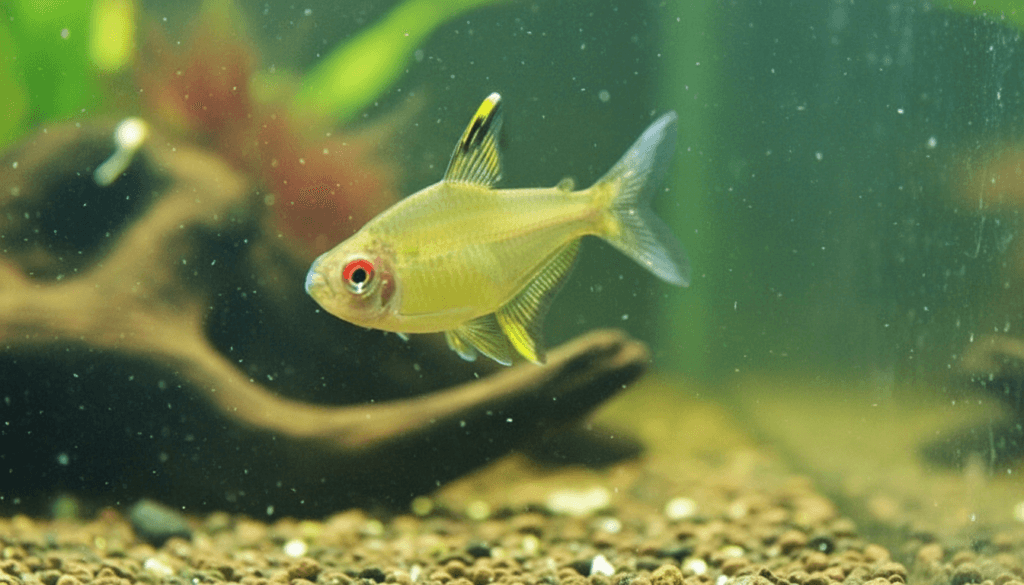
Also steer clear of overly boisterous tankmates that stress schooling patterns; Lemon Tetra perform best with companions that occupy slightly different microzones — bottom-dwellers for detritus control and mid-to-top swimmers for a balanced visual spread. When building a community, match water parameter needs: pair Lemon Tetra with species tolerant of soft, slightly acidic water for the healthiest mixed tank.
Feeding the Lemon Tetra
Lemon Tetra are omnivores with a preference for protein-rich live and frozen foods that accentuate color. A varied diet keeps them robust and lively: high-quality flake food as a staple, supplemented with frozen bloodworms, daphnia, brine shrimp, and micro-pellets. For weekly variety, offer live blackworm or microworms to stimulate natural foraging. Occasional vegetable matter such as blanched spinach or spirulina flakes supports digestive balance. Feeding frequency: small portions twice daily; avoid overfeeding — remove uneaten food after two minutes to prevent water quality decline. When conditioning for breeding, increase protein-rich live foods for several weeks to boost vitality and improve spawning readiness. If trying to enhance the lemon hue specifically, feeds containing natural carotenoids from krill or astaxanthin-rich supplements can intensify yellow tones without harming health.
Reproduction
Breeding Lemon Tetra is achievable for hobbyists with reasonable patience. They are egg scatterers with no parental care; adults will consume their own eggs if left together. For a successful spawn, set up a dedicated breeding tank with soft, slightly acidic water (pH 5.5–6.5), low hardness (1–4 dGH), and a temperature around 25–27°C (77–81°F). Include fine-leaved plants, Java moss, or a spawning mop to catch eggs. Dimmed lighting and tannin-rich water from leaf litter reduce stress and encourage spawning activity.
Introduce a conditioned trio or small group (a ratio of 2 males to 1 female often works) to the breeding tank in the evening; eggs are typically deposited in the early morning. After spawning, remove adults promptly to prevent egg predation. Eggs hatch in roughly 24–48 hours depending on temperature; fry become free-swimming in 4–6 days and require infusoria or commercial liquid fry food at first, progressing to newly hatched Artemia nauplii and finely crushed flakes as they grow. Regular small water changes and very gentle aeration help maintain water quality for developing fry; raising several hundred fry will require frequent separation into growing groups to avoid stunting from overcrowding.
Unusual breeding tip: introducing a small amount of peat or leaf tannins and maintaining slightly dim lighting can trigger multiple spawns over weeks — Lemon Tetra may spawn repeatedly if conditions remain consistent. Also note that captive-bred strains sometimes lose a tiny bit of breeding vigor compared to wild strains, but careful conditioning and high-quality live foods almost always restore robust spawning behavior.
Watching Lemon Tetra develop from elegant adults to active spawners and then to flourishing fry is highly rewarding. With attention to water chemistry, gentle flow, proper schooling numbers, varied diet, and a planted, tannin-rich environment, Lemon Tetra will thrive and reward you with lively displays, social cohesion, and bright color that bring a slice of tropical stream life into the aquarium.