Bolivian Ram: Complete Care, Behavior, Breeding
General information
Bolivian Ram is a peaceful dwarf cichlid prized for approachable temperament and attractive, warm colors. If this fish is chosen, expect a compact, inquisitive species that forms pair bonds and thrives in calm, planted setups. Lifespan typically ranges from about four to six years under stable conditions. This guide focuses on actionable setup, daily care, and reproducible breeding steps so that you can provide a confident, fish-centered environment rather than a decorative afterthought.
Appearance
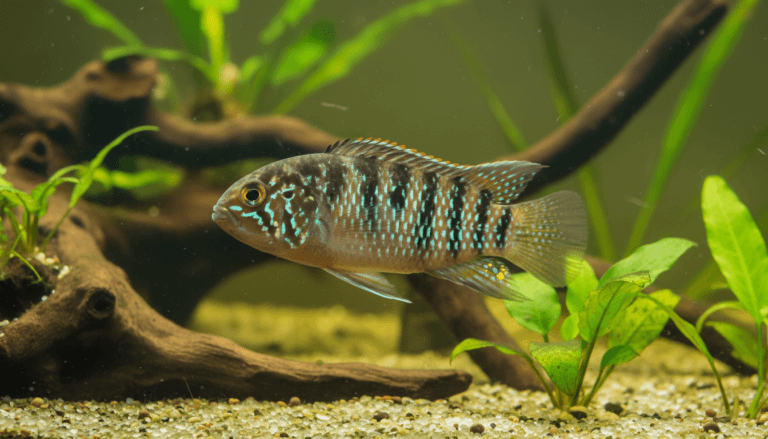
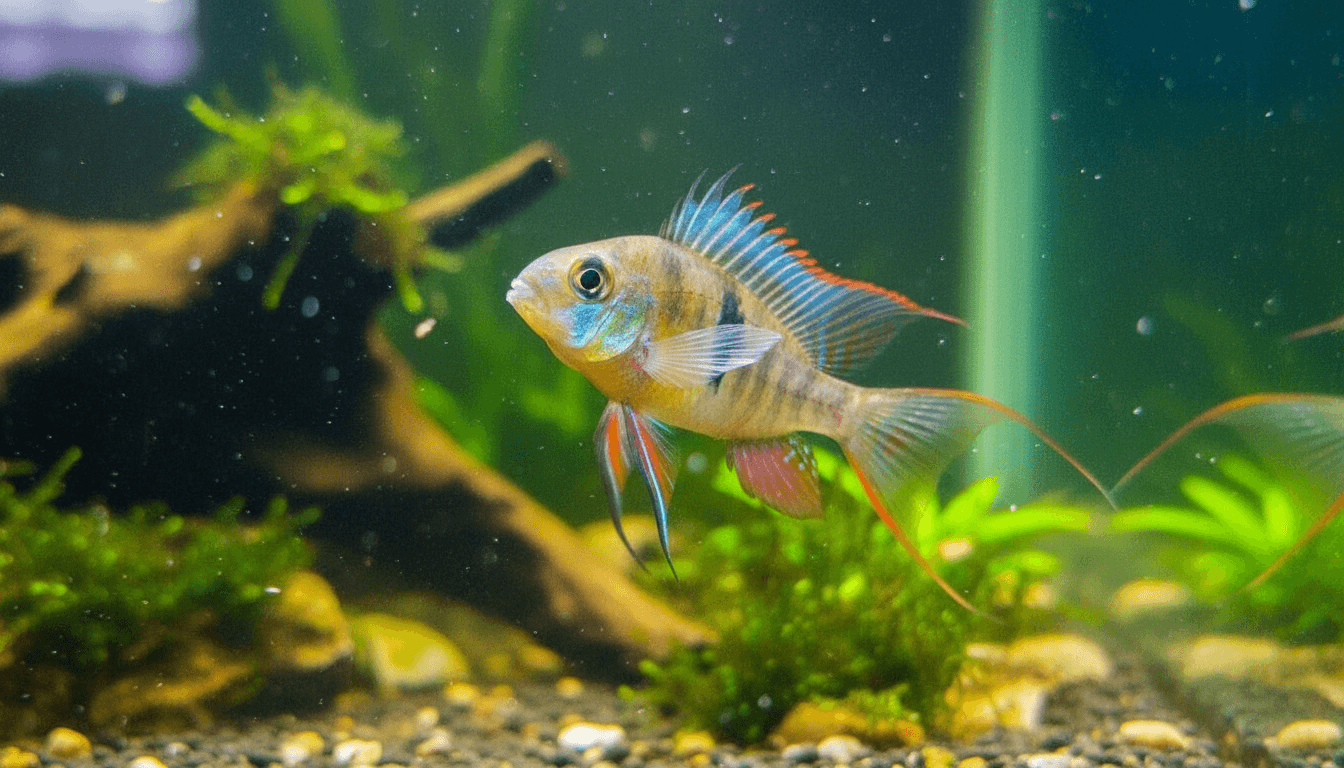
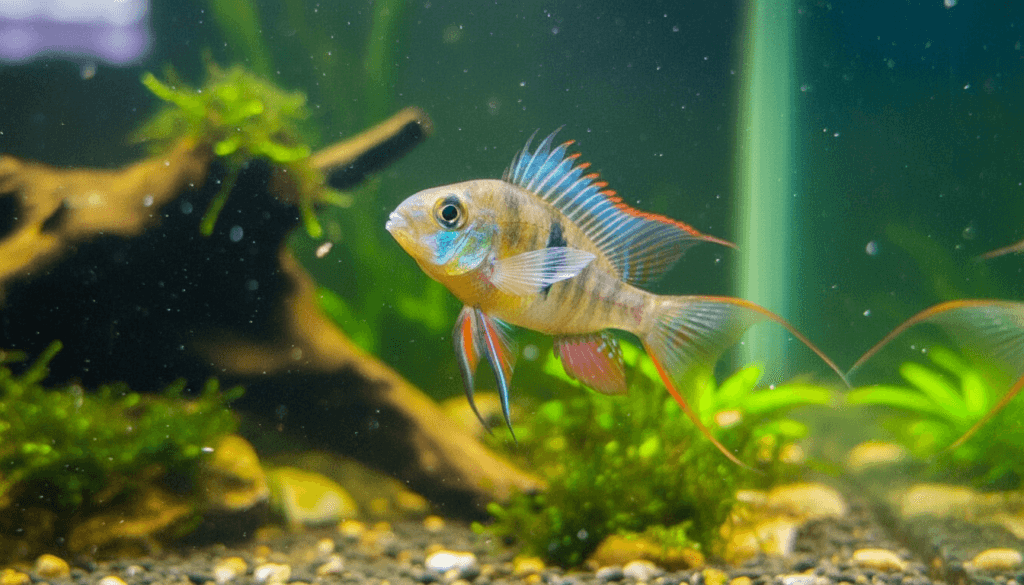
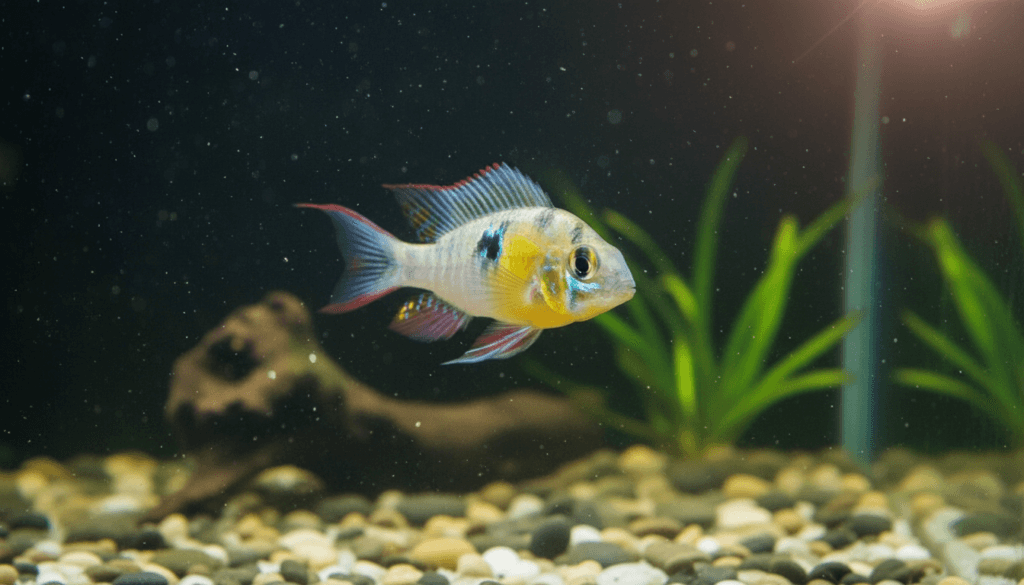
Bolivian Ram shows a mellow palette: sandy to golden body tones, a pinkish face with subtle blue flecking on the cheeks, and vertical dark bands along the flanks in some individuals. Bolivian Ram adults reach roughly 6–8 cm (2.5–3 in) standard length; males often display slightly larger size and a taller dorsal fin with elongated rays. Color intensity fluctuates with mood, breeding condition, and water quality—duller colors commonly indicate stress or poor diet, while vivid reds and blues usually signal excellent health and nutritional status.
Habitat
In the wild, Bolivian Ram inhabits slow-moving, tannin-stained waters with soft substrates, leaf litter, and root tangles. Natural habitats include small streams, floodplain pools, and marginal lagoons across parts of Bolivia, Brazil, and Paraguay. Replicating this soft, sheltered environment in the home tank—using sand, driftwood, and leaves—encourages natural behaviors like gentle sifting and pair formation. Bolivian Ram tolerates slightly brackish conditions only rarely; fresh, stable water is the core requirement.
Сare and maintenance
Water parameters
Maintain temperature between 24–28°C (75–82°F). Aim for a pH of 6.0–7.5, with slightly acidic to neutral water preferred for breeding. General hardness (GH) in the range of 3–12 dGH suits most captive populations; softer water (3–6 dGH) improves breeding success and intensifies color in many specimens. Sudden swings in pH, temperature, or hardness stress the fish—use slow adjustments and monitor with a reliable test kit.
Tank size
Minimum recommended volume is 75 liters (20 US gallons) for a bonded pair, with larger systems (100–150 liters / 26–40 US gallons) preferred for groups or community layouts. Prioritize length over height: an aquarium length of 90 cm (36 in) or more gives Bolivian Ram room to establish territories and display natural swimming patterns. For small groups (3–6 individuals), provide at least 120 liters (32 US gallons) with plenty of horizontal space.
Filtration and water flow
Choose gentle but efficient filtration: canister filters with adjustable outlets, sponge filters, or hang-on-back units fitted with spraybars or deflectors work well. Flow intensity should be low to moderate; avoid strong currents that stress the fish or prevent normal foraging. If the filter output is strong, direct it into a baffle or plant mass to diffuse flow. Filtration should provide mechanical, biological, and some chemical polishing (activated carbon for tannin control only if needed).
Substrate and decor
Fine sand is the preferred substrate—Bolivian Ram will sift lightly and display on soft bottoms. Add smooth river stones, a few flat slate or rock plates for spawning, and branches or driftwood to create shaded corridors. Include leaf litter (Indian almond, oak) to release tannins and mimic their biotope; this helps reduce stress and encourages natural feeding behavior. Use robust foreground plants (Java fern, Anubias pinned to wood) and mid-ground stem plants to create cover while leaving open swimming lanes.
Lighting
Moderate lighting (about 0.3–0.6 W/L or equivalent PAR levels for low-to-medium-light plants) works best; intense light stresses shy individuals and promotes algae on rocks and leaves. Provide 6–8 hours of light daily, with benefit in short midday dimming or areas of shade created by floating plants. When encouraging breeding, slightly lower light and increased cover often reduce skittishness and increase spawning confidence.
Water changes
Perform regular water changes of 25–35% weekly to maintain water quality. In densely stocked community tanks, increase to 30–40% twice weekly. Always match temperature and pH to the tank before adding replacement water. For more natural conditions, use water treated to remove chlorine/chloramines and, when desired, gently remineralized to provide stable GH compatible with the chosen targets.
Social behavior and group size
Bolivian Ram is semi-territorial and not a schooling fish. Minimum group setup is a mated pair, but some aquarists keep small groups (3–6) to allow natural mate selection and reduce harassment of single fish. When kept in groups, watch for dominant males establishing territories; provide multiple hiding spots to diffuse aggression. In community tanks, pair bonds form and both parents typically guard fry diligently. Keep one pair per suitably large tank to avoid year-round territorial fights.
Additional behavioral care tips
Bolivian Ram appreciates a stable routine: consistent feeding times, low-stress handling, and gentle tank maintenance. Use dimmed lights and broad-leaf plants if fish appear shy. Provide shallow caves or overturned clay pots for retreats. During seasonal conditioning for breeding, gently raise temperature by 1–2°C and increase high-quality protein in the diet for 7–10 days; this often stimulates pairing and spawning activity. Watch for subtle signals—flaring, color intensification, and synchronized cleaning of a flat surface herald imminent spawning.
Compatibility
Bolivian Ram fits well in peaceful community aquariums alongside tetras, rasboras, small catfish (Corydoras), and non-aggressive gouramis. Avoid large, boisterous species and fin-nippers (e.g., tiger barbs, some danios) that stress or harass rams. When adding tankmates, prioritize species that prefer similar water parameters and low to moderate flow. Territorial disputes can occur if multiple dominant males are present in a small tank; spacing, visual barriers, and plant thickets reduce conflict. Bolivian Ram can coexist with bottom-dwellers, provided the latter are not overly competitive during feeding.
Feeding the Bolivian Ram
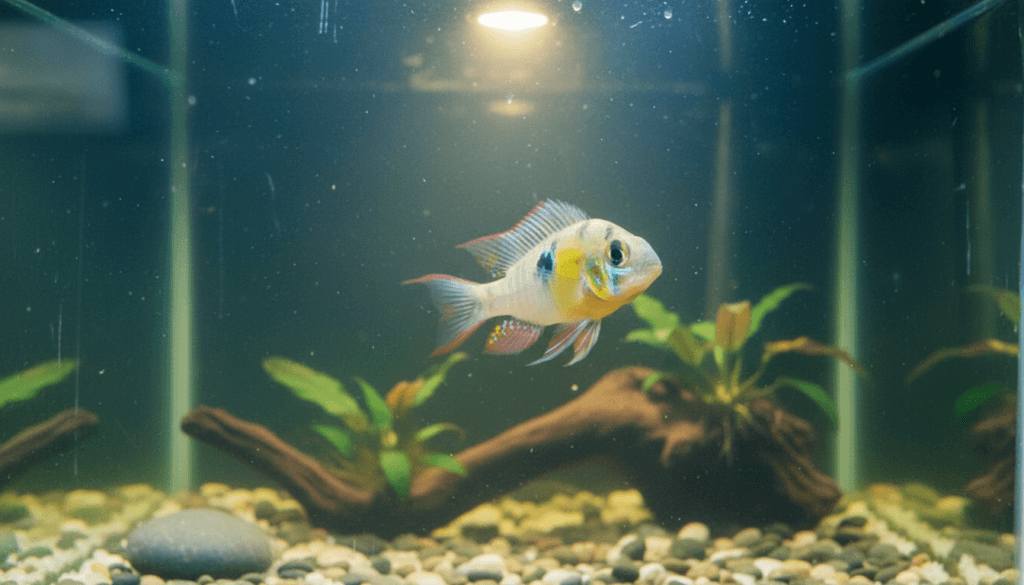
Bolivian Ram is omnivorous with a lean toward protein-rich foods. Offer a varied diet: high-quality sinking pellets or granules as staple items, supplemented with frozen or live foods such as bloodworms, daphnia, and brine shrimp. Introduce vegetable matter occasionally—blanched spinach or spirulina flakes—to round out nutrition and support colors. Feed small portions once or twice daily, removing uneaten food after a few minutes to prevent water fouling. Rotate several brands and types to prevent nutritional deficiencies and boredom: a steady regimen of only flakes risks dulling of color and reduced breeding readiness.
For conditioning to breed, increase frequency to 2–3 small feedings daily of protein-rich fare for 10–14 days, then offer live or frozen treats the day before introducing breeding conditions. Monitor body condition: slightly rounded bellies indicate good health, while bloating can signal overfeeding or internal parasites—treat promptly and temporarily shift to fasts and medicated foods if necessary.
Reproduction
Breeding Bolivian Ram is very rewarding because parental care is strong and fry are easily reared with proper planning. Pairs are substrate spawners, laying eggs on flat stones, broad leaves, or clay pots. To encourage spawning, provide slightly softer water (pH 6.0–6.8), raise temperature to 26–28°C, and increase protein-rich feed for several weeks. Bolivian Ram pairs will clean the chosen site together; spawning often occurs in the morning hours.
Once eggs are laid, both parents guard and fan the clutch. At typical aquarium temperatures, eggs hatch in 48–72 hours, and fry become free-swimming roughly 5–7 days after hatching. Initially feed newly free-swimming fry infusoria or commercially available liquid fry foods for 4–7 days, then progress to newly hatched brine shrimp and finely crushed high-quality micro pellets. Parents usually tolerate fry in the main tank and will aggressively defend them; if other fish are present, consider a partition or rearing tank only if predation becomes an issue.
Successful tricks used by experienced hobbyists include offering a flat piece of smooth rock or a clay pot lid as an obvious spawning surface, maintaining slightly lower lighting to reduce skittishness during courtship, and performing extra-small, frequent water changes to keep conditions pristine. Avoid moving the tank or making large maintenance disturbances during brood care; parental abandonment often results from sudden environmental changes.
Bolivian Ram can be selectively bred for color and finnage; however, beware of hybridization with similar Mikrogeophagus species. To preserve healthy bloodlines and predictable behavior, purchase pairs from reputable breeders, quarantine newcomers, and document lineage where possible.