Rope Fish Care Guide: Erpetoichthys calabaricus
General information
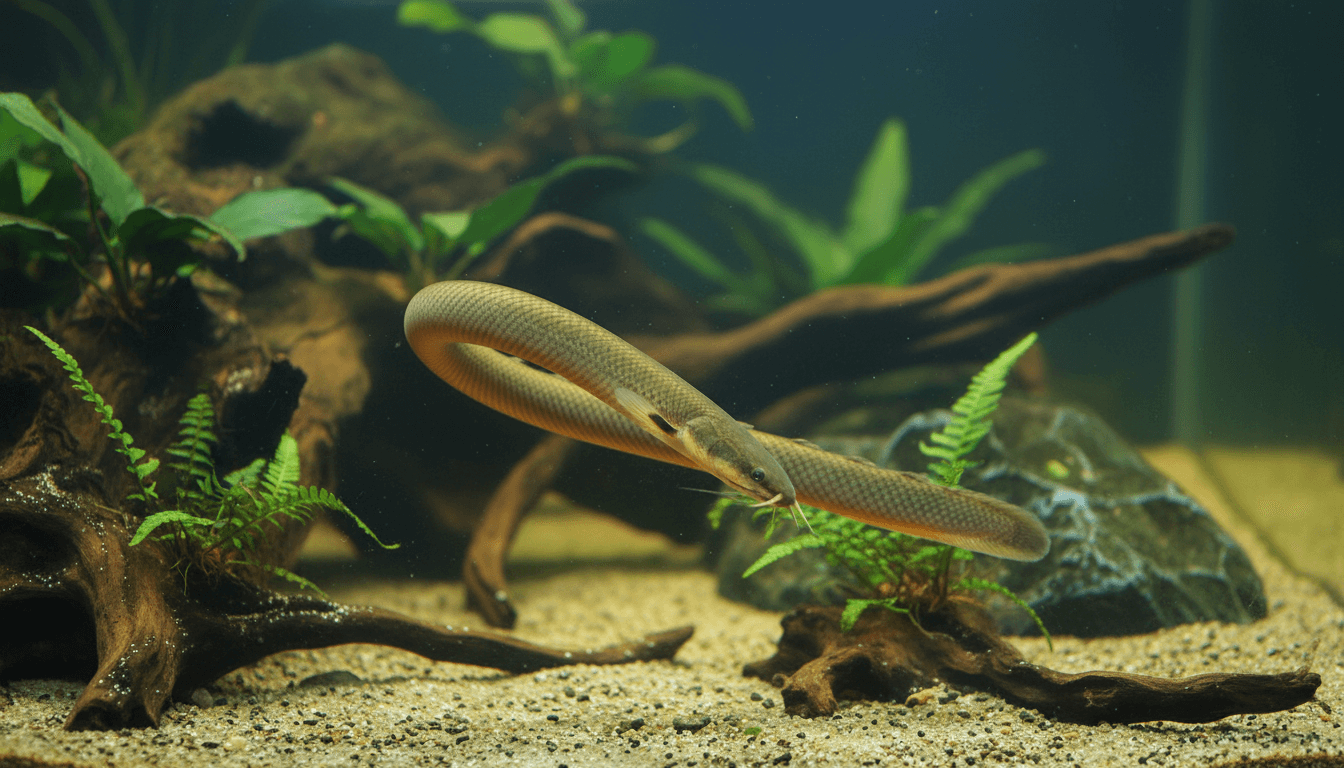
Rope Fish (Erpetoichthys calabaricus) are elongated, eel-like members of the Polypteridae family that look exotic but require straightforward husbandry. Native to slow-moving, shaded waterways in West and Central Africa, the species is built for ambush predation: a long, flexible body, small dorsal finlets, and an ability to surface for air make this fish different from typical community species. Keep this name in mind when shopping and planning an aquarium — “rope fish” is the common label used by retailers and hobby literature.
Appearance
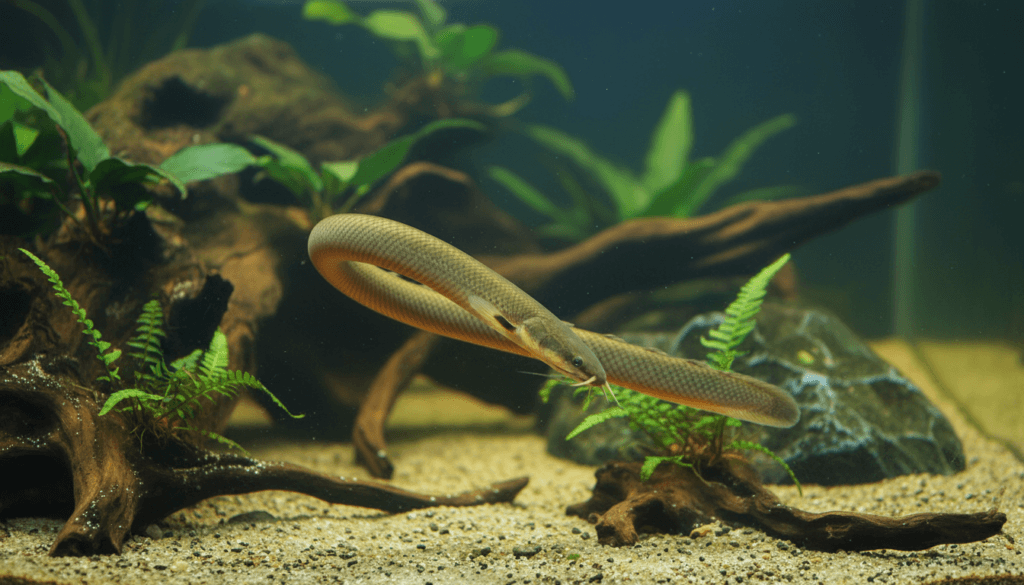
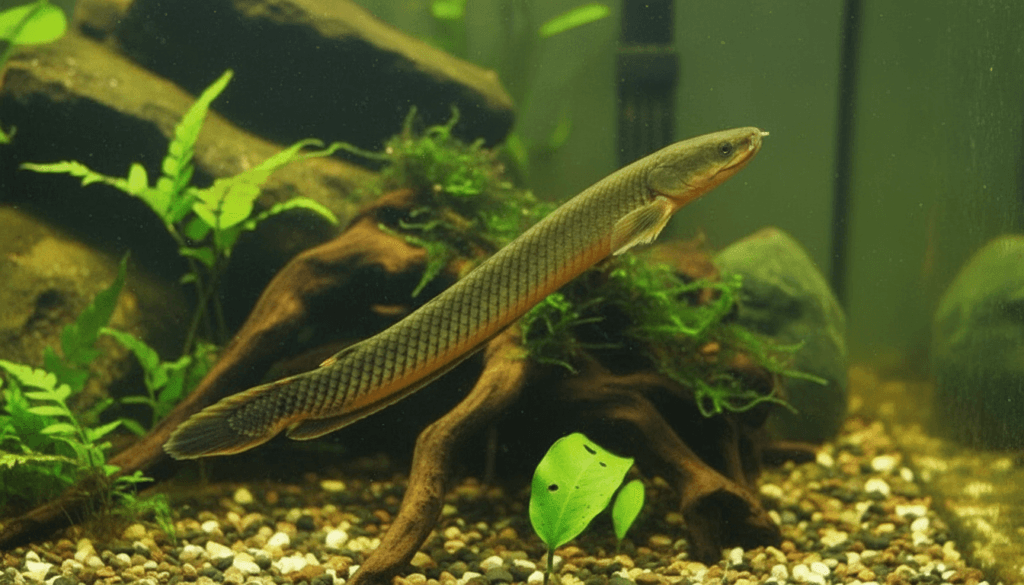
Expect a slim, ribbon-like body that can reach roughly 45–60 cm (18–24 in) in mature specimens. Color ranges from olive-brown to gray with darker mottling or faint vertical striping that breaks up the silhouette. Fins are reduced and placed far back on the body; tiny dorsal finlets create a segmented look along the spine. Eyes are relatively small and positioned for lateral vision rather than binocular focus. Juveniles appear more translucent and patterned; adults darken and take on the classic rope-like profile.
Habitat
Natural habitats are shaded floodplain pools, slow rivers, and marshy channels with heavy leaf litter and submerged roots. Water is often tannin-stained with low to moderate flow and plenty of submerged structure: driftwood tangles, fallen leaves, crevices, and root mats. Temperatures tend to be warm year-round, and oxygen at the surface is used regularly because of the species’ modified respiratory anatomy. In an aquarium, recreating these conditions reduces stress and encourages natural behaviors such as surface-checking and nocturnal hunting.
Сare and maintenance
Water parameters
| Parameter | Value |
|---|---|
| Temperature | 24–28 °C (75–82 °F) |
| pH | 6.0–7.5 |
| General hardness (GH) | 5–15 °dGH |
Stable temperature and clean water matter more than chasing perfect numbers. Slightly softer, slightly acidic water mimics wild conditions but rope fish are adaptable across the ranges above. Frequent ammonia or nitrite spikes are not tolerated; biological filtration and measured water changes keep toxicity low.
Tank size
| Parameter | Value |
|---|---|
| Minimum volume (single adult) | 200–240 L (53–64 US gallons) |
| Recommended dimensions | Length ≥ 120 cm (48 in); height moderate (≤ 45 cm / 18 in) to reduce vertical stress |
Length is the most important dimension. Rope Fish need horizontal space to swim and turn. For more than one adult, multiply volume and length: two adults => 300–400 L with length ≥ 150 cm.
Filtration and water flow
Use robust biological filtration: canister filters or large hang-on-back units with high media mass provide stable nitrification. Add a sponge filter if fry or delicate tankmates are planned; sponge filters also offer safe surface agitation for air-gulping species. Flow should be low to moderate — rope fish dislike strong currents. If filter outlets create strong jets, deflect them with spray bars, flow baffles, or positioned driftwood so current is diffuse.
Substrate and decor
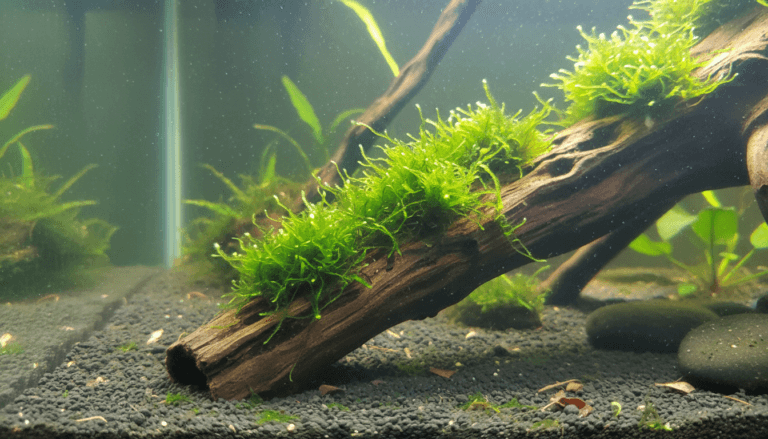
Prefer fine sand or smooth, rounded gravel to protect the skin and ventral surface; avoid sharp-edged substrates. Provide multiple hiding spots: driftwood snags, clay pots, PVC tubes, rock caves, and root-like branches. Add leaf litter (for example, Indian almond/Terminalia catappa leaves) to create tannins and cover. Floating plants such as Salvinia or Pistia, plus dense marginal plants, supply shade and reduce stress. Ensure decor has no small gaps the fish could wedge into and escape-proof any lids.
Lighting
Low to moderate lighting works best because this species prefers dim, shaded conditions. Aim for 4–8 hours of visible light using dimmable LEDs; include heavy shade zones created with floating plants or dense midwater planting like Vallisneria or Ceratopteris. Bright, long-duration lighting can push rope fish into constant hiding and reduce natural activity.
Water changes
Perform routine water changes of 25–35% weekly. If the tank has heavy feeding of frozen/live high-protein food, consider 30–40% weekly or 20% twice-weekly. Use dechlorinated water matched to tank temperature and similar pH to avoid sudden parameter swings. Vacuum detritus under caves and leaf litter during changes to limit nitrate accumulation.
Social behavior and group size
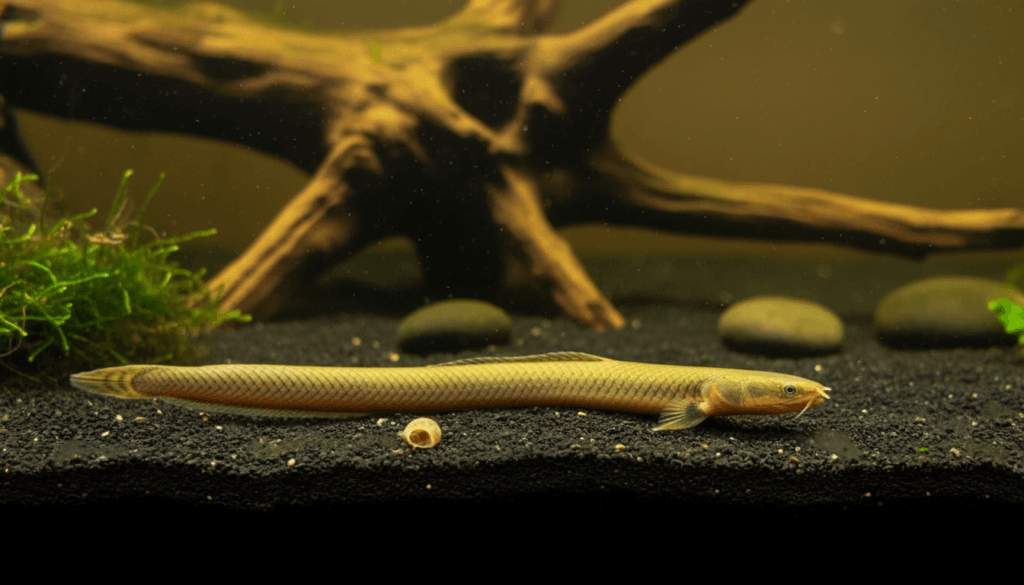
Rope Fish are not schooling fish — they are best described as semi-social. Keeping a single adult is acceptable and often simpler. If keeping multiple individuals, a minimum of two is recommended only in very large tanks (see tank size guidance); social structure may form with one dominant individual. Territoriality is usually low, but competition for the same hiding place can occur. Avoid overcrowding and watch for persistent chasing when adding new animals.
Additional behavioral care tips
- Install a secure, heavy lid: rope fish are escape artists and able to wriggle through narrow gaps; a tight-fitting cover is mandatory.
- Provide surface access: rope fish surface to gulp air; floating plant mats help them feel secure while doing so.
- Maintain multiple hiding locations to prevent competition over single shelters.
- Observe feeding behavior: rope fish are crepuscular/nocturnal hunters; offer food at dusk or use a dim red light to monitor without stressing them.
- Avoid extreme bright flashes during night checks; sudden light can trigger frantic behavior near the surface.
Compatibility
| tankmate | compatible or not | note |
|---|---|---|
| Plecostomus (large plecos) | Compatible | Armor and size usually protect plecos; still provide hiding spots and feeding areas. |
| Silver Dollars | Compatible | Peaceful mid-sized schooling herbivores; need a roomy tank. |
| Large peaceful cichlids (e.g., Severums) | Compatible with caution | Possible aggression; choose stable, non-territorial species and monitor introductions. |
| Small tetras, rasboras, danios | Not compatible | Likely to be eaten; any fish small enough to fit in the rope fish’s mouth is at risk. |
| Synodontis catfish | Compatible with caution | Similar activity periods; ensure size parity and ample caves to reduce disputes. |
| Shrimps and small snails | Not compatible | Often consumed as food. |
| Other polypterids (bichirs, smaller rope fish) | Compatible if size-matched | Mix similar-sized individuals in a large tank to avoid predation; watch for dominance. |
Rule of thumb: don’t keep anything smaller than roughly half the adult body width; hard-shelled or armored species fare better. Avoid very aggressive or hyperactive species that stress or injure the rope fish.
Feeding the Rope Fish
Rope Fish are carnivores with a preference for meaty foods. Build a balanced feeding plan around frozen and prepared items with occasional live food for conditioning only — not as a staple due to disease risk.
- Staples: frozen bloodworms, blackworms, Mysis shrimp, krill, silversides, and chopped earthworms.
- Prepared foods: high-quality sinking carnivore pellets (brands like Hikari Carnivore, New Life Spectrum Predator, or Omega One sinking sticks) encourage a healthy diet and easier storage.
- Live food (sparingly): feeder guppies or small fish pose disease and thiaminase risks and should be quarantine-sourced; live feeder insects such as large earthworms or blackworms are safer if raised or purchased from reputable sources.
Feeding schedule: juveniles — twice daily; adults — once daily or every other day depending on activity and body condition. Monitor body shape: ribs or concavity indicate underfeeding; bloating indicates overfeeding. Avoid goldfish as a regular food source — goldfish contain thiaminase which can cause vitamin B1 deficiency in predators when fed repeatedly. Rotate protein types and consider a vitamin supplement (e.g., vitamin-enriched thaw water or pellet soaking) if frozen foods form the majority of the diet.
Reproduction
Breeding Rope Fish in home aquaria is uncommon and not reliably documented compared with more routine aquarium spawners. Sexual dimorphism is subtle or unclear without dissection; visual sexing is unreliable.
If attempting breeding, follow this conservative plan:
- Provide a very large breeding tank (several hundred liters) with abundant caves and leaf litter to mimic flooded-root environments.
- Condition potential breeders on live and frozen high-protein foods; increase feeding frequency for several weeks.
- Soften water slightly and lower hardness towards 5–8 °dGH and pH near 6.5; raise temperature slightly for conditioning (26–28 °C) to simulate rainy season warmth.
- Implement large, frequent water changes with slightly cooler replacement water to simulate the start of a rainy season; sudden changes can trigger spawning behavior in many tropical species.
- Provide dim lighting and surface access; add floating plants and fine-leaved midwater plants as potential egg adhesive sites.
Plan for egg/fry survival: if eggs are produced, adults will likely eat them unless separated. Rearing fry that hatch demands specialized microfoods: newly hatched Artemia (baby brine shrimp) and progressively larger live/frozen foods. Because reliable protocols are scarce, first attempts should be considered experimental and undertaken only by advanced hobbyists prepared for significant resource investment.
FAQ
How big do Rope Fish get?
Adults commonly reach 45–60 cm (18–24 in) in captivity; growth depends on tank size and diet. Give long tanks to avoid cramped movement and stunted growth.
Can Rope Fish breathe air?
Yes. Rope Fish possess a modified respiratory system and will surface to gulp air; this behavior requires unobstructed access to the surface and reinforces the need for a tightly sealed lid to prevent escape.
Will a Rope Fish eat shrimp or snails?
Small shrimp and many small snail species are at risk and should not be considered reliable tankmates. Large, heavily armored snails (e.g., some large Nerite or big Mystery snails) may survive but observe predation risk.
Are Rope Fish aggressive?
Not overtly. These fish are ambush predators toward small prey but typically display low interspecific aggression. Territorial squabbles can occur around limited hiding spots; provide multiple shelters and space to reduce conflict.