Top 7 Aquarium Plants Every Beginner Should Try
Introduction
If you’re stepping into the world of aquatic gardening, adding live aquarium plants transforms tanks faster than most upgrades — aesthetics, water quality, and fish behavior all improve. In this guide I’ll introduce ten forgiving species, share oddball facts I’ve learned from decades of hobby time, and give practical, actionable tips so your first planted tank thrives. The focus here is on aquarium plants that tolerate beginner mistakes: irregular fertilizing, modest lighting, and the occasional forgotten water change.
Why aquarium plants matter (and a few surprising perks)
Beyond looking lush, aquarium plants play many roles: they compete with algae, consume nitrates, oxygenate water during the day, and provide hiding spots for shy fish and breeding sites for fry. An unusual fact: some aquarium plants like Anubias and Java fern have structures that let them survive emersed (above water) and submerged phases, which is why many nurseries grow them partially out of water. Another neat observation I share with new hobbyists — plants change behavior depending on fish load. A lightly-stocked tank will see greener, slower growth, while a crowded tank often fuels ravenous plant growth as nitrate supply spikes.
Top 10 aquarium plants for beginners
Below are ten species I consistently recommend to newcomers. I’ll cover basic needs, placement advice, and a quirky tip for each one based on years of trial and error.
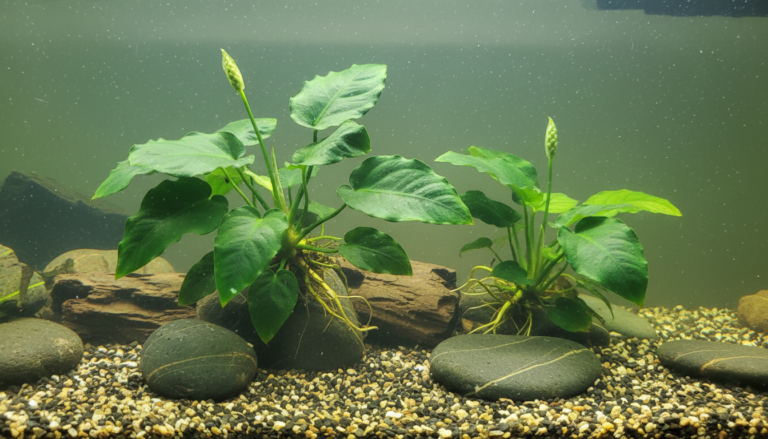
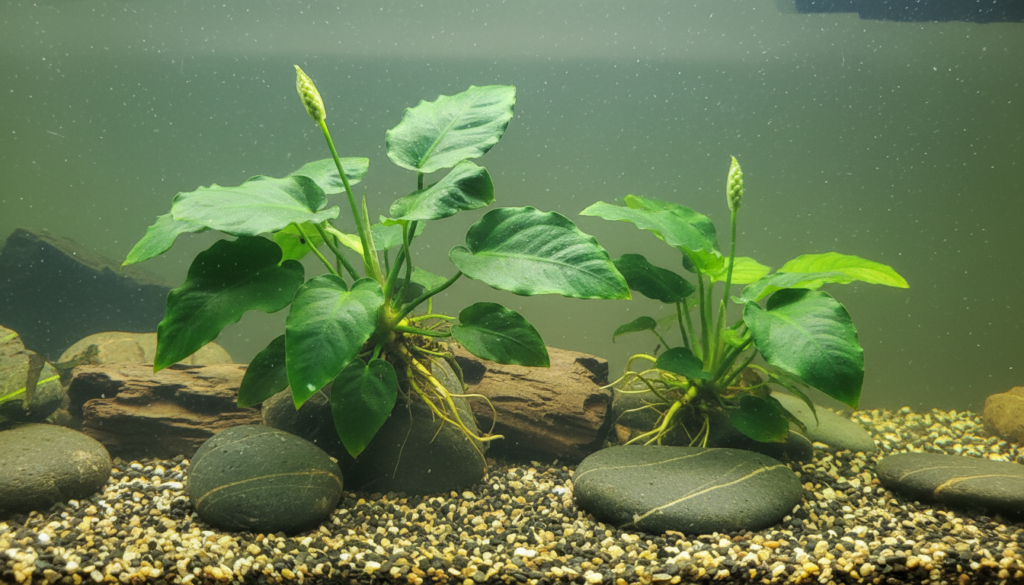
Anubias (Anubias barteri / Anubias nana)

Anubias are slow-growing, tough, and practically indestructible. They prefer being tied to driftwood or rock because their rhizome will rot if buried. Low light and low-tech tanks are fine; they withstand a broad temperature range (72–82°F / 22–28°C). Practical tip: attach Anubias to hardscape with cotton thread temporarily — the roots will grip in a few weeks. Unusual fact: Anubias leaves flipped to the surface will produce smaller but denser emersed leaves.
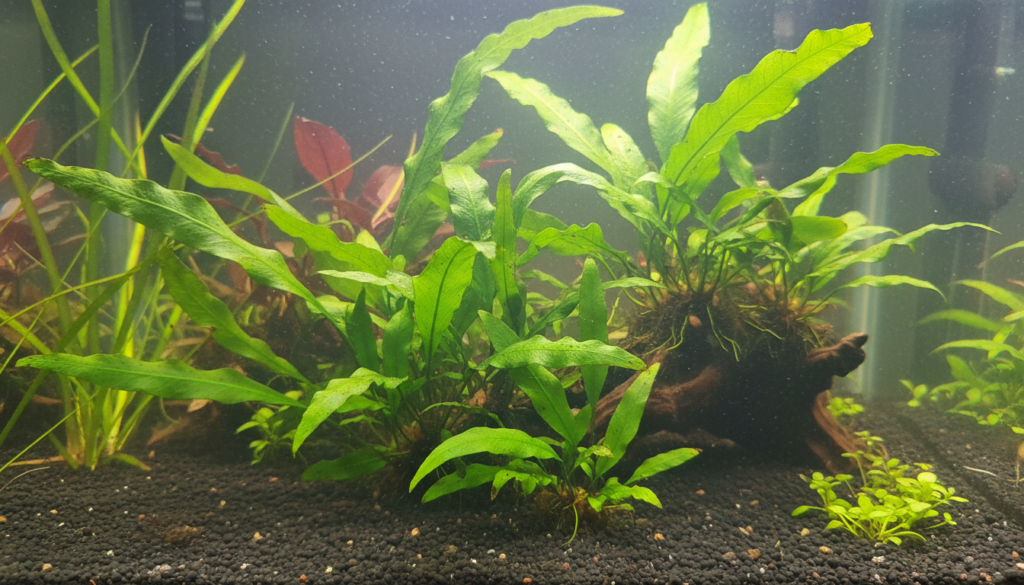
Java Fern (Microsorum pteropus)
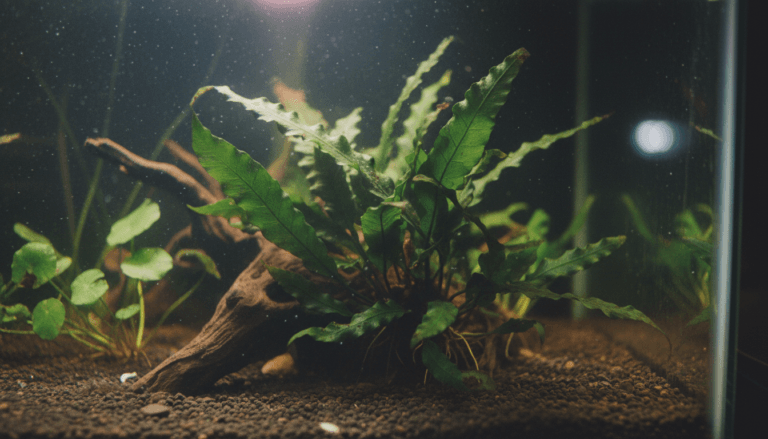
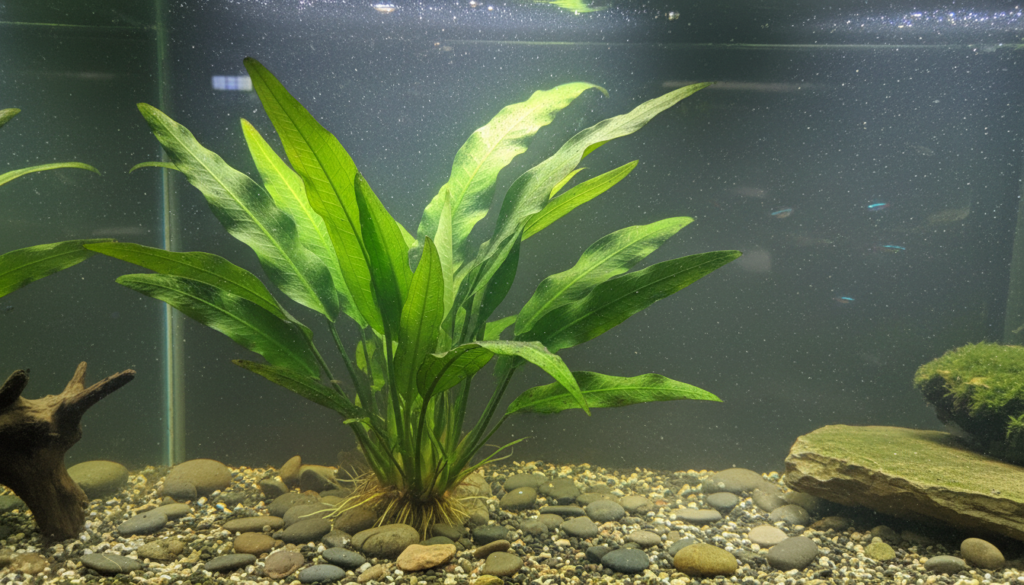
Java fern is another rhizome plant that flourishes when left alone. It tolerates low light, poor substrate, and most water chemistries. Avoid planting the rhizome; affix to wood or rock. Curious detail: variety names like ‘Windelov’ or ‘Narrow’ refer to leaf shape created under different growth conditions, so the same plant can develop unexpected forms in your tank. Tip: propagate by cutting off small plantlets that form on mature leaves.
Amazon Sword (Echinodorus spp.)
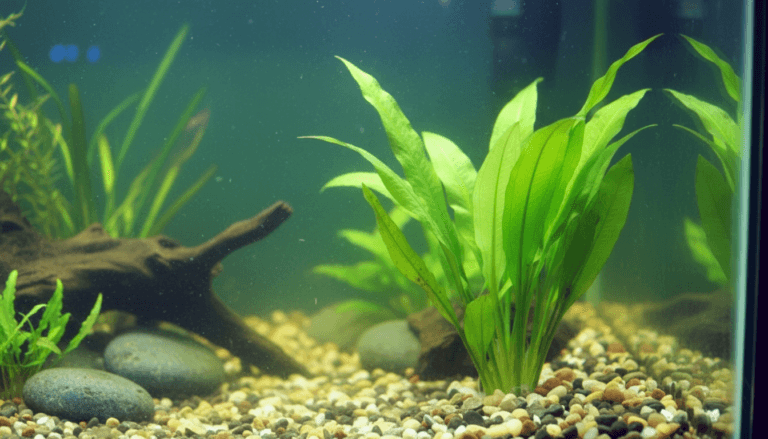
- Amazon swords are classic centerpiece plants. They need a nutrient-rich substrate and benefit from root tabs because their rosette consumes nutrients rapidly. They send out daughter plants via runners, making propagation easy. Odd observation: swords sometimes sulk (drop leaves) after introduction but rebound strongly — patience is rewarded. Place as a mid-background/centerpiece in medium to large tanks.
Cryptocoryne (Cryptocoryne wendtii)
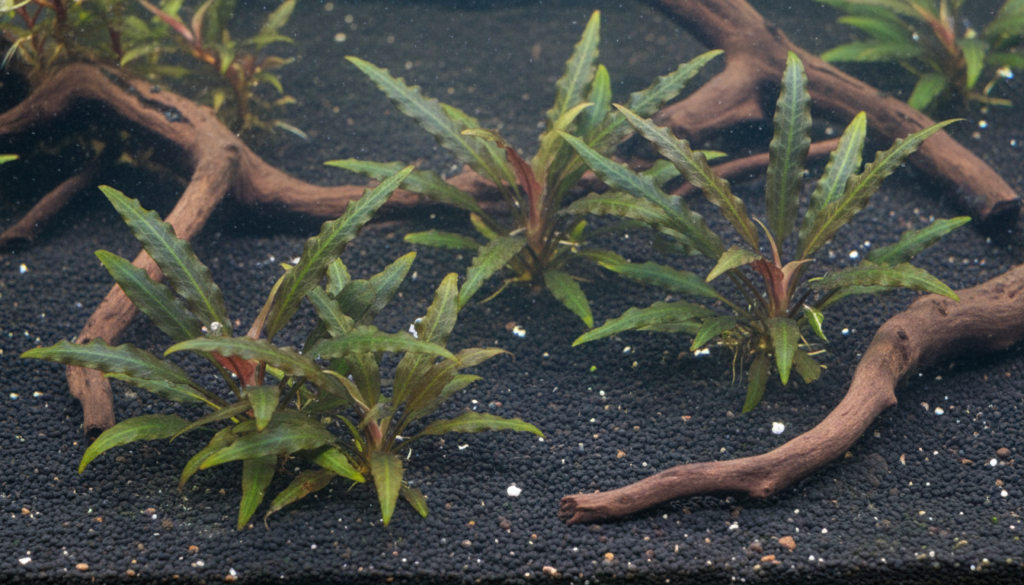
Crypts are beloved for shade tolerance and diverse leaf textures. They can suffer “crypt melt” — sudden leaf disintegration when moved or when water parameters shift — but most recover with new growth. They prefer a substrate with organic matter and low to moderate light. Practical tip: introduce crypts early, let them settle, and avoid large swings in water parameters to prevent melt.
Water Wisteria (Hygrophila difformis)
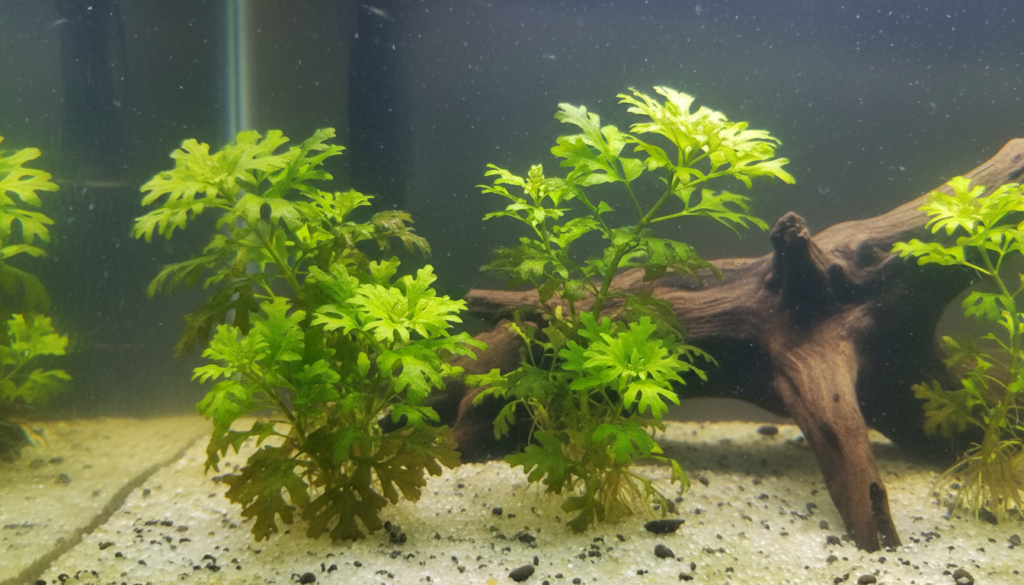
- Water wisteria is a versatile stem plant that can be grown as a background bush or trimmed into midground shapes. It tolerates a wide range of lighting and responds well to occasional liquid fertilizers. An unusual note: emersed-grown water wisteria will have dramatically different, lacy leaves compared to submerged forms. Tip: trim the tops and replant cuttings to create denser growth.
Dwarf Sagittaria (Sagittaria subulata)
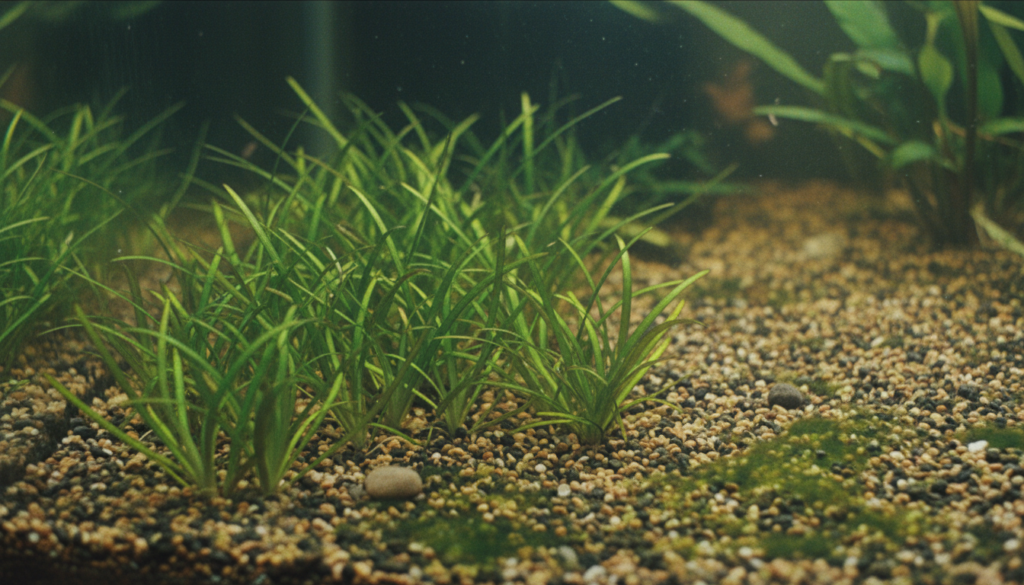
Dwarf sagittaria is one of the most forgiving carpeting foreground plants. It spreads slowly by runners and tolerates low light, making it ideal for small or nano tanks. It will produce small white flowers above the surface if conditions allow — a delightful sight. Practical care: keep a thin substrate layer and add root tabs every few months for energy.
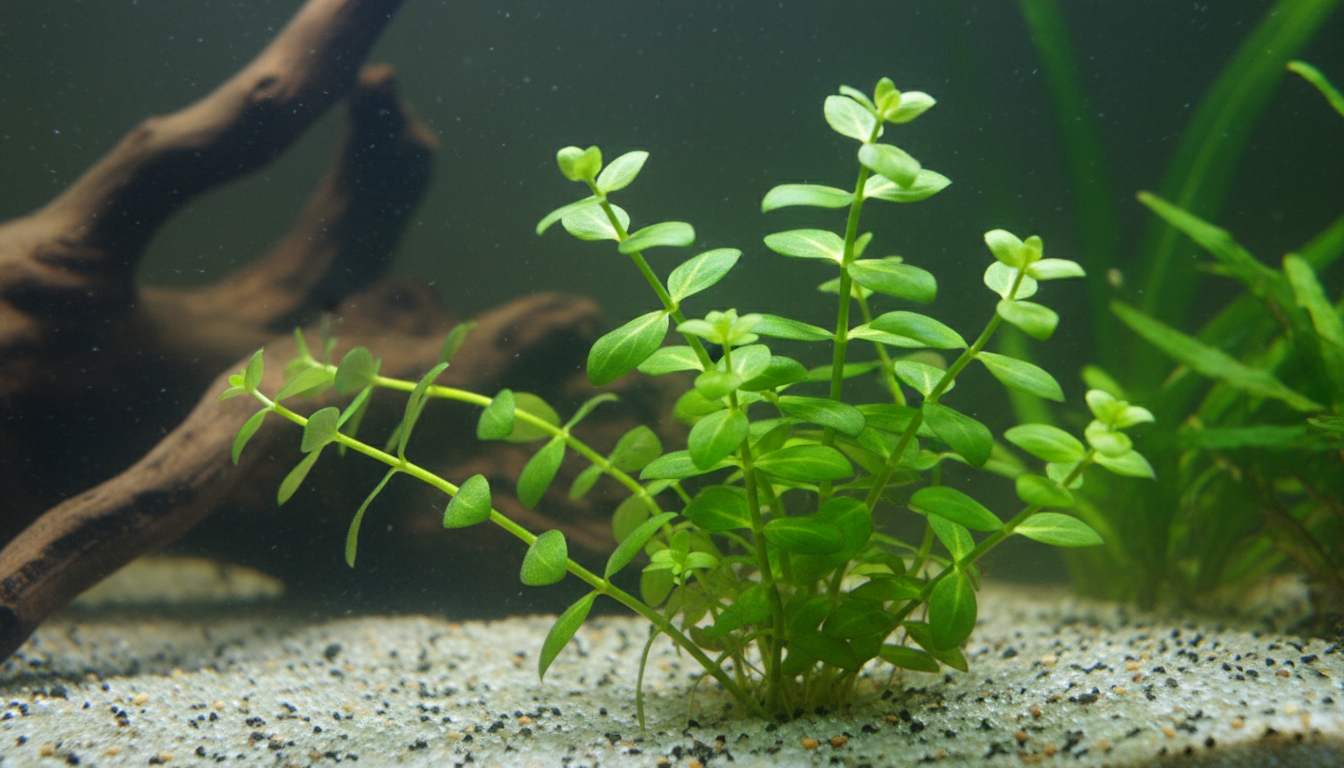
Bacopa caroliniana
Bacopa is a sturdy stem plant that adds vertical structure and can be a semi-background accent in smaller tanks. It’s easy to propagate by cutting tops and replanting. A hidden joy: Bacopa develops purple undersides on leaves when iron or lighting changes — it’s a natural signal for nutrient adjustments. Tip: pinch the growing tips to encourage bushier growth rather than tall, stringy stems.
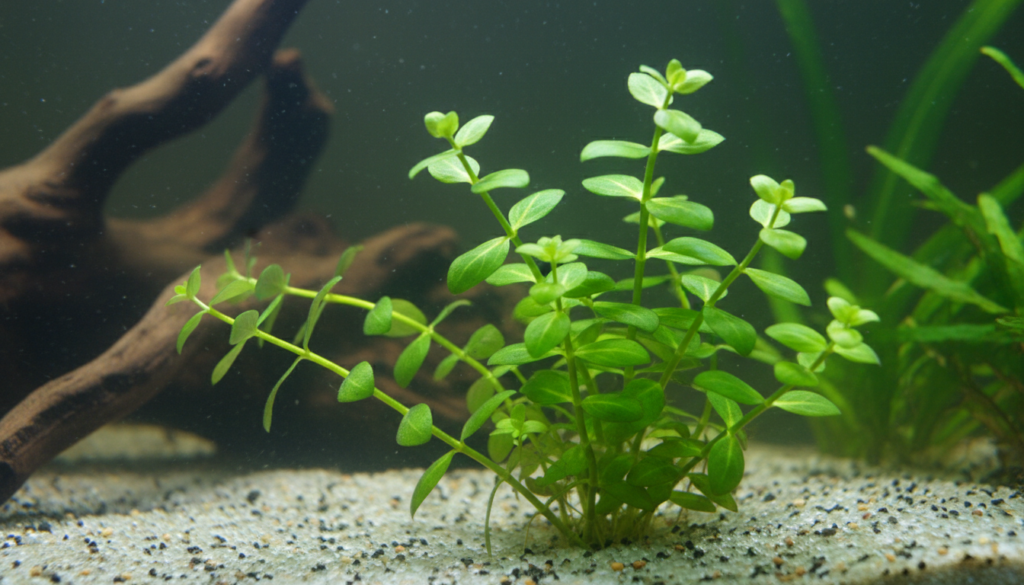
Easy aquarium plants — placement and pairing advice
Think of your aquarium in zones: foreground, midground, and background. Use dwarf sagittaria and Java moss in the front, Anubias and Java fern on wood or rocks in the midground, and Amazon sword, vallisneria, or water wisteria at the back. Mixing textures (broad leaves, fine needles, and bushy stems) keeps the tank visually interesting and supports different fish behaviors. For example, tetras love dense stem plants to feel secure, while corydoras prefer open sandy patches with nearby shelter.
Maintenance, lighting, and nutrients for long-term success
Basic maintenance for these beginner-friendly aquarium plants is straightforward: regular water changes (20–30% weekly), modest lighting (one watt per liter isn’t necessary — aim for low to medium intensity), and occasional root tabs or liquid fertilizers. CO2 injection is not required for most plants listed but will accelerate growth and benefit carpeting species like dwarf sagittaria or hairgrass. A practical routine I use: monthly root tab application for heavy root feeders like Amazon swords and weekly two- to three-pump dosing of a balanced liquid fertilizer for water column feeders.
Common problems and quick fixes
- Algae takeover: Reduce lighting time, increase water changes, and add fast-growing plants like hornwort to consume excess nutrients.
- Yellowing leaves: Often iron or micronutrient deficiency — a liquid iron supplement or comprehensive fertilizer usually helps quickly.
- Crypt melt: Keep water stable and be patient; new crypt leaves often emerge after the shock period.
- Rhizome rot (Anubias/Java fern): Ensure rhizomes are not buried; reattach to hardscape if necessary.
FAQ
- Q: Can I keep aquarium plants without substrate?A: Yes. Several plants like Anubias, Java fern, and Java moss prefer being attached to hardscape rather than buried. Floating or rootless plants such as hornwort also do well without substrate.
- Q: How much light do beginner aquarium plants need?A: Most beginner aquarium plants listed here are happy with low to medium light — roughly 0.25–0.5 watts per liter with modern LED fixtures. Avoid intense light unless you plan to manage CO2 and dosing closely.
- Q: Do I need CO2 for a healthy planted tank?A: Not for these hardy species. CO2 improves growth rate and appearance but is optional. If you want a lush carpet or rapid stem growth, consider a simple CO2 setup later.
- Q: How do I propagate these aquarium plants?A: Methods vary: cut stems and replant (Bacopa, water wisteria), divide crowns or runners (Amazon sword, vallisneria, dwarf sagittaria), or remove plantlets (Java fern, Anubias). Java moss can be torn into sections and tied down.
- Q: Which aquarium plants are best for shrimp tanks?A: Java moss, Anubias, and Java fern are excellent for shrimp because they offer grazing surfaces and shelter. Hornwort also provides cover for baby shrimp.
Conclusion
Introducing aquarium plants to your tank is one of the most rewarding upgrades you can make. These ten species form a reliable toolkit for beginners: hardy, forgiving, and visually diverse. Start with a few anchored pieces like Anubias and Java fern, add fast growers like water wisteria or hornwort to stabilize water chemistry, and finish with a foreground carpet such as dwarf sagittaria. Keep light moderate, fertilize moderately, and perform steady maintenance — within weeks you’ll notice clearer water, calmer fish, and a more natural aquarium ecosystem. Remember: patience and observation win over fancy equipment when you’re learning the rhythms of planted tanks.