Blue Phantom Pleco Care: Secrets from an Aquarist
Introduction
If you’re drawn to shimmering, subtly patterned catfish, the Blue Phantom Pleco deserves a spot on your “must-see” list. In this guide I’ll walk you through everything I’ve learned over years keeping and observing the Blue Phantom Pleco — from how to set up a comfortable tank to quirky behaviors that reveal a lot about their preferences. You’ll find unusual facts, hands-on tips, and specific examples that most short care sheets skip. Whether you already own a Blue Phantom Pleco or are planning to add one, this piece is written like a conversation between hobbyists: detailed, practical, and honest.
Blue Phantom Pleco: Origins, Identification, and Varieties
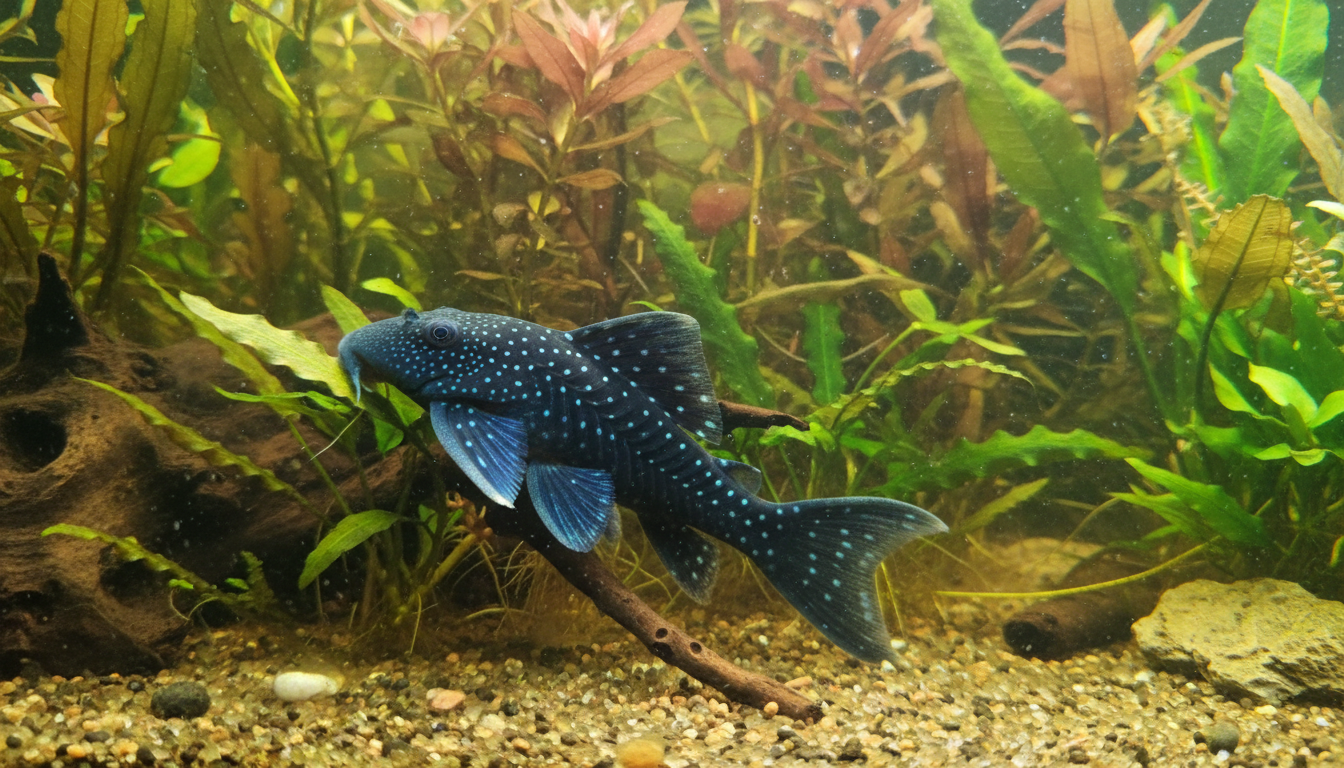
The Blue Phantom Pleco is a common name used for a few visually similar loricariids often sold in the hobby. True scientific identity can vary: some are forms of Ancistrus, others are Hypostomus or closely related genera. What makes them distinct is a slate-blue to charcoal background color with iridescent spots or a pearly dusting that catches light at certain angles. In my experience, lighting dramatically changes their appearance — under warm LED spectrum they look slate gray; under cooler lights the blue flecks pop.
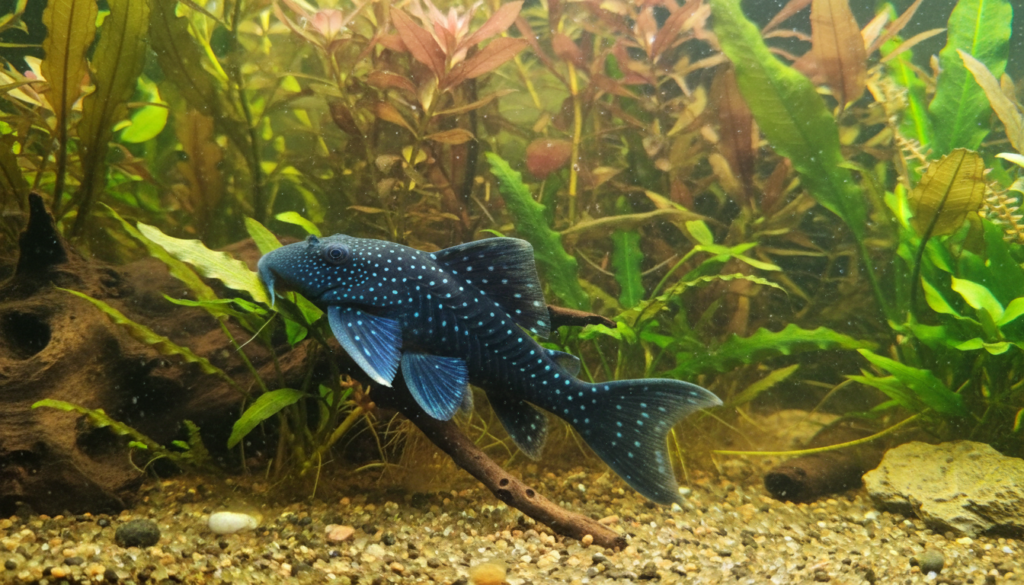
Size is another thing to keep in mind. Many Blue Phantom Pleco variants remain small to medium (6–8 inches max), but depending on the exact species, some can grow significantly larger. When I bought my first specimen, I underestimated adult size and had to upgrade the tank sooner than I liked. A realistic expectation: plan for 8–12 inches of adult length in your tank budgeting unless you confirm the exact species.
Blue Phantom Pleco: Tank Setup and Water Parameters
Getting the physical and chemical environment right makes a huge difference. These fish are comfortable in moderately soft to moderately hard water; they tolerate a pH range roughly from 6.5 to 7.8, but they thrive around 6.8–7.4. Temperature-wise, favor 74–80°F (23–27°C). In my tanks I aim for 76–78°F — a sweet spot balancing activity and long-term health.
- Tank size: Single adult Blue Phantom Pleco does best in a 40–55 gallon at minimum. For a pair or community tank, 75+ gallons is safer.
- Filtration: Strong, reliable filtration with biological capacity is essential. These fish appreciate clean, well-oxygenated water. I prefer canister filters with moderate flow; too strong current can stress them, but some flow mimics riverine origin.
- Substrate and decor: Use smooth sand or fine gravel. Provide multiple caves — terracotta pots turned on their sides, PVC hides, or natural wood hollows work well. These fish are nocturnal and value secure retreats during the day.
- Hardscape: Add driftwood liberally. Driftwood serves as a territorial marker, grazing surface, and aids digestion when driftwood fibers are consumed.
Diet and Feeding Tips for Blue Phantom Pleco
One of the pleasures of keeping a Blue Phantom Pleco is watching their feeding preferences evolve. They are omnivorous with a leaning toward herbivory as adults. A mixed diet ensures good color, body condition, and longevity. My go-to regimen includes:
- High-quality sinking wafers designed for plecos and loricariids.
- Blanched vegetables: zucchini, cucumber, and peeled peas — rotate these weekly.
- Occasional protein: bloodworms or mysis, but in small quantities to avoid fatty buildup.
- Driftwood: provide real wood; they will rasp on it and it aids digestion.
Tip: Attach a slice of blanched sweet potato to a stone with a rubber band and remove after 24 hours to prevent fouling. Change up foods to prevent selective feeding. One unusual observation from my tanks: adding a tiny dusting of spirulina powder to wafers dramatically improves shimmer in their spots over a few months.
Behavior and Tank Mates
Blue Phantom Pleco behavior ranges from passive to mildly territorial around caves. They are primarily nocturnal but will cruise the tank in low light. In my experience, territorial disputes mostly stem from insufficient hides. If you see chasing, add more caves rather than moving the fish. Fish-only community tanks with calm species like tetra, rasbora, or peaceful gouramis work well. Avoid overly boisterous bottom dwellers or heavily carnivorous species that could bully them.
One odd but repeatable behavior I’ve noticed: during early morning hours, my Blue Phantom Pleco often perches mid-water on driftwood, almost like a sloth. It’s a resting posture and not a sign of distress. If seen gasping at the surface or listless, check water quality immediately — these catfish are sensitive to nitrate spikes.
Breeding and Breeding Challenges
Breeding the Blue Phantom Pleco in captivity is possible but requires patience. They are cave spawners; males guard the eggs. To encourage breeding, simulate a rainy season: perform larger water changes with slightly cooler, softer water and increase feeding of fresh vegetables and live foods. Provide narrow, tube-like caves (PVC or drilled logs) approximately the adult’s girth.
- Sexing: Males often have broader heads and more pronounced odontodes (small bristles) on their pectoral fins and cheeks.
- Conditioning: Feed protein-rich treats for 2–3 weeks before attempting to breed.
- After spawning: Remove the female once eggs are laid; males will fan and guard. Monitor for fungus and do small water changes to keep water pristine.
In one of my tanks, a successful spawn produced 50–70 fry; I had to carefully remove the male only when fry began free-swimming to allow them to leave the cave. Raising fry on finely mashed vegetables and specialized micro-pellets worked well. Patience is key: growth is steady but slow.
Common Health Issues and Preventive Care
Blue Phantom Pleco health problems are often environmental rather than infectious. Common issues include:
- Skin abrasions from rough decor — use smooth hides.
- Digestive blockages from excessive protein — avoid overfeeding meaty foods.
- Parasitic infections if kept with wild-caught community fish — quarantine new additions for at least two weeks.
Regular maintenance — 20–30% weekly water changes and substrate vacuuming — keeps nitrate levels low and reduces stress. I also periodically scrub algae and inspect hides; catching a problem early has saved more than one fish in my care.
Unusual Facts and Personal Anecdotes
Here are some lesser-known tidbits and real-life observations you rarely see in quick care guides:
- Color shift: I’ve watched the same fish appear nearly black one day and sapphire-speckled the next after a minor water change and lighting adjustment. Their iridescence interacts with spectrum and water chemistry.
- Scent trails: These catfish sometimes follow scent trails to food; I’ve trained a more outgoing individual to come out for offerings by tapping a specific rock before presenting food.
- Territory zoning: In a large tank, different individuals carve out micro-territories — one prefers the left back corner driftwood, another claims the filtration outflow. Respecting these zones reduces conflict.
FAQ
Q: How big does a Blue Phantom Pleco get?
A: Most variants reach 6–10 inches, but size depends on species. Budget for an adult size of up to 8–10 inches unless you have confirmed a dwarf form.
Q: Is the Blue Phantom Pleco reef safe?
A: No. They are freshwater fish and cannot be kept in saltwater or brackish reef systems.
Q: Can they be kept with shrimp?
A: Small, peaceful shrimp may cohabit, but large plecos can inadvertently eat baby shrimp or outcompete them for biofilm. If you want shrimp, provide plenty of hiding places and dense plant cover.
Q: What should I feed juvenile Blue Phantom Pleco?
A: Offer softened vegetables, crushed sinking pellets or wafers, and occasional microfoods. Juveniles need more protein initially but transition to more plant matter as they grow.
Conclusion
Owning a Blue Phantom Pleco is rewarding for aquarists who appreciate subtle beauty and gentle night-time wanderers. They are adaptable, yet they flourish when given thoughtful tank design, varied diet, and secure hides. Remember: confirm species where possible, plan tank size realistically, and prioritize water quality. With a bit of patience and a few clever tricks — like varied lighting, attached vegetable feeds, and multiple caves — you’ll enjoy healthy, vibrant Blue Phantom Pleco that reveal surprising personality and color over time.
Thanks for reading. If you give one of these fish a try, start with a solid 40–55 gallon tank, add driftwood and caves, and watch how the Blue Phantom Pleco quietly transforms your aquarium into a more mysterious, living tableau.