Anubias Barteri Care: Light, Placement and Propagation
General information
If you want a plant that survives beginner mistakes, Anubias barteri is a strong candidate. It tolerates weak lighting, skipped fertilizer doses and fish that shred softer greenery. It also grows slowly. A healthy plant often produces just one new leaf every one to three weeks, so patience is part of the deal.
The species belongs to the arum family, Araceae, which also includes peace lilies and philodendrons. Heinrich Wilhelm Schott formally described it in 1860. The name honors Charles Barter, a British botanist who collected plants in West Africa. Most of what you see in shops sold simply as “Anubias” is one of its varieties:
- var. barteri: the classic form, with broad, arrow- to heart-shaped leaves on long stems.
- var. nana: the compact dwarf form, usually 5–15 cm tall and by far the most popular in nano tanks.
- var. angustifolia: narrow, lance-shaped leaves. Often sold as ‘Afzelii’, although true Anubias afzelii is a separate species.
- var. caladiifolia: large, rounded, heart-shaped leaves that resemble a caladium.
- var. glabra: slender leaves, sometimes traded as Anubias minima.
Popular cultivars include ‘Nana Petite’, ‘Coffeefolia’ with rippled, bronze-tinted new growth, and ‘Golden’ with chartreuse leaves. All of them share the same basic care, so the advice below applies across the board.
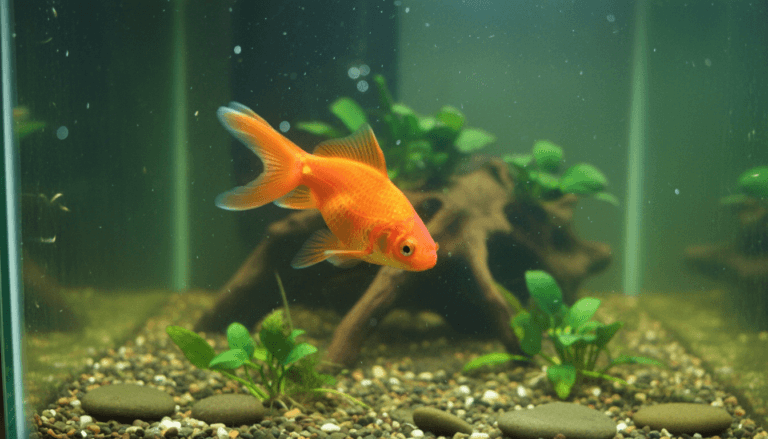
One practical detail sets anubias apart from most aquarium plants. Its tissues contain calcium oxalate crystals and have a bitter, tough texture. Many plant-eating fish take one bite and leave it alone. That is why anubias is often the only plant left standing in goldfish and large cichlid tanks.
Appearance
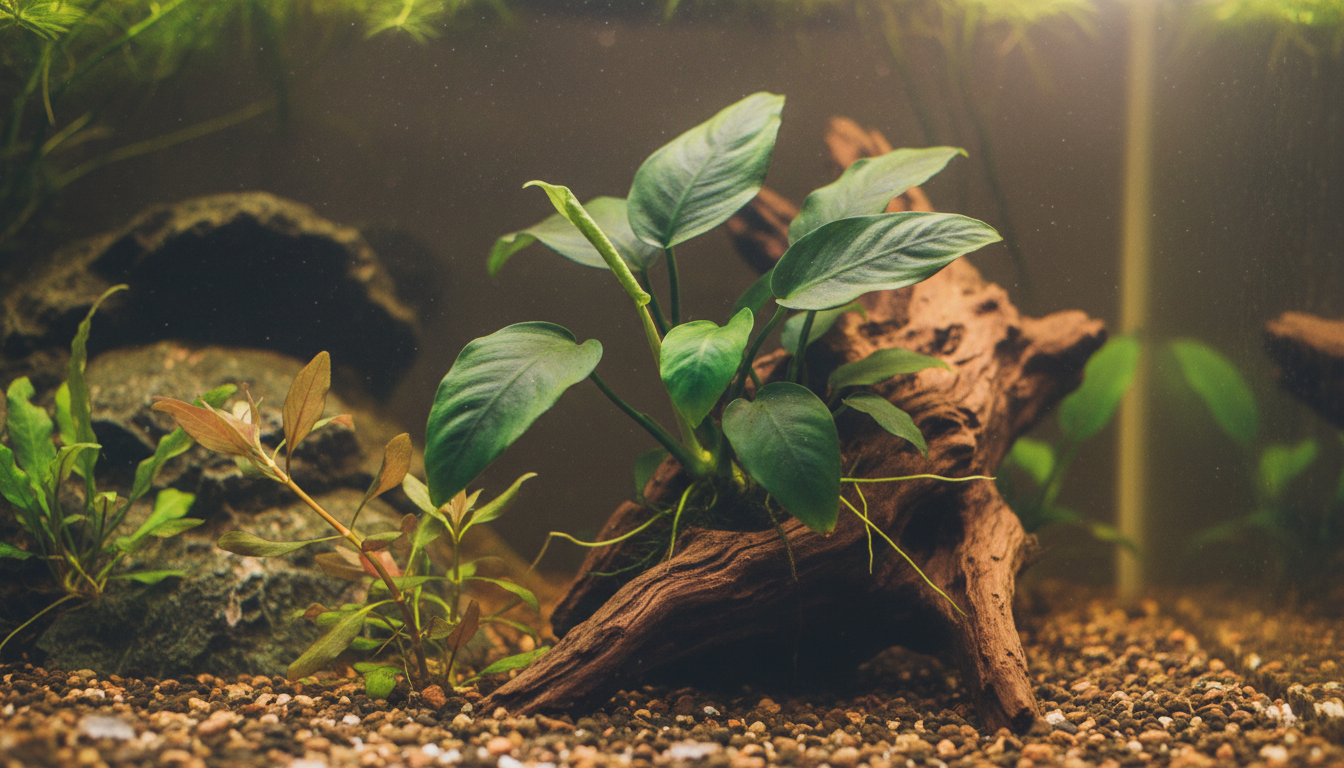
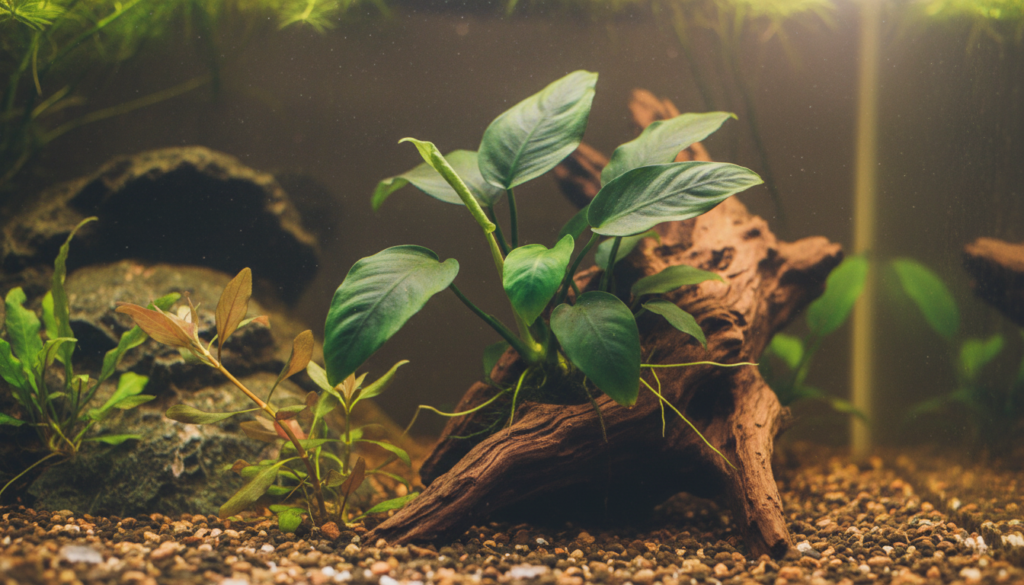
The whole plant grows from a horizontal rhizome. This thick, green-to-brown stem creeps along the surface of rock or wood. Leaves sprout from the top of the rhizome on petioles (leaf stalks). Wiry roots grow from the underside and grip whatever they touch.
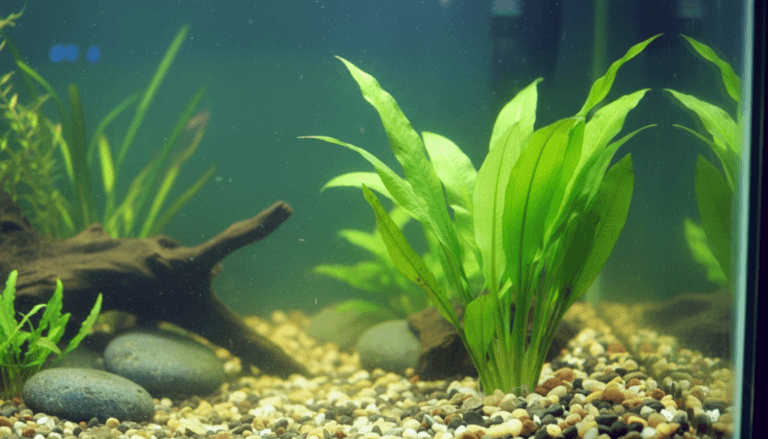
Leaves are dark green, glossy and leathery. Run a finger over one and it feels almost like plastic. In var. barteri, the blades reach 10–20 cm long. The plant can stand 25–40 cm tall once the petioles stretch. Var. nana stays much smaller, with leaves rarely over 6 cm.
Submerged plants sometimes flower. A white or cream spathe wraps around a spadix, the same structure you see on a peace lily. Flowers underwater are a sign of a stable, mature plant, not a warning sign. You can leave them or snip them off.
New leaves emerge rolled and pale before hardening and darkening. ‘Coffeefolia’ is the exception that catches people off guard: its new leaves open reddish-brown and only turn green over several weeks.
Habitat
Wild Anubias barteri comes from tropical West Africa. Its range includes Nigeria, Cameroon, Liberia, Ivory Coast, Guinea and the island of Bioko. It grows along forest streams and rivers, usually under a dense tree canopy.
In nature it is mostly a marsh plant, not a fully aquatic one. Plants cling to rocks, fallen trunks and stream banks. They spend the dry season emersed, with leaves in humid air. They are flooded during the rainy season. This dual lifestyle explains its toughness. A plant adapted to constant change does not mind a few aquarium quirks.
Shade is the other key clue. Under a forest canopy only a fraction of sunlight reaches the water. That is why anubias does best in your tank under modest light. It is also why its leaves collect algae under strong lamps.
Almost every anubias in the hobby is farmed, not wild-collected. Nurseries in Southeast Asia and Europe grow them emersed in greenhouses. Others are sold as tissue-culture cups grown in sterile gel. That matters for you, because a newly bought emersed plant may drop a leaf or two as it adjusts to life underwater.
Care and maintenance
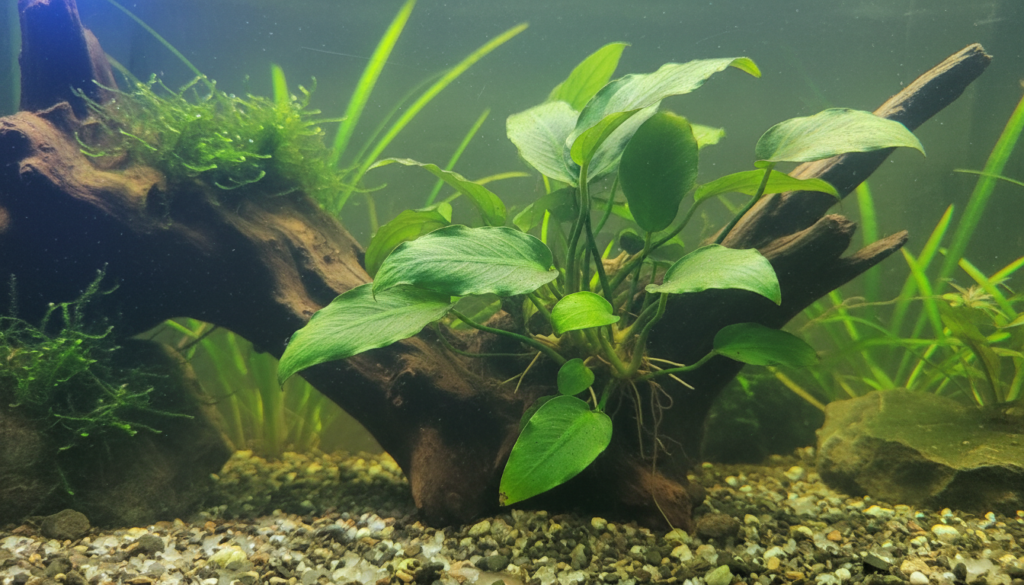
Start with the most important rule: do not bury the rhizome. A rhizome covered with gravel or sand starves of oxygen and begins to rot. It turns mushy, brown and smells sour. Roots can go into the substrate. The rhizome itself must stay exposed to the water column.
Water parameters
Anubias barteri accepts a wide range of water chemistry. You do not need to adjust your tap water unless your fish require it.
| Parameter | Value |
|---|---|
| Temperature | 22–28 °C (72–82 °F) |
| pH | 6.0–7.5 (tolerates up to about 8.0) |
| General hardness (GH) | 3–15 dGH |
| Carbonate hardness (KH) | 2–12 dKH |
| Tank size (var. nana, ‘Petite’) | From 10 L (about 3 gallons) |
| Tank size (var. barteri, caladiifolia) | From 60 L (about 15 gallons), ideally 30 cm or taller |
Stability matters more than any exact figure. Above 30 °C growth slows and the leaves can yellow. That is worth knowing if you keep discus at the warm end of their range.
Substrate
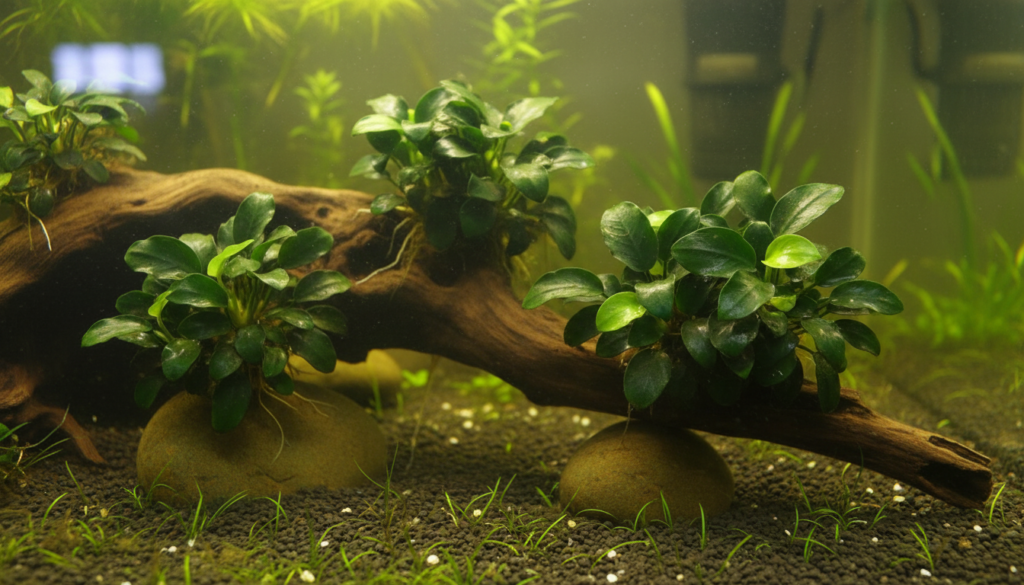
Here is the counterintuitive part. This plant needs no special substrate at all. Since the rhizome should not be buried, the classic approach is to attach it to hardscape:
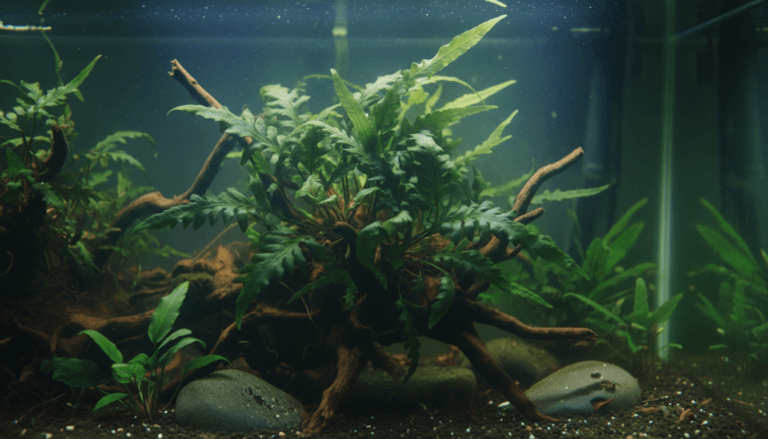
- Tie it to driftwood or lava rock with cotton thread or fishing line.
- Glue it with cyanoacrylate gel (superglue gel). Apply a small dot to the rock, press the rhizome on for 20 seconds and place it back in the tank.
- Wedge it into a crevice between stones.
- Plant it with only the roots pushed into sand or gravel and the rhizome resting on top.
Roots usually grip the surface within 4–8 weeks. After that, you can cut away the thread.
If roots reach into the substrate, they will feed from it. An aquasoil or root tabs placed near the roots will speed growth. Plain inert gravel is perfectly fine too, as long as the water column carries some nutrients.
Lighting
Low to moderate light is ideal. Aim for about 15–40 µmol/m²/s PAR at the leaf level. Most stock LED hoods on standard tanks deliver roughly that range. Keep the photoperiod at 6–8 hours per day, and use a timer so it stays consistent.
A full-spectrum white light of around 6,500 K works well. No special red or blue spectrum is required.
The bigger concern is too much light. Slow-growing leaves stay on the plant for a year or more, which gives green spot algae (Coleochaete) and black beard algae plenty of time to settle. If you run a high-tech tank, place anubias in the shade of driftwood, taller stem plants or floating plants like Salvinia or Limnobium laevigatum. Leaves that look bleached or develop yellow patches under bright light are being stressed.
CO2 supplementation
CO2 is not required. The plant grows well in tanks with no injection whatsoever. Natural CO2 from fish respiration and surface exchange is enough for its slow metabolism.
Injected CO2 (around 20–30 ppm) is beneficial. Growth speeds up noticeably and leaves tend to be larger. Liquid carbon products based on glutaraldehyde help a little too. Do not dose them directly onto the leaves of large plants, since some aroids can react poorly to concentrated spot treatment.
Fertilization
Because it feeds slowly, anubias rarely shows deficiencies in a tank with fish. Still, a lean regimen keeps the leaves dark and glossy.
- Nitrogen (nitrate): 5–10 ppm. Fish waste often supplies this alone.
- Phosphate: 0.5–1 ppm.
- Potassium: 5–10 ppm. Potassium shortage shows as pinholes and yellow leaf edges.
- Iron: 0.05–0.1 ppm. Pale new leaves with green veins point to an iron deficiency.
- Other micronutrients: manganese, boron, zinc and molybdenum, supplied by any comprehensive trace mix.
In a low-tech tank, dose an all-in-one liquid fertilizer once a week right after the water change, at half the label rate. With CO2 injection, move to two or three doses per week at the full rate. If the roots are in the substrate, push a root tab within 5 cm of them every 2–3 months.
Water changes
Change 20–30% of the water weekly. Anubias itself is not fussy. The fish in the tank and the algae balance are what benefit most. Fewer dissolved organics means less algae on those long-lived leaves.
Water change day is also the time to inspect the leaves. Wipe off algae with your fingers or a soft toothbrush. Remove any leaf that is more than half covered. Cut it at the base of the petiole with sharp scissors.
Placement in the aquarium
Placement depends on the variety. Var. nana and ‘Petite’ belong in the foreground or on rocks in the midground. Var. barteri, caladiifolia and angustifolia work as midground or background plants in tanks at least 30 cm tall. Plants tied to tall branches of wood also look great in the upper part of the scape.
Anubias handles strong current well. Positioning it near a filter outlet keeps debris and algae spores from settling on the leaves. Because fish usually ignore it, it is also one of the few plants you can use with demanding tankmates:
| Tankmate | Compatible? | Note |
|---|---|---|
| Goldfish (Carassius auratus) | Yes | Tie it to wood or rock. Goldfish dig up anything rooted in gravel. |
| African cichlids (mbuna) | Mostly yes | One of the few plants they leave alone. Wedge it firmly between stones. |
| Silver dollars (Metynnis spp.) | Partly | They may still nibble young leaves. Mature leaves usually survive. |
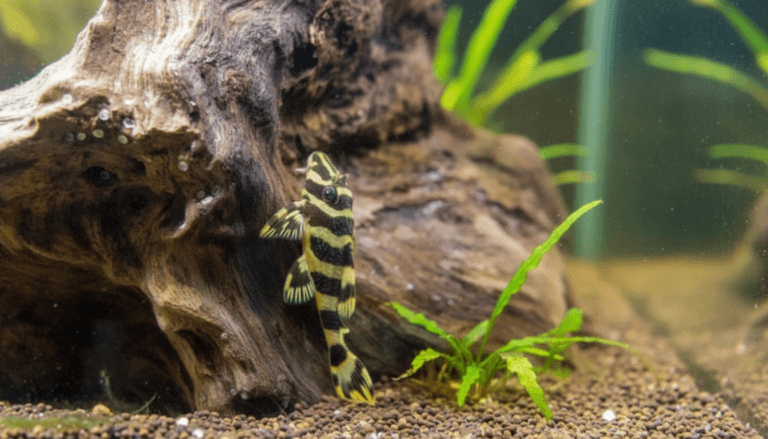
| Plecos (e.g. Ancistrus spp.) | Yes | Bristlenose plecos often graze algae off the leaves without damaging them. |
| Cherry shrimp (Neocaridina davidi) | Yes | Excellent combo. Shrimp pick biofilm from the leaf surfaces. |
| Nerite snails (Neritina spp.) | Yes | They clean green spot algae from leaves more effectively than most fish. |
| Large crayfish (Procambarus spp.) | No | They cut leaves and rhizomes with their claws. |
| Rabbit snails (Tylomelania spp.) | Partly | Some individuals graze on softer new growth. |
Reproduction
In the aquarium, the plant reproduces almost entirely through rhizome division. Seeds can form on emersed plants after pollination, but this practically never happens underwater. The good news is that division is easy.
Wait until the rhizome reaches about 10 cm long or carries at least 6–8 leaves. Then follow these steps:
- Lift the plant or the decor it is attached to out of the water.
- Choose a cutting point that leaves at least 3–4 leaves on each piece.
- Cut cleanly through the rhizome with a sterilized razor blade or sharp scissors.
- Attach each section to wood or stone the same way you mounted the parent plant.
Each piece will continue growing from the cut end within a few weeks. Sections with fewer than three leaves may survive, but they recover much more slowly.
A large rhizome also produces side shoots on its own. These small branches grow new leaves and can be snipped off once they have 2–3 leaves of their own. If you leave them attached, the plant gradually forms a dense, bushy clump. This is the look many aquascapers want on a piece of driftwood.
Occasionally a rhizome segment stays dormant for months before sprouting. Do not throw it away. As long as it remains firm and green, it is alive.
FAQ
Can you plant Anubias barteri in gravel or sand?
Yes, but only the roots. Push the roots into the substrate and keep the rhizome lying on top of it. If you bury the rhizome, it will likely rot within weeks. When in doubt, tie the plant to wood or rock instead.
Why are my anubias leaves turning yellow?
Old leaves yellow naturally and are replaced, so one at a time is normal. Several yellow leaves at once usually point to a buried rhizome, a lack of nitrate or potassium, or too much light. Check whether the rhizome feels soft. Then test your nitrate level and consider reducing the photoperiod to 6 hours.
How do I get rid of algae on anubias leaves?
First move the plant into shade or reduce light intensity. Remove leaves that are badly covered. You can spot-treat the remaining leaves outside the tank by dipping them for 1–2 minutes in a 3% hydrogen peroxide solution diluted 1:10, then rinsing them well. Nerite snails and Amano shrimp (Caridina multidentata) help with prevention.
Does anubias need to be fully underwater?
No. It grows both fully submerged and emersed. You can keep it in a paludarium or let leaves rise above the surface in a shallow tank. Emersed plants grow faster, but they need high humidity, so keep them in a covered setup.