Pearl Danio Care Guide: Tank, Diet, Breeding and More
General information
Few small fish change color as much with the light as the pearl danio. Under a bright overhead lamp it looks almost silver. Under softer side light the same fish glows pink, lilac and pale blue, much like the inside of a mussel shell. That shifting sheen is where the common name comes from. Its scientific name is Danio albolineatus, and older books list it as Brachydanio albolineatus.
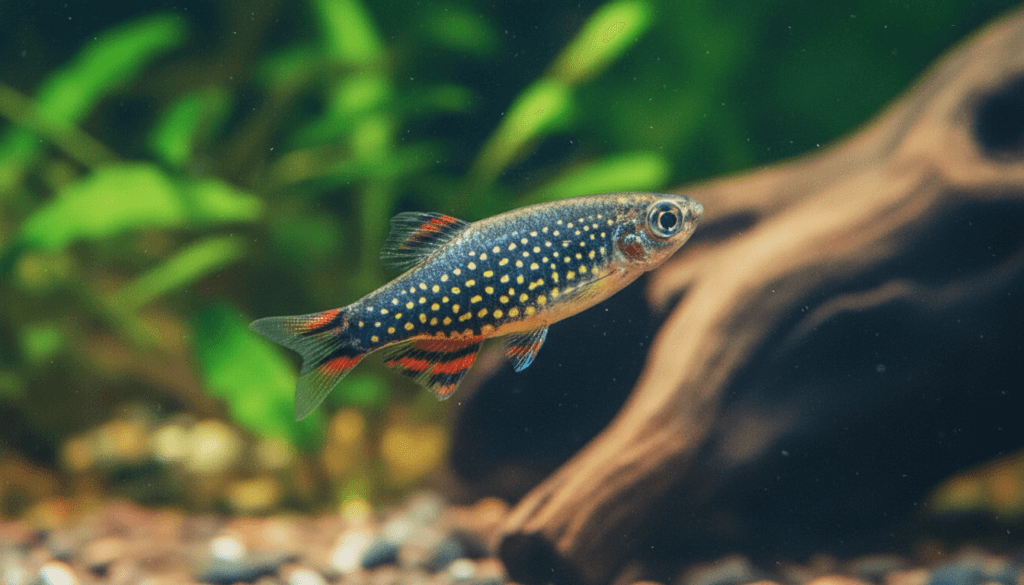
It belongs to the family Cyprinidae, so its relatives include the zebra danio (Danio rerio), rasboras and barbs. Like the zebra danio, it is hardy and fast. It forgives most beginner mistakes. Unlike the zebra danio, it has never been sold in neon GloFish versions, so most stock in shops still looks close to the wild fish.
- Adult size: 5–6.5 cm (about 2–2.5 in)
- Lifespan: 3–5 years with good care
- Temperament: peaceful but very active
- Swimming level: mainly upper and middle water
- Care level: easy
Expect constant motion. This species rarely rests in open water during the day. If you want a calm, slow-moving display, choose something else.
Appearance
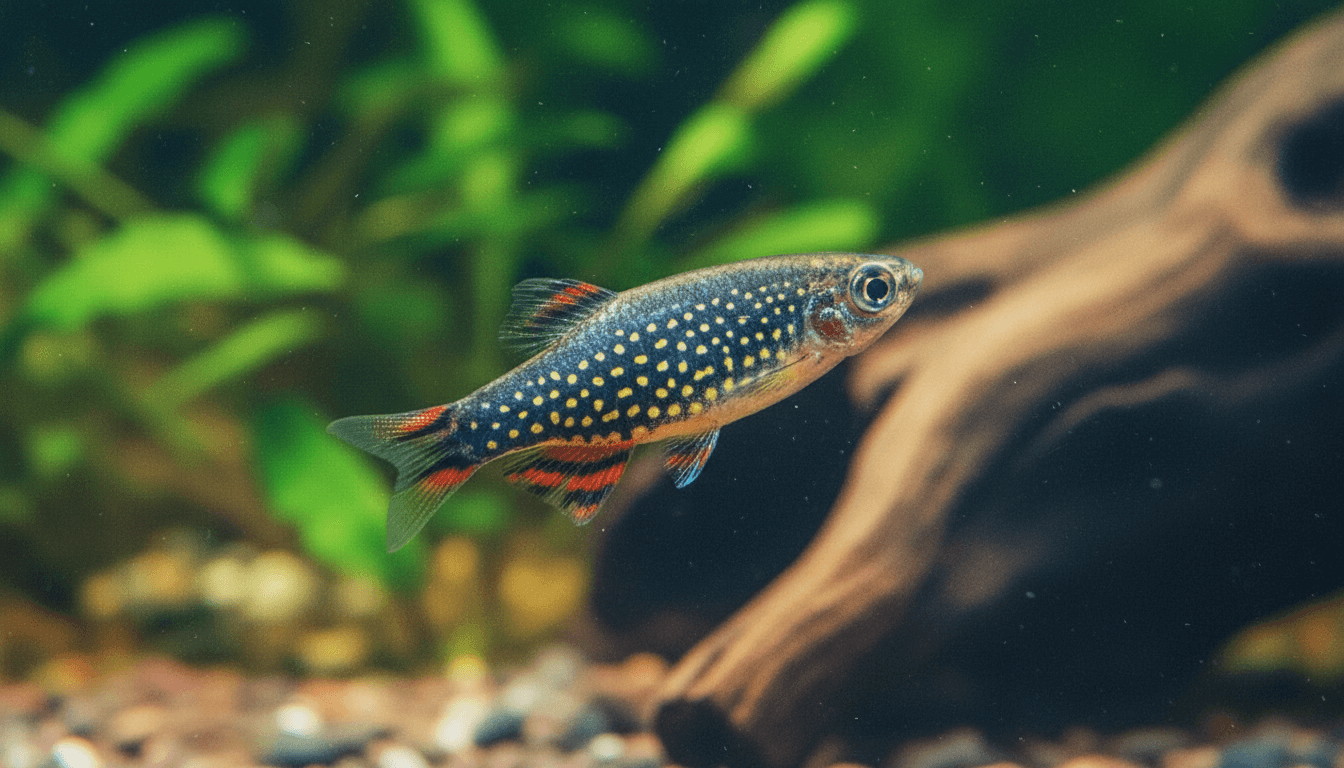
The body is long, slim and slightly flattened from side to side, which suits a fish built to hold its place in a current. The base color is a pale grey-blue with a pearly iridescence. A thin orange to red-orange line usually runs from the middle of the flank to the base of the tail. It is often bordered by a faint bluish band.
Look closely at the head and you will see two pairs of barbels. They are surprisingly long for a danio. Most people never notice them until the fish is in a quarantine tank at eye level.
Sexing adults is fairly simple:
- Males are slimmer and show stronger color, especially the orange line and a pinkish wash on the fins.
- Females have a rounder, deeper belly. This is most obvious when they carry eggs.
- Males often appear slightly smaller in overall bulk, even when length is similar.
- During courtship, males darken and flare their fins as they chase females.
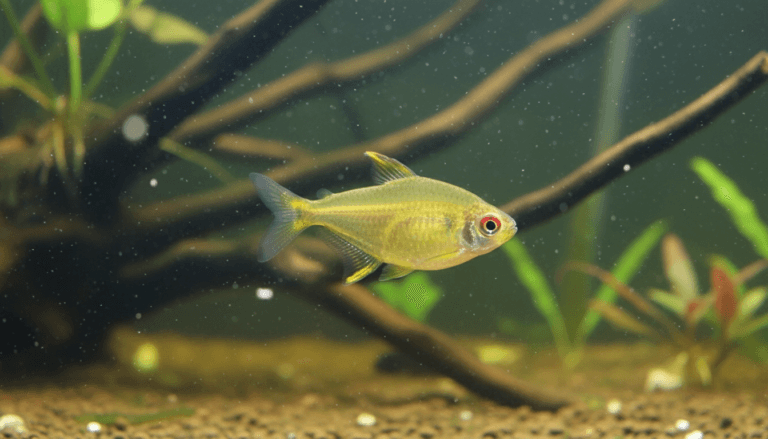
A golden or “gold pearl” form also shows up in the trade. It has a yellowish body with a weaker sheen and needs exactly the same care. Do not confuse either form with the rose danio (Danio roseus). That species looks similar, but it has a more even violet-pink tone and lacks the clear orange flank line.
Habitat
Wild populations are spread across a wide part of Southeast Asia. Records come from Myanmar, Thailand, Laos, Cambodia, peninsular Malaysia and Sumatra. Most of these fish live in clear, shallow hill streams and small rivers with moving, well-oxygenated water. The beds are usually gravel, pebbles and sand, and the banks are often overhung with vegetation.
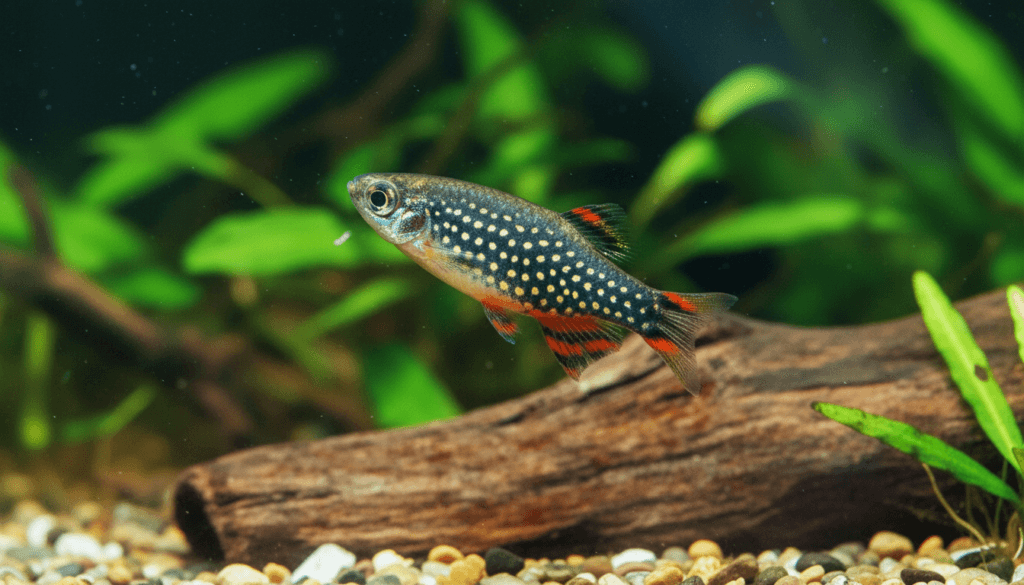
Some populations also turn up in slower water during the rainy season, including flooded margins and rice paddies. This range of habitats helps explain why the species copes with a broad spread of water chemistry in captivity.
The key point for your tank is water quality. In nature this fish lives in moving, oxygen-rich water, not stagnant ponds. It does better with a cooler, cleaner setup than many tropical fish kept at 27–28°C.
Сare and maintenance
Water parameters
Stability matters more than chasing an exact pH figure. Captive-bred stock adapts well to typical tap water, as long as it is dechlorinated.
| Parameter | Value |
|---|---|
| Temperature | 20–25°C (68–77°F) |
| pH | 6.0–8.0 |
| General hardness (GH) | 2–12 dGH |
| Ammonia / nitrite | 0 ppm |
| Nitrate | below 20–25 ppm |
Here is a counterintuitive fact: the pearl danio prefers the cooler end of the tropical range. In a heated living room that stays around 21–23°C, you may not need a heater at all. Running it warmer than 26°C for months shortens its life and reduces dissolved oxygen.
Tank size
| Parameter | Value |
|---|---|
| Minimum volume | 75 liters (about 20 gallons) |
| Recommended volume | 110 liters (about 30 gallons) or more |
| Minimum length | 75 cm (30 in) |
| Recommended dimensions | 90 × 40 × 40 cm or longer |
Length beats height every time. A tall 60-liter column tank gives these sprinters nowhere to run. A long, shallow tank lets the school stretch out the way it would in a stream. A tight lid is not optional either, because danios jump, especially when startled or chasing.
Filtration and water flow
Choose a filter rated for at least four to five times the tank volume per hour. A canister filter or a large hang-on-back filter works well in tanks of 90 cm and up. In smaller setups, a sponge filter paired with a small powerhead also does the job.
Moderate to fairly strong flow is welcome. Point the filter outlet along the length of the tank to create a gentle “river” at the surface. You will often see the school facing into the current and holding position, which is natural behavior. Leave one calmer corner behind plants or wood so the fish can choose how hard they work.
Substrate and decor
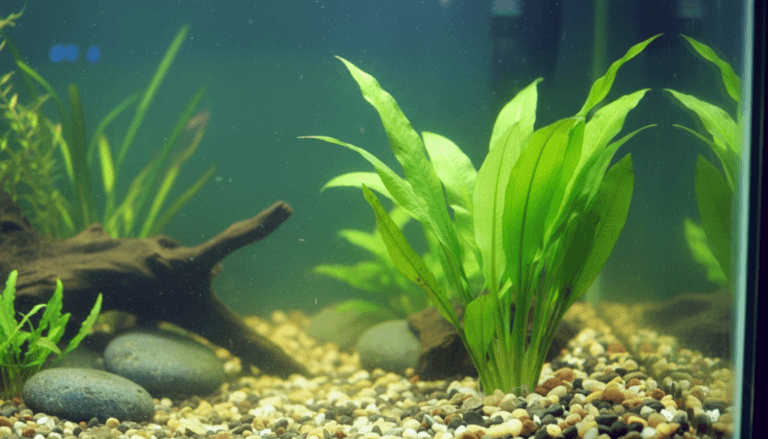
Fine to medium rounded gravel or smooth sand in natural brown and grey tones suits this species. Dark substrate makes the pearly sheen far more visible than white sand does. Add a few river stones and one or two pieces of driftwood to break lines of sight. Keep the middle and upper water mostly open.
Plants that tolerate cooler water and current are the best picks:
- Java fern (Microsorum pteropus) tied to wood or rock
- Anubias barteri var. nana
- Vallisneria (Vallisneria spiralis) along the back
- Java moss (Taxiphyllum barbieri) on stones
- Cryptocoryne wendtii in the foreground
Leaf litter is optional. A few Indian almond leaves (Terminalia catappa) are harmless, but this is not a blackwater fish. Do not expect it to need tannin-stained water.
Lighting
Medium lighting for 8–10 hours a day is enough. Very strong light washes the color out to plain silver. Softer light, or light angled from the front, brings out the pink and blue tones. Floating plants such as Amazon frogbit (Limnobium laevigatum) can shade one end, but keep them to about a third of the surface. The fish needs open water up top and you need the gas exchange.
Water changes
Change 25–30% of the water every week. If your tank is heavily stocked, or nitrate climbs above 20 ppm between changes, do two smaller changes of 15–20% instead. Match the new water to within 1–2°C of the tank. Since this fish comes from clean streams, a skipped month of maintenance shows quickly as faded color and clamped fins.
Social behavior and group size
Keep at least 6. A group of 8–12 is much better. This is a shoaling fish that tightens into a true school when it feels threatened. In a small group, males focus their chasing on one or two individuals, and stress spreads fast.
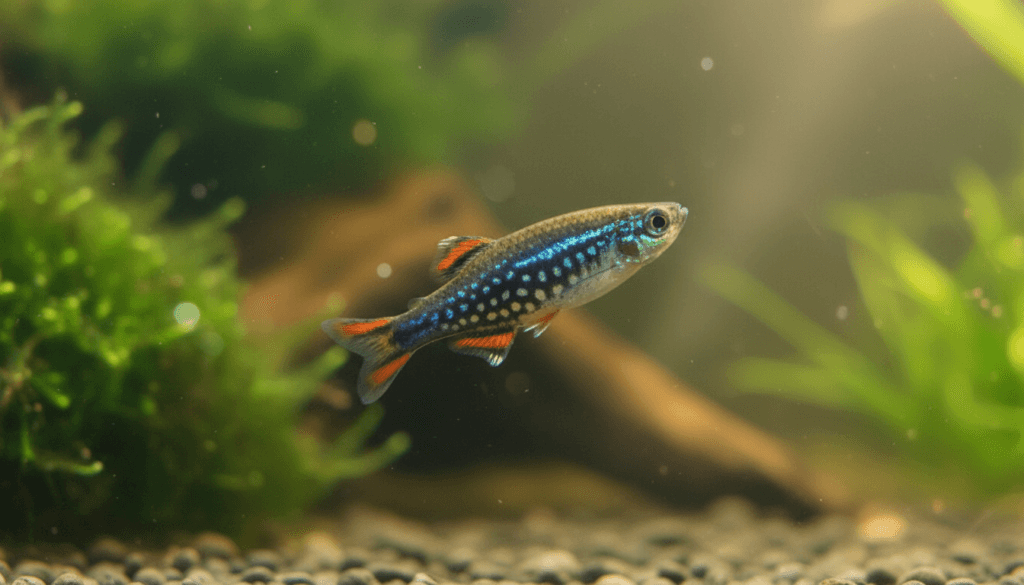
Within the group you will see a loose pecking order. Males spar with brief chases and fin displays, but they do not hold territories the way gouramis or cichlids do. Aim for slightly more females than males, or at least an even ratio.
Additional behavioral care tips
- Shy behavior and hiding usually mean the group is too small, not that the fish is timid.
- A cover glass with no gaps around cables stops most jumping losses. Cut-out strips of mesh work for open-top setups.
- Rapid darting is normal. Repeatedly scraping against rocks is not, and it often points to parasites or poor water.
- Add new fish in batches of at least 4–5 so they settle into the existing school faster.
- Quarantine new arrivals for 3–4 weeks. Wild-type cyprinids can carry ich and gill flukes.
Compatibility
Peaceful does not mean slow. The pearl danio can outcompete gentle fish at feeding time and may stress very calm species just by zooming past them.
| Tankmate | Compatible? | Note |
|---|---|---|
| Zebra danio (Danio rerio) | Yes | Similar speed and temperature needs; may shoal loosely together. |
| White Cloud Mountain minnow (Tanichthys albonubes) | Yes | Ideal partner for cooler, unheated tanks. |
| Harlequin rasbora (Trigonostigma heteromorpha) | Yes | Keep near 24°C as a compromise temperature. |
| Cherry barb (Puntius titteya) | Yes | Stays lower in the water, so space is shared well. |
| Corydoras (e.g. Corydoras paleatus) | Yes | Peppered cory handles cool water well and covers the bottom. |
| Hillstream loaches (Sewellia, Beaufortia) | Yes | Great biotope match for a flowing, rocky setup. |
| Cherry shrimp (Neocaridina davidi) | With caution | Adults are safe; baby shrimp will be eaten. |
| Betta (Betta splendens) | No | Wants warmer, still water; danios may nip long fins. |
| Fancy guppies | No | Long-finned males get nipped and prefer warmer water. |
| Angelfish (Pterophyllum scalare) | No | Needs 27°C+; adults may eat small danios. |
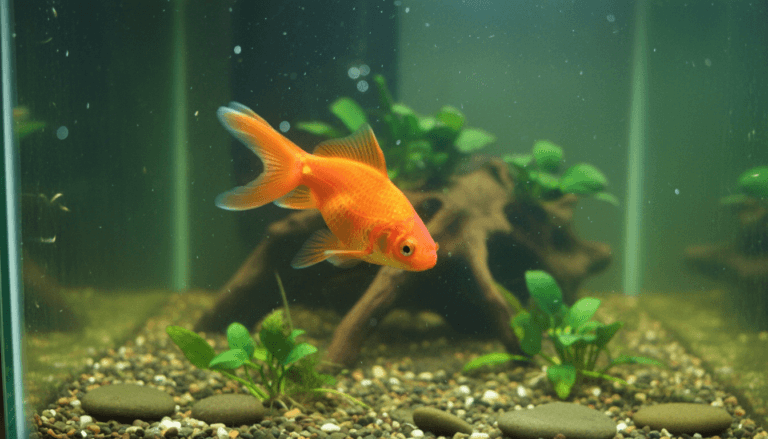
| Fancy goldfish | No | Temperature overlaps, but goldfish waste load and size make it a poor match. |
Feeding
In the wild, this species picks insects off the surface and grabs small invertebrates drifting in the current. Its upturned mouth tells you it feeds high in the water column. Sinking pellets that drop past it quickly often go uneaten.
Build the diet around a quality micro-flake or small floating granule (0.5–1 mm), then add frozen or live foods 2–3 times a week:
- Daphnia
- Cyclops
- Brine shrimp (Artemia), frozen or freshly hatched
- Mosquito larvae
- Bloodworms, chopped, as an occasional treat
Feed twice a day, giving only what disappears in about 2 minutes. Fast, fat-free fish like this one look hungry all the time, so do not let begging decide the portion size. One fasting day per week is fine for adults.
If you keep slower bottom dwellers, drop their food at lights-out. Otherwise the danios will rush the sinking wafers first.
Reproduction
Breeding Danio albolineatus is easy to trigger and hard to finish successfully in a community tank. The reason is simple. Adults eat their own eggs within minutes, and the parents provide no care at all.
Set up a separate breeding tank of 30–40 liters. Keep the water shallow, around 10–15 cm deep, and cover the bottom with something the eggs can fall through:
- A layer of glass marbles
- Plastic mesh raised 2–3 cm off the glass
- A thick mat of Java moss
- Bunches of spawning mop made from acrylic yarn
Use mature water from the main tank at 24–25°C and a small air-driven sponge filter. Condition the adults for a week with daily live or frozen foods until the females look visibly round. Then move one or two females with two males into the breeding tank in the evening.
Spawning usually starts at first light. Males chase females through the plants or over the marbles, and the eggs scatter as the pair presses together. A single female can release a few hundred small, clear, non-adhesive eggs. Remove the adults as soon as you spot eggs, or after 24–48 hours at most.
At around 25°C the eggs hatch in roughly 2–3 days. The fry hang on the glass while they absorb the yolk sac, then become free-swimming a few days later. Start them on infusoria, paramecium or a commercial liquid fry food. After about a week, switch to microworms and newly hatched brine shrimp. Small daily water changes of 10% with matched water keep the delicate fry alive through the first month.
Juveniles show their first sheen at about 6–8 weeks. The orange flank line develops later, and most fish reach breeding size by 5–6 months.
FAQ
Do pearl danios need a heater?
Not always. If your room never drops below about 20°C, the fish will be fine without one. In colder homes, use a small adjustable heater set to 22–23°C to prevent nighttime drops.
How many pearl danios should be kept together?
The minimum is 6, but 8–12 gives much calmer behavior and better color. Groups smaller than 5 often lead to one fish being bullied constantly.
Can pearl danios live with shrimp?
Adult cherry shrimp and Amano shrimp (Caridina multidentata) are generally safe. Shrimplets will be hunted, so if you want a growing shrimp colony, add dense Java moss or keep the shrimp in a separate tank.
Why has my pearl danio lost its color?
The most common causes are lighting that is too bright from directly above, a pale substrate, high nitrate or stress from too small a group. Test the water first, then try a darker background and softer light before changing anything else.