Tiger Barb Care Guide: Keep a Vibrant School Safely
General information
The Tiger Barb is a compact, active schooling fish that injects energy into almost any community aquarium. Tiger Barb has a reputation for bright striping, bold personality, and a tendency to chase slow-moving tankmates — all traits that make it as entertaining as it is demanding. Native to Southeast Asia, Tiger Barb is a hardy species well-suited to aquarists who enjoy dynamic tanks and steady social interactions. Expect quick bursts of activity, rapid feeding responses, and a fish that rewards thoughtful husbandry with vivid color and confident behavior.
Beyond the usual hobbyist chatter, Tiger Barb has a fascinating taxonomic history: once placed in Puntius and now often listed as Puntigrus tetrazona, the species demonstrates how scientific names shift while husbandry needs remain steady. This fish is not just decorative; it plays a role in some micro-ecosystems as an algae grazer and insectivore in the wild. When kept correctly, Tiger Barb can live several years and develop brilliant coloration, especially in darker, well-planted aquaria where contrast makes the orange and black bands pop.
Appearance
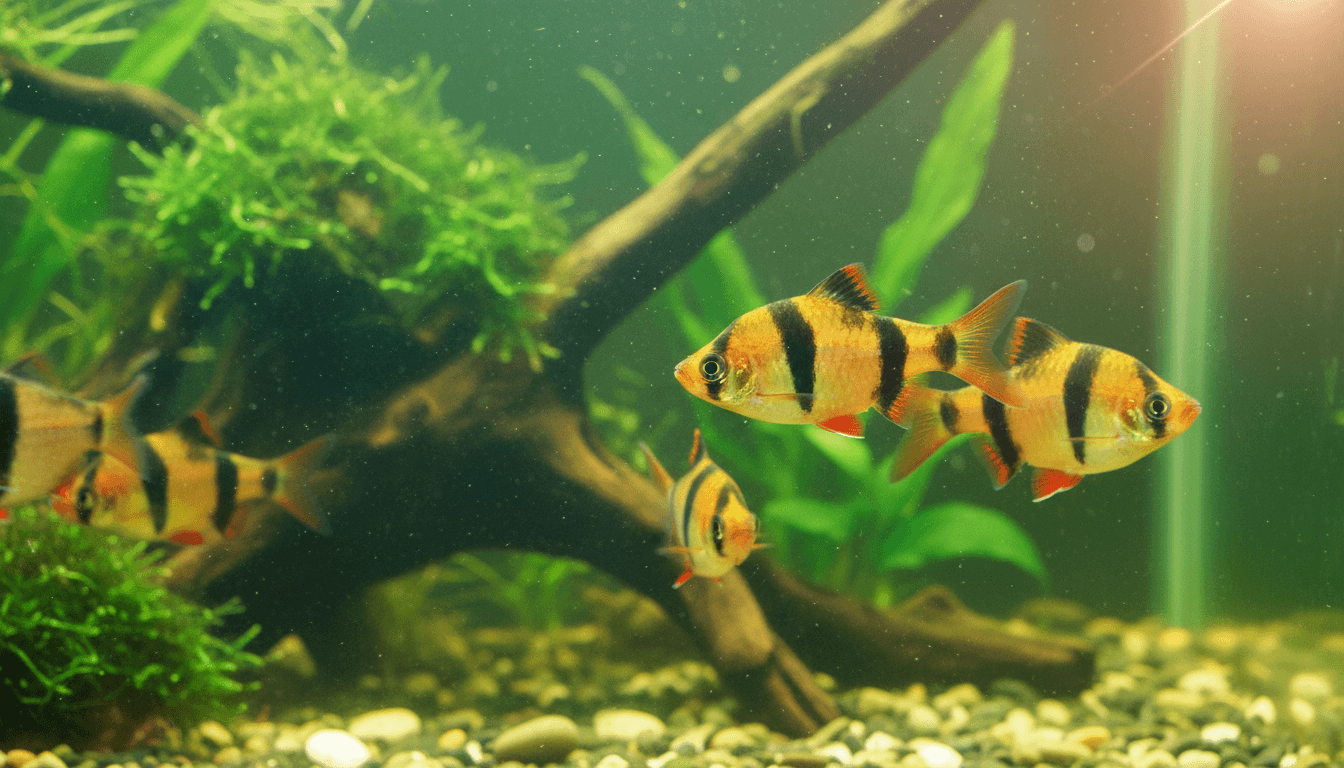
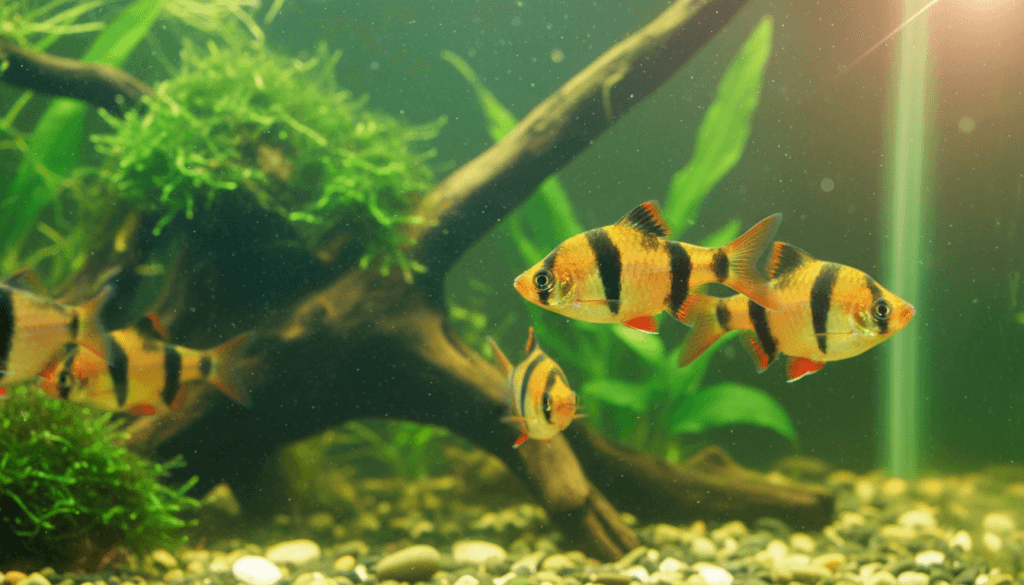
The typical Tiger Barb sports a golden-orange base color crossed by four vertical black bars, with red-orange fins that intensify in well-lit, high-oxygen aquaria. Mature males often show deeper red on the dorsal and anal fins and a slightly slimmer profile, while females may be rounder and paler when carrying eggs. Size averages 5–7 cm (2–2.8 inches) in captivity, although larger specimens are occasionally reported in generous setups.
Unique visual quirks include subtle variation in bar thickness and an occasional “broken” bar near the dorsal, which makes identifying individuals easy once a school is established. Scattered iridescent scales along the flank can appear under certain angles of light, giving Tiger Barb a shimmering quality. Young fish may display fainter bands that deepen with sexual maturity; aggressive schooling behavior and flare-ups during feeding often cause brief color intensification.
Habitat
Wild Tiger Barb inhabit slow to moderate-flow streams, seasonal rivers, and flooded fields across Borneo, Sumatra, and the Malay Peninsula. These waters are typically warm, slightly acidic to neutral, and rich in leaf litter and submerged roots — conditions that inform ideal aquarium design. A biotope-themed tank that mimics tannin-stained water, dense plant pockets, and driftwood will make Tiger Barb feel at home and display more natural behaviors.
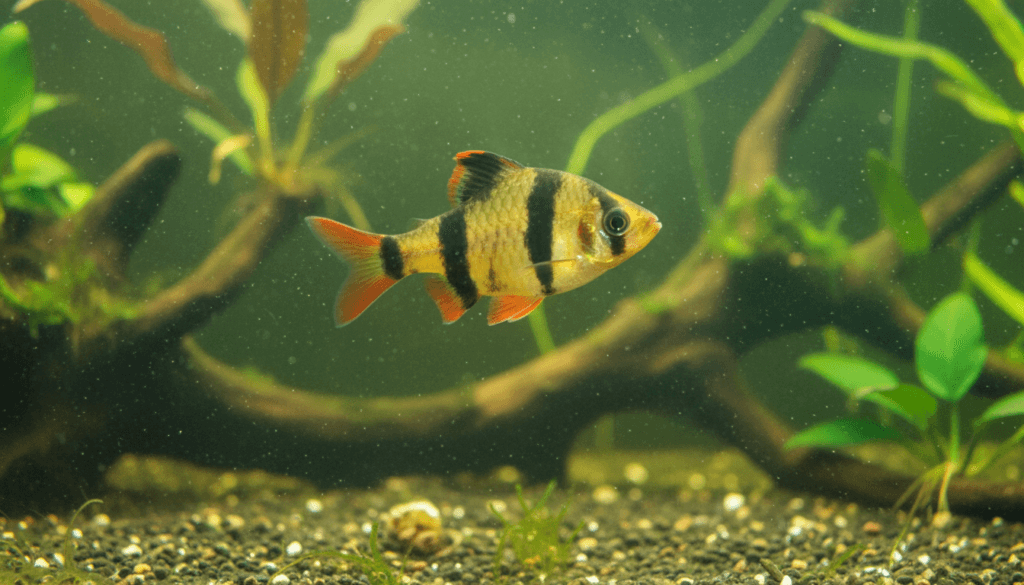
Seasonal changes in the wild influence breeding and schooling patterns: wet-season floods expand foraging grounds, and clearer dry-season pools concentrate fish into denser groups. Recreating gentle water movement, scattered shaded zones, and varied substrates helps stimulate natural activity and reduces stress. Many aquarists notice that Tiger Barb kept in tanks with moderate tannin levels and soft surfaces are less prone to fin nipping and show more nuanced social signals.
Сare and maintenance
Water parameters
Temperature: 22–28°C (72–82°F). pH: 6.0–7.5, with 6.5–7.2 ideal for most captive stocks. General hardness (GH): 4–12 dGH. Stability matters more than hitting a single “perfect” number; gradual fluctuations are less stressful than sudden shifts. Aim for consistent temperatures and monitor pH trends after major water changes or substrate adjustments. If using tap water with higher GH, pair Tiger Barb with plants and decorations that create microhabitats to soften perceived water quality.
Tank size
Minimum volume: 60 liters / 15 gallons for a small school. Recommended dimensions: length > height (e.g., 80–100 cm length over 40–50 cm height) to allow horizontal schooling. Bigger tanks reduce aggression and let hierarchies form without constant encounters. For groups larger than 8–10 fish, scale up to 100–150 liters (25–40 gallons) or more; longer tanks are preferable because Tiger Barb love to patrol horizontally.
Filtration and water flow
Filter type: hang-on-back (HOB), canister, or sponge filter with biological media. Preferred flow intensity: low to moderate — replicate gentle stream currents. Too strong a flow can scatter a school and stress less robust individuals; too weak can reduce oxygenation. Aim for turnover of 4–6× tank volume per hour with adjustable outflow to create mild eddies rather than blasty currents. Include surface agitation for gas exchange without creating turbulent swims.
Substrate and decor
Substrate: dark gravel or fine sand helps colors stand out and reduces glare. Driftwood and rocks: arrange in small caves and low arches to offer escape routes and break line-of-sight. Plants: choose sturdy stems (e.g., Hygrophila) and mid-height rosette plants, plus floating plants to diffuse bright light. Leaf litter: Indian almond leaves or oak create tannins, shelter, and natural foraging zones. Combine open swimming lanes with dense planting to satisfy both active schooling and shy individuals.
Lighting
Intensity: moderate; avoid extreme brightness that bleaches colors or stresses fish. Duration: 6–8 hours daily, with some midday dimming possible for a natural cycle. Shade: provide shaded pockets via floating plants or overhangs so Tiger Barb can retreat. A light schedule that mimics dawn and dusk helps reduce aggression spikes that sometimes occur at abrupt light changes.
Water changes
Frequency: weekly or biweekly depending on stocking and feeding. Percentage: 20–30% for weekly changes, 30–50% for biweekly maintenance in heavily stocked tanks. Monitor nitrate levels; consistent partial changes maintain water stability and reduce disease risk. When adding new water, ensure temperature and pH are matched to avoid shocking Tiger Barb, which react sensitively to sudden chemistry swings.
Lid or cover
Tiger Barb will leap occasionally, especially if startled or when chasing. A tight-fitting lid is recommended. Provide small ventilation gaps but avoid large openings where fish can jump out. Hanging plants or a floating mat can reduce anxiety that causes jumping by softening surface exposure.
Social behavior and group size
Minimum group size: 6–8 individuals. Social structure: schooling with a dynamic hierarchy; males will spar and display but serious aggression is reduced in larger groups. Tigers establish pecking orders; keeping them in sufficient numbers diffuses bullying onto multiple targets rather than isolating one fish. Mixed-sex groups function well, but balance sexes when possible to prevent persistent harassment of single females.
Additional behavioral care tips
Rotate decor and add enrichment like floating feeding rings or sparse rock mazes to keep personalities active. If fin-nipping becomes a problem, increase school size, add robust, fast-swimming tankmates, or rearrange decorations to disrupt status quo. Monitor for stress signs such as faded color, clamped fins, or nocturnal hiding; these often indicate water quality or social imbalance issues. Night lighting or a gentle moonlight phase can help reduce daytime overstimulation.
Compatibility
Choosing tankmates for Tiger Barb requires balancing energy and resilience. Tiger Barb do best with fast, boisterous fish that can handle occasional nips: danios, certain rasboras, and larger tetras are good fits. Avoid slow-moving, long-finned species like bettas or angelfish that trigger fin nipping. Bottom-dwelling species such as Corydoras catfish and Otocinclus often coexist peacefully because they occupy different tank zones and are armored against incidental chasing.
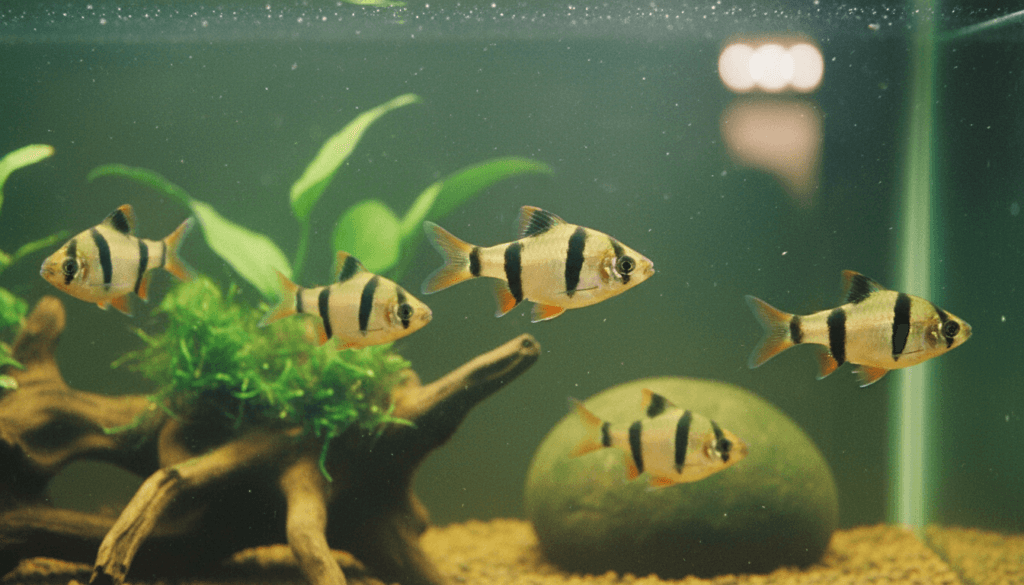
Hardier mid-sized community fish can help diffuse attention and reduce harassment frequency. When mixing species, observe initial interactions closely; Tiger Barb may single out a timid fish, so be prepared to separate if stress becomes visible. Using the focus keyword across community planning helps keep the school centered in design choices: when planning a community tank, always consider how Tiger Barb activity will shape the lives of neighboring species.
Feeding the Tiger Barb
Tiger Barb are omnivores with an appetite for variety. A staple of quality flake or pellet food provides daily nutrition, while frequent supplementation with frozen or live fare — bloodworms, daphnia, brine shrimp — supports coloration and breeding condition. Vegetal matter is also appreciated: blanched spinach, zucchini slices, or algae wafers keep digestion regular and prevent nutrient deficiencies.
Feed small portions twice daily, offering only what Tiger Barb consume within 2–3 minutes to avoid fouling the tank. Using a mix of dry and fresh/frozen diets three to four times per week yields the best color results. Be mindful that overfeeding can trigger aggression by increasing energy levels and competition; controlled portions help maintain social balance. Including occasional grazing opportunities, like biofilm-covered driftwood or seeded floating plants, satisfies natural foraging instincts and reduces chasing behavior.
Reproduction
Breeding Tiger Barb in captivity is straightforward for aquarists who provide correct environmental cues. They are egg scatterers that broadcast eggs over plants and fine-leaved substrates. To encourage spawning, set up a separate breeding tank with slightly softer, acidic water (pH 6.0–6.8) and temperatures toward the upper end of their range (26–28°C / 79–82°F). Add dense, fine-leaved plants or a spawning mop to protect eggs from parental predation.
Introduce a conditioned group with a higher male-to-female ratio and feed high-protein live foods for several days. Spawning often occurs in early morning with chasing and displays; expect 100–200 eggs from an active pair within a group context. Remove adults after spawning or use a mesh breeder insert to protect eggs. Eggs typically hatch in 24–48 hours, and fry become free-swimming after approximately 3–5 days. Start fry on infusoria and freshly hatched brine shrimp; gradual weaning onto micro-pellets and finely crushed flake ensures steady growth.
Selective breeding can enhance specific traits like deeper red fin pigmentation, bar contrast, or reduced aggression, but careful record-keeping and ethical selection are crucial to avoid inbreeding and unwanted deformities. Observing subtle courtship behaviors — small circling motions and fin flaring — gives insight into sex ratios and readiness to spawn, allowing more precise breeding setups.
Keeping Tiger Barb offers a lively, educational display of social dynamics, color morphs, and breeding behaviors. With proper tank design, stable water conditions, and thoughtful community choices, Tiger Barb can be a centerpiece species that educates and captivates. Emphasize consistent maintenance, varied feeding, and group-oriented housing to keep the school vibrant and healthy for years to come.