
Top 7 Stunning Guppy Species: Care and Tips Guide
Introduction
If you’ve ever wandered the aisles of a fish shop or scrolled through aquarium forums, you know there’s a dizzying variety of guppy species to choose from. From tail shapes that look like miniature fans to color patterns so complex they seem painted, guppy species are the little fireworks of the freshwater hobby. In this post I’ll walk you through ten of my favorite varieties, share unusual facts I’ve picked up over years of keeping and breeding them, and offer practical tips so you can enjoy these lively characters in your own tank.
Top 10 guppy species — brief overview
Guppy species can mean different things to different people. Some hobbyists use the phrase to describe scientifically distinct species in the Poecilia genus, while most of us mean the many cultivated strains derived from Poecilia reticulata. For clarity, this list focuses on the popular cultivated guppy species you’ll actually buy: classic wild-type lines, heavily patterned strains, and designer hybrids that emerged from selective breeding. I picked these ten because they represent a range of colors, tail forms, and breeding quirks that are both beautiful and accessible to beginners and veterans alike.
1. Moscow Guppy
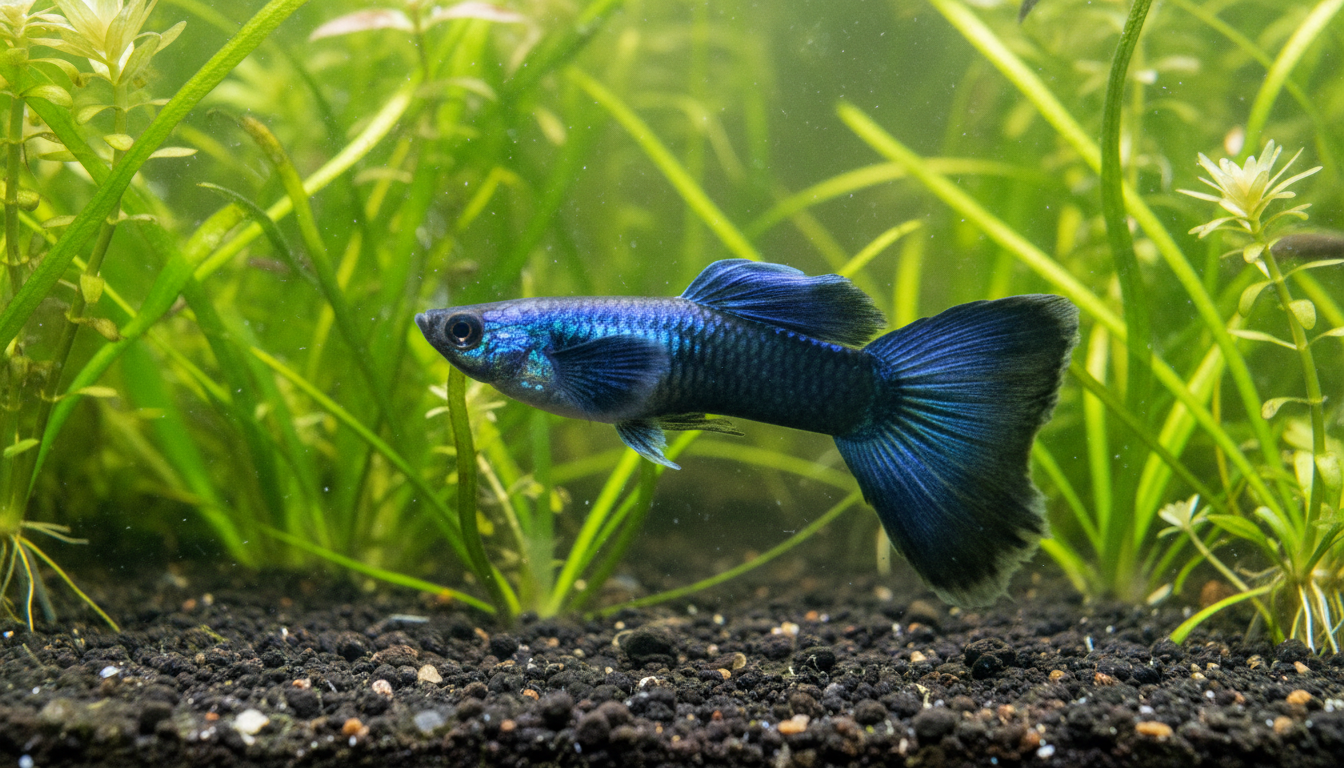
Moscow guppy species are prized for deep, metallic blues and greens. They often have the richest body color of any strain, and males can look like tiny moving jewels. Because their color is so valuable, breeders may cross them repeatedly to intensify hues; if you’re buying, pay attention to the saturation of young males — it hints at future quality.
2. Fancy Tail Guppy (Fan and Veil Hybrids)
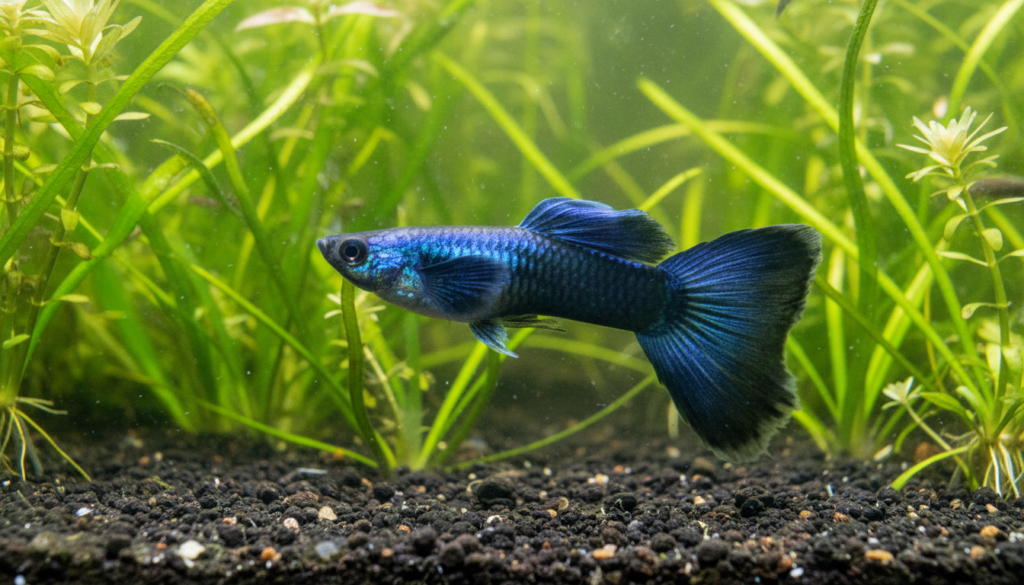
When I say “fancy tail,” I’m talking about fans and veils that have been emphasized by breeders. These guppy species variants sport broad, flowing tails that ripple with every flick. They need a calm flow and wide open swimming areas to prevent tail damage. If you keep these with boisterous tankmates, you’ll notice frayed fins much faster than with hardier strains.
3. Halfblack Guppy
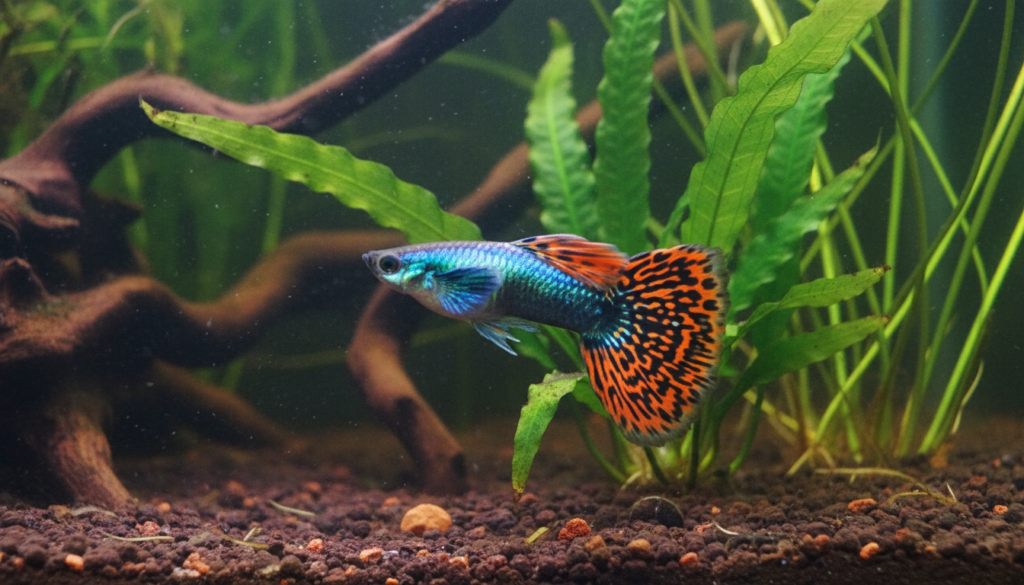
Halfblack guppy species are dramatic — roughly half the body and tail are solid black while the other half shows bright hues. The contrast is theatrical and makes selective breeding rewarding: you can chase cleaner demarcations or interesting asymmetry. One unusual fact: the halfblack pattern can sometimes correlate with better stress resilience in my experience, possibly because dark pigments offer UV protection in brighter tanks.
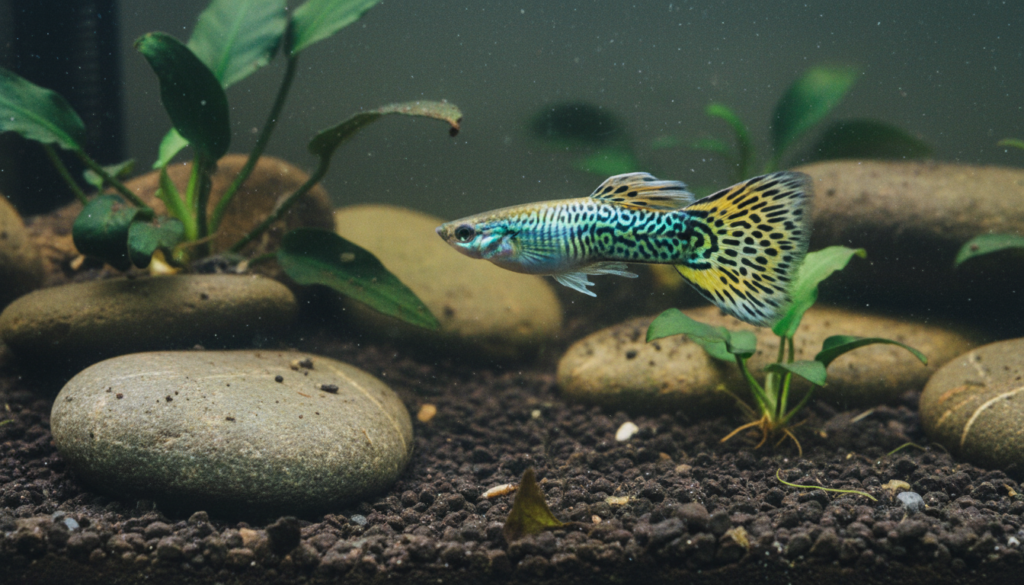
4. Snakeskin Guppy
The snakeskin pattern gives a scale-like, reticulated look that shimmers under light. It’s a personal favorite in planted tanks where the pattern echoes the natural striations of leaves. Snakeskin guppy species often carry genes that increase iridescence, so you’ll see different colors depending on the angle of light — a small aquarium light hack I love is angling the hood lamp slightly to maximize this effect.
5. Tuxedo Guppy
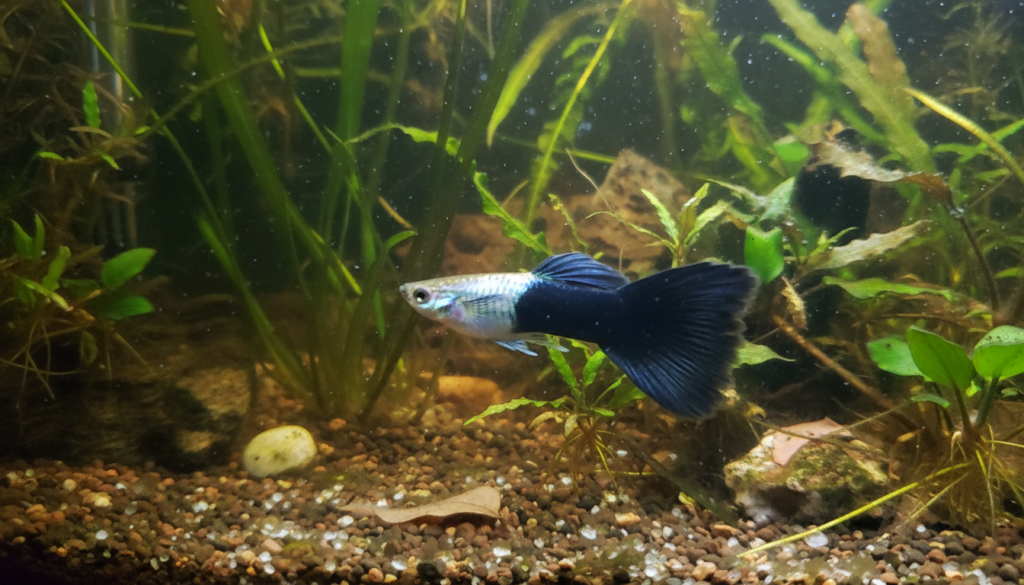
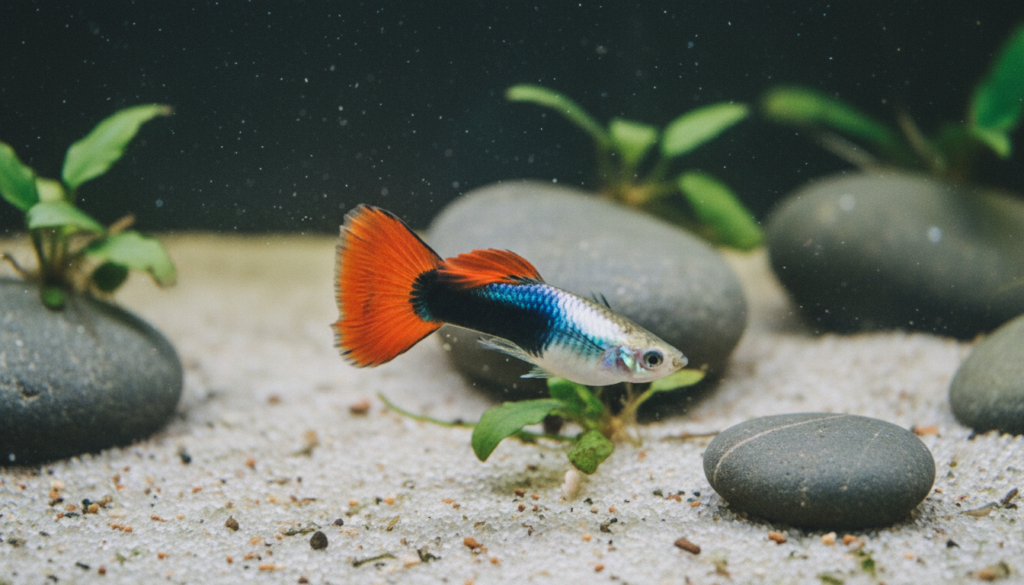
Tuxedo guppies look classy: dark rear halves with brighter fronts, like a miniature tailcoat. They mix well with mid-ground plants because their silhouette contrasts nicely against green foliage. If you’re breeding for pattern, watch for inconsistent demarcation — a clear line from head to tail indicates strong genetics in Tuxedo guppy species.
6. Yellow King Cobra Mosaic
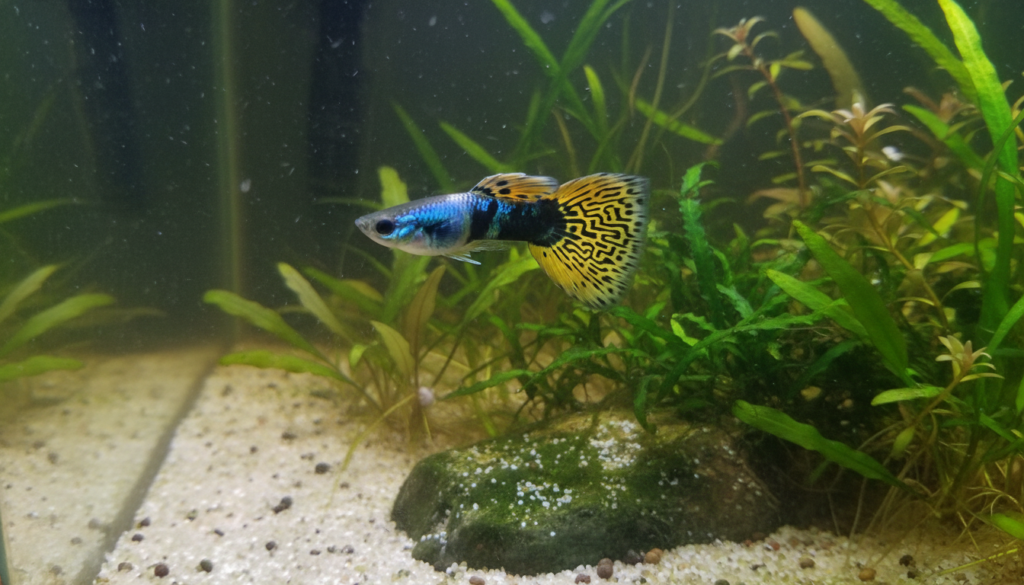
These guppy species combine bright yellow pigmentation with mosaic or cobralike patterns. Some of my most eye-catching community tanks have had a scattering of these yellows — they act as focal points. Interesting note: yellow pigments in guppies can be sensitive to diet; I found carotenoid-rich foods (like spirulina flakes plus live brine) keep yellows luminous.
7. Japanese Blue Guppy
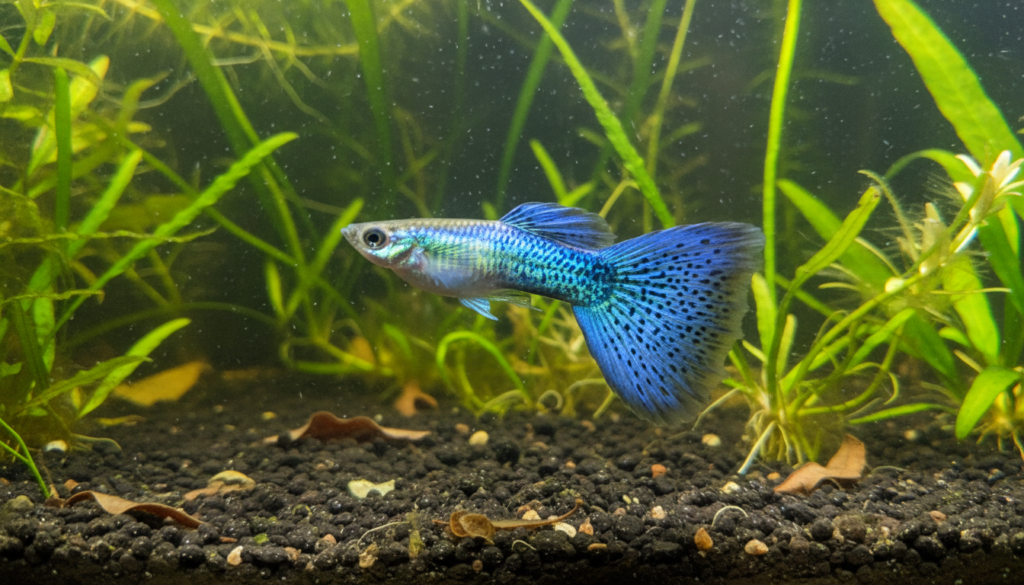
Japanese Blue is a historical strain, revered for cool steel-blue tones. These guppy species tend to be calm and display flash when courting. If you want to preserve subtle blues, avoid overcrowding, which can dull color expression. Also, do occasional low-dose fertilization of plants rather than heavy water changes to keep them stress-free and colorful.
How to choose guppy species for your tank
Choosing the right guppy species comes down to a few practical considerations: tank size, filtration, tankmates, and whether you plan to breed. Small community tanks (10–20 gallons) do well with a handful of mixed fancy guppies, but if you want to showcase tail forms, opt for a 20+ gallon with calm current. I recommend selecting guppy species with similar temperament and size to avoid bullying; for example, avoid pairing extreme-veiled males with fin-nipping tetras.
Tank setup tips that helped me keep guppy species thriving
- Water parameters: Keep pH 7.0–7.8 and temperature 74–82°F. I aim for pH around 7.2 and 78°F for reliable breeding.
- Plants and hiding spots: Java moss and floating plants reduce stress and provide fry cover. When I added more moss mats, fry survival increased dramatically.
- Filtration and flow: Use sponge filters or adjustable canister flow to protect delicate fins, especially if you keep fan-tailed guppy species.
- Diet: Mix high-quality flakes with frozen and live foods. Guppy species fed a small daily portion of live brine shrimp show brighter colors and more vigorous courtship displays.
- Breeding control: If you don’t want constant fry, house only males or use a breeder box. Conversely, set up a species tank with dense plantings if you want to raise fry naturally.
Breeding notes and genetics for guppy species
Guppy species are an excellent entry point into aquaculture genetics. Traits like the halfblack, cobra, or snakeskin are inherited through combinations of dominant and recessive alleles. When I first started breeding, I tracked parent colors and tail types in a simple notebook; after a few generations patterns began to predictably reappear. A practical tip: always keep at least two males per line to avoid inbreeding depression and rotate breeders every few generations if you can.
Common health issues and preventative care
Guppy species are generally hardy, but fin rot, ich, and columnaris can crop up if water quality slips. I learned the hard way that overcrowding and overfeeding are the fastest route to outbreaks. Regular partial water changes (20–25% weekly), routine gravel vacuuming, and a varied diet keep immune systems strong. Quarantine new additions for two weeks; it’s a simple step that saved me from several scares.
FAQ
- Q: How many guppy species should I keep in a 10-gallon tank?A: In a 10-gallon, a small group of 3–5 guppies (preferably a male-to-female ratio like 1:2) is best. Too many males will stress females with constant courting.
- Q: Can different guppy species interbreed?A: Yes. Most cultivated guppy species are the same species (Poecilia reticulata) and will interbreed freely, producing mixed-pattern offspring. If you want to preserve a strain, keep it separate.
- Q: What is the best diet for bright colors?A: A mix of high-quality flakes, frozen bloodworms, and live brine shrimp boosts carotenoids and enhances pigments. For yellow and red tones, add carotenoid-rich foods and a varied regimen.
- Q: Do guppy species get along with shrimp?A: Smaller shrimp like cherry shrimp can coexist, but expect some predation on juveniles. Dense plant cover gives shrimp a fighting chance.
Conclusion
Guppy species bring endless variety and personality to the aquarium hobby. Whether you’re drawn to the metallic sheen of a Moscow, the dramatic split of a halfblack, or the delicate flow of a fan-tailed fancy, there’s a strain to fit every taste and tank. My best advice: start with a small, well-maintained setup, keep a few hardy strains to learn breeding basics, and enjoy the surprise of young fry — each generation tends to produce delightful and sometimes unexpected color combinations. Happy planting, feeding, and watching; these tiny showpieces reward patience more than anything.
One Comment