Least Rasbora Care: Tiny Charmer for Nano Tanks
General information
The Least Rasbora is a diminutive, elegant schooling fish prized for small aquariums and biotope setups. Native to slow-moving blackwater streams and peat swamps in Southeast Asia, the Least Rasbora thrives in densely planted tanks with soft, acidic water and subdued light.
As a member of the Cyprinidae family, this fish displays classic schooling instincts paired with surprising personality: quick, darting movements, curious inspection of leaf litter, and a tendency to form tight shoals when comfortable. If adding a splash of delicate motion to a nano tank is the goal, the Least Rasbora is a top candidate.
Appearance
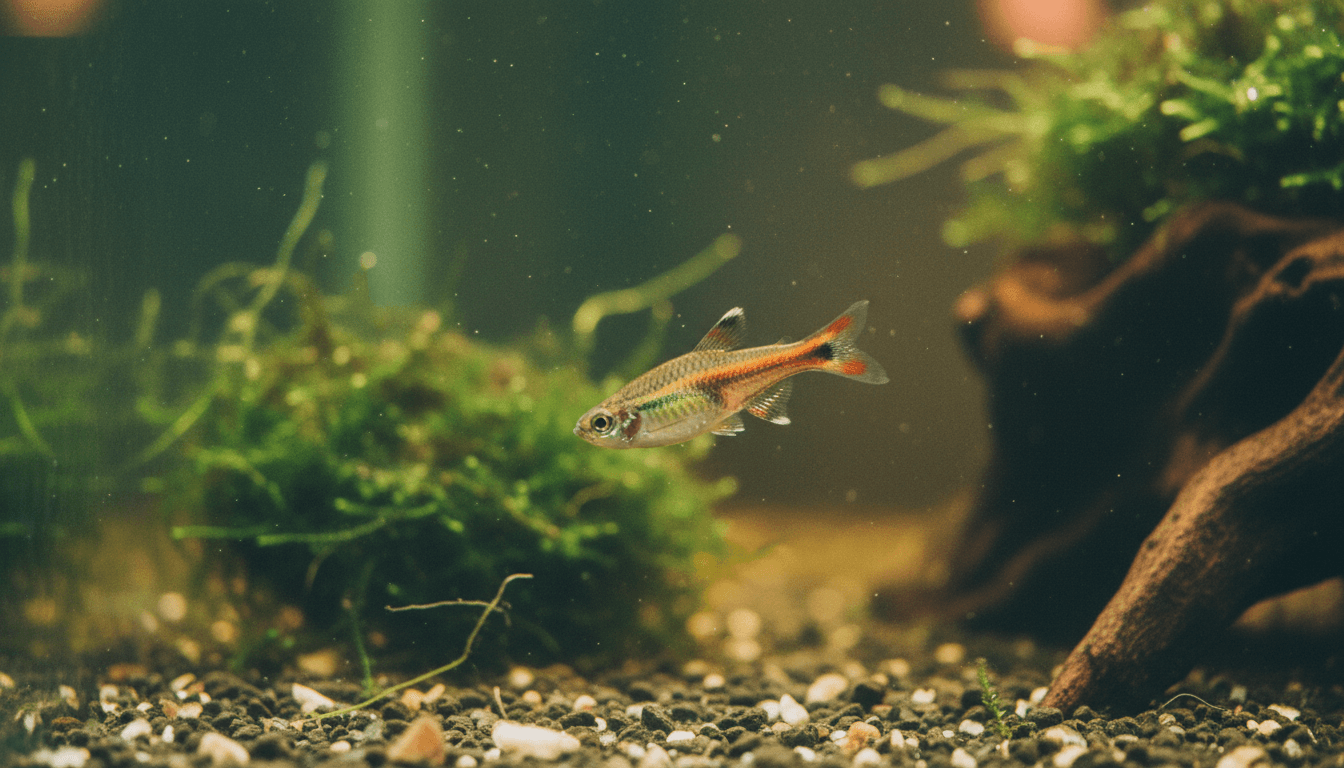
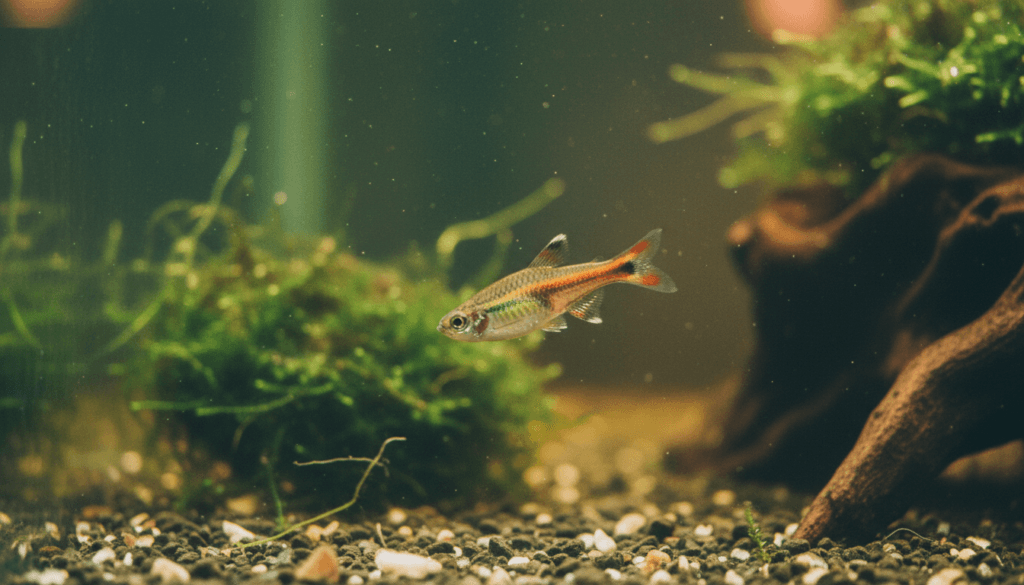
Least Rasbora are tiny, usually reaching 2–3 cm (0.8–1.2 inches) in length. The body is slender and streamlined, with a translucent to silvery base color that takes on deeper hues under tannin-stained water. A defining feature is a thin, dark lateral stripe that runs from just behind the gill cover toward the tail, sometimes interrupted by a subtle metallic sheen. Fins are typically clear or faintly tinted; males may show sharper, more contrasting lines during the breeding season. Color intensity is highly influenced by diet, water chemistry, and social environment: well-kept Least Rasbora in angling-soft, blackwater conditions often display richer contrast and a pearly iridescence.
Habitat
In the wild, Least Rasbora occupy shaded, slow-flowing streams and peat swamps where water is tea-colored from decaying leaves and tannins. Substrates in their native range are soft, sandy or silty, often layered with leaf litter and submerged wood. Aquatic plant cover is abundant but low-growing; surface canopy from riparian vegetation creates soft, dappled light.
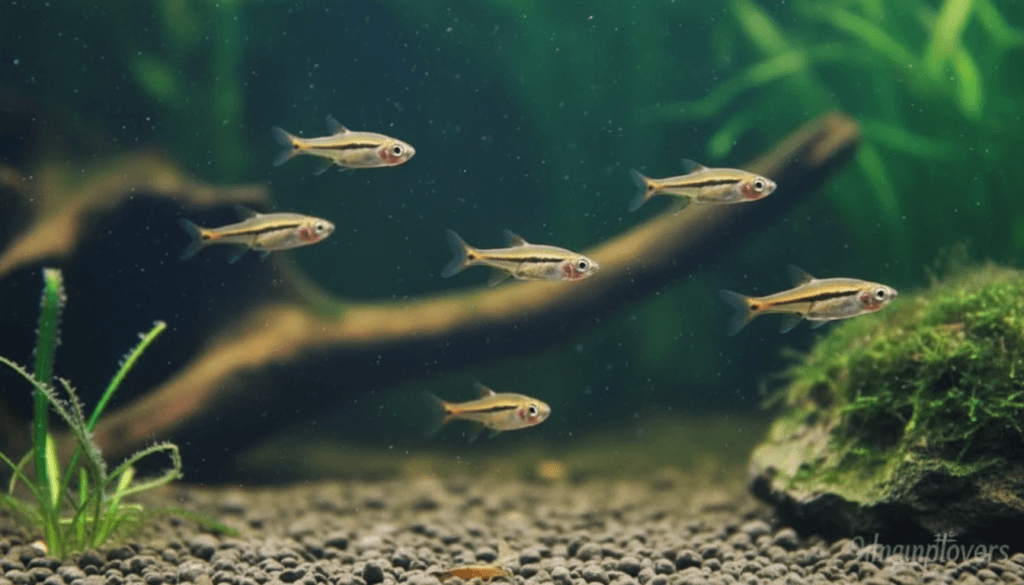
Replicating these conditions in the aquarium—using driftwood, Indian almond leaves, and floating plant cover—encourages natural behavior and enhances coloration in Least Rasbora. Temperature in natural habitats typically ranges from the low 20s to high 20s °C, and water chemistry tends to be very soft with pH below neutral.
Сare and maintenance
Water parameters
Temperature: 22–28°C (72–82°F). pH: 5.0–7.0, ideally 5.5–6.5 for best color and breeding success. General Hardness (GH): 0–6 dGH; carbonate hardness (KH) should be low. Stable, slightly acidic, and very soft water replicates blackwater conditions where Least Rasbora thrives. Sudden swings in pH or hardness stress these fish; use peat filtration, driftwood, or Indian almond leaves to gently acidify and soften water over time.
Tank size
Minimum volume: 10 liters (2.5 gallons) for a micro-group, but 20 liters (5 gallons) or more is strongly recommended. Recommended dimensions: longer tanks are preferred—aim for length greater than height (for example, 60 cm length x 30 cm height or smaller nano equivalents). The Least Rasbora benefits from horizontal swimming space to form cohesive schools; therefore a longer footprint is better than a tall column.
Filtration and water flow
Filter type: gentle sponge or low-output hang-on-back with prefilter sponge. Preferred flow intensity: low to moderate; water movement should be subtle to mimic slow streams. Avoid strong currents that push the fish into constant swimming. A sponge filter also doubles as a safe surface for fry and microfauna, and it minimizes the risk of suction injury to tiny rasboras.
Substrate and decor
Substrate: fine sand or soft dark gravel. Decor: include driftwood, smooth stones, and ample leaf litter such as Indian almond leaves or oak leaves to create tannin-rich microhabitats. Densely planted foreground and midground with carpeting plants or low stem plants will give the Least Rasbora both cover and feeding grounds. Add floating plants—water lettuce, salvinia—for shade and softened light. Avoid sharp-edged rocks or rough decorations that might damage fins.
Lighting
Intensity: low to moderate; aim for subdued illumination that imitates shaded streams. Duration: 6–8 hours of light daily is adequate, sometimes shorter if a heavy floating canopy is used. Provide areas of shade via floating plants or leaf litter so Least Rasbora can shelter from bright light. Strong LED setups can be dimmed or used with floating plants to reduce direct illumination.
Water changes
Frequency: weekly or biweekly depending on stocking and filtration. Percentage: 20–30% weekly is a good baseline; 30% every 10 days works well for smaller setups. Use dechlorinated, aged, or peat-treated water that matches tank temperature and softness to avoid shock. If tap water is hard, mix with reverse osmosis (RO) water to achieve the desired GH and KH.
Lid or cover
Least Rasbora are not known to be strong jumpers, but juveniles can occasionally leap when startled. A tight-fitting lid is advisable in nano tanks to prevent escape and reduce evaporation. Ensure adequate gap for air exchange while preventing gaps wide enough for tiny fish to squeeze through.
Social behavior and group size
Minimum group size: 8–12 individuals; a school of 15+ brings out the most natural schooling displays. Social structure: strongly schooling with non-aggressive hierarchy—displaying safety in numbers, coordinated movements, and synchronized feeding. Small groups or solitary individuals display shyness, reduced color, and heightened stress. Provide consistent group sizes to avoid social instability.
Additional behavioral care tips
Least Rasbora are sensitive to abrupt changes and can be startled by loud vibrations or aggressive tankmates. Encourage natural foraging by scattering microfoods and allowing biofilm to develop on leaves and wood—these fish often nip at microfauna. Observe for shoaling tightness: a relaxed school spreads out, while a stressed one clings to hiding spots. During breeding shifts, males may become more active and slightly more colorful; provide fine-leaved plants or spawning mops to support reproductive behavior.
Compatibility
Compatibility decisions should prioritize peaceful, small-bodied tankmates that share soft, acidic water preferences. Ideal companions include other microfish that tolerate similar conditions: small tetras, pygmy rasboras, and small non-aggressive catfish like otocinclus and inch-long Corydoras pygmaeus. Larger, boisterous fish, shrimps that require harder water, or fin-nippers are poor matches and will stress Least Rasbora.
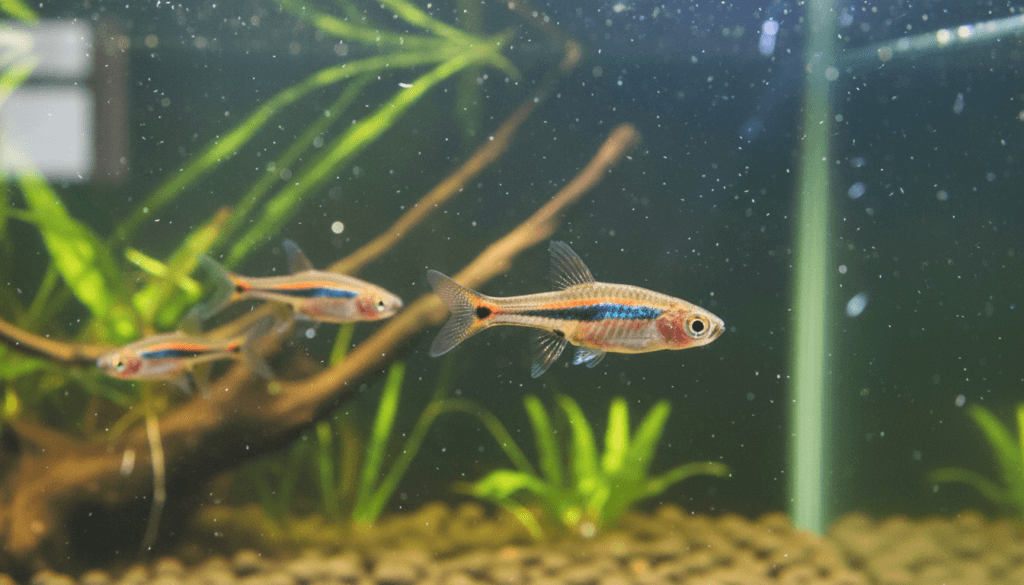
When combining species, ensure the Least Rasbora has ample hiding places and that water chemistry suits all inhabitants. Overcrowding with too many mid-water feeders can reduce shoaling cohesion and increase competition for microfoods.
Feeding the Least Rasbora
Diet in captivity should mirror the small, protein-rich fare found in their native microhabitats. Feed a varied diet of high-quality micro-pellets, crushed flake, and frozen foods such as microworms, daphnia, and baby brine shrimp. Offer foods twice daily in small amounts that are consumed within a minute to avoid fouling the small-volume tanks often used. Supplement occasional live foods to trigger breeding and to sharpen coloration. Sprinkle finely milled spirulina or vegetable powders once or twice weekly to provide plant-based nutrients and promote a balanced gut flora. Observe feeding behavior: the Least Rasbora often nibbles near the surface and midwater, so introduce foods at multiple levels to encourage natural foraging patterns.
Reproduction
Breeding Least Rasbora is rewarding and achievable with attention to water chemistry and habitat cues. These fish are egg scatterers that prefer fine-leaved plants or spawning mops to deposit adhesive eggs. To initiate spawning, slightly lower temperature to the lower end of the preferred range, perform a larger water change with softer, cooler water, and increase the frequency of live microfood feedings. Males will develop brighter lines and more animated courtship displays; a healthy group will produce eggs among plant leaves and leaf litter within days.
Remove adults to prevent egg predation or provide dense moss where fry can hide. Eggs hatch in 24–48 hours depending on temperature; feed fry infusoria or liquid fry food initially, transitioning to newly hatched brine shrimp and microworms as they grow. Maintain gentle filtration and frequent tiny water changes to keep fry water pristine—fry are particularly sensitive to ammonia and nitrate spikes. Over several weeks, fry will mature into schooling juveniles that display the species’ characteristic behaviors and coloration.