Sunset Platy: Vibrant Care Guide and Tank Tips
General information
Sunset Platy is a popular livebearing aquarium fish prized for bold orange-to-red hues and peaceful temperament. If you are choosing a community fish that brings consistent color and activity to the middle and top levels of the tank, Sunset Platy often ticks the boxes. Native to Central America through captive-bred strains, this variety has been selectively bred for deep sunset tones, hardiness, and approachable behavior, making it a favorite among beginners and experienced aquarists who want low-fuss color.
Sunset Platy adapts well to planted tanks, tolerates a range of water chemistry, and will reward steady care with steady breeding. Attention to diet, space, and water quality makes the difference between a drab orange fish and a brilliantly colored show-stopper. Many aquarists keep Sunset Platy as part of seasonal color rotations or biotope-inspired setups; some use them as “color anchors” in shrimp or nano community tanks. Expect active schooling, curious surface foraging, and a willingness to accept a wide variety of foods.
Appearance
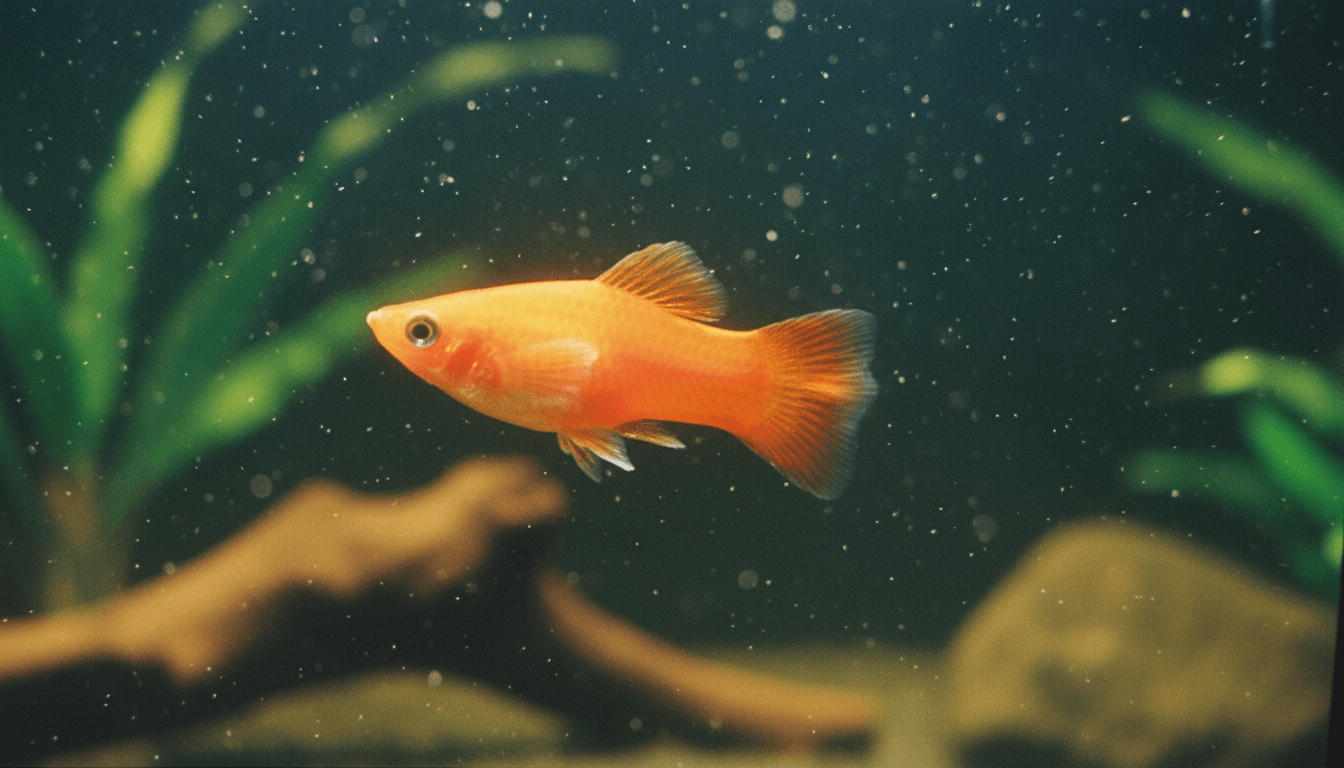
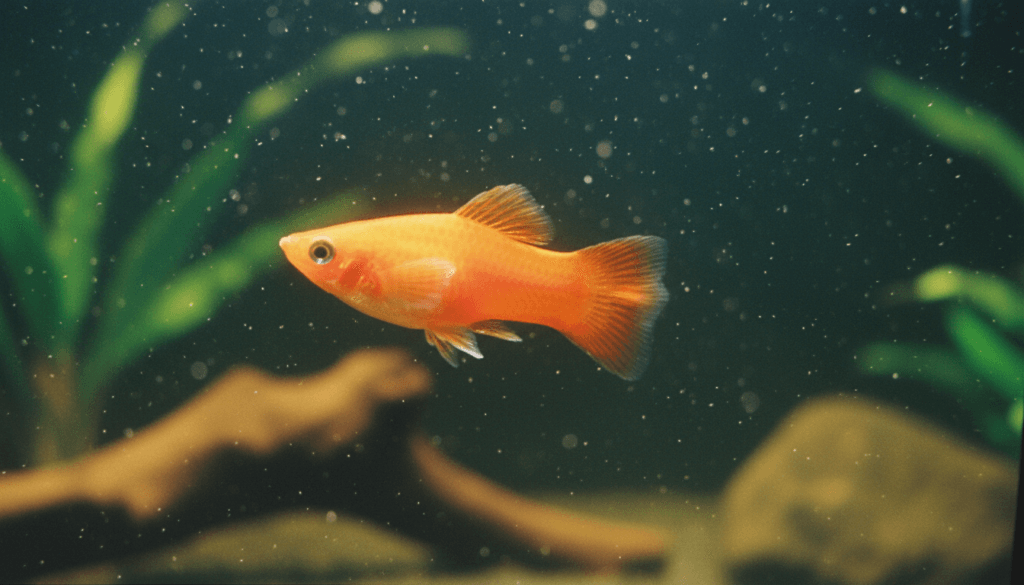
Sunset Platy carries a compact, laterally compressed body typical of platy species, usually reaching 3–6 cm (1.2–2.4 inches). The defining feature is a gradient of color that runs from bright golden-orange at the head through deep reddish-orange and sometimes into near-black at the fin tips in select strains. Males are more slender with a pointed anal fin modified into a gonopodium; females are rounder-bodied and often larger, carrying broods. Fin shapes vary from round to swordlike tails in specialty lines, but the sunset palette is the central attraction.
Color expression can change with diet, water quality, and mood. Sunset Platy often shows enhanced pigmentation when given carotenoid-rich foods, moderate lighting, and stable temperatures. Subtle patterning—flecks, vertical bars, or dorsal highlights—appears in many specimens; selective breeders have developed high-contrast varieties that look almost painted. Note that stress, overcrowding, or poor water can wash out color quickly, so the vibrant sunset look is a direct reflection of good husbandry.
Habitat
In the aquarium, Sunset Platy thrives in planted environments that mimic slow-moving Central American streams: soft substrate, plenty of leaf cover, and a mix of mid-level plants and floating shade. Natural microhabitats for wild platy ancestors include edge vegetation, shallow backwaters, and areas with moderate aquatic plant growth. Translating that into the tank means offering both open swimming lanes and dense plant thickets so fish can choose cover or surface range.
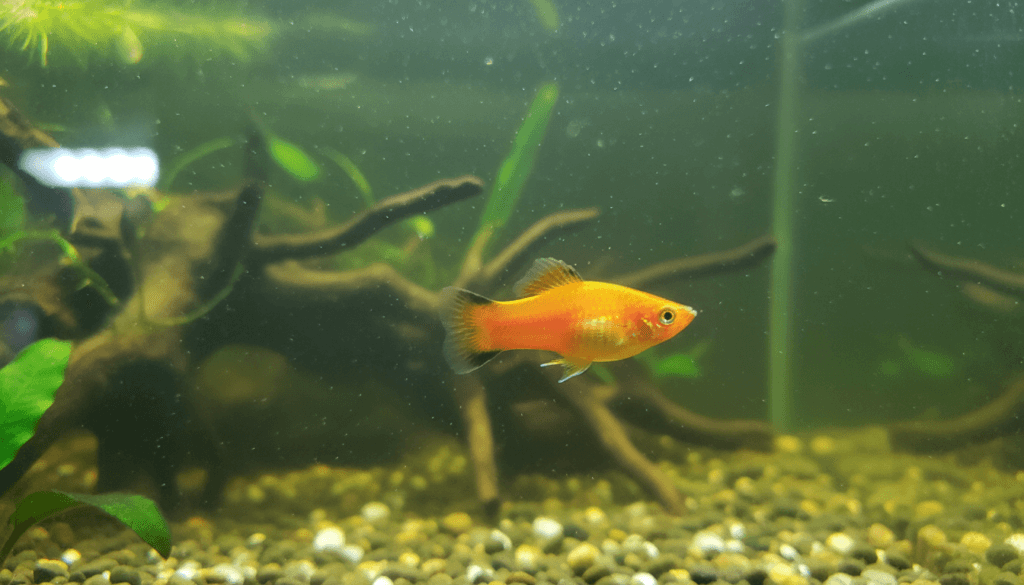
Ideal microhabitats within the aquarium include caves or root tangles for shy individuals, broad-leaved plants for fry to hide in, and floating plants to diffuse bright light. A few pieces of smooth driftwood and inert rock can add structure without creating strong currents. While Sunset Platy tolerates a range of conditions, replicating these gentle, sheltered settings encourages natural behavior — frequent surface foraging, tail-slapping social displays, and peaceful shoaling.
Сare and maintenance
Water parameters
Temperature: 22–26°C (72–79°F). pH: 7.0–8.0. General hardness (GH): 8–15 dGH. This species tolerates a moderately hard, slightly alkaline range; stability matters more than hitting exact numbers. Avoid frequent wide swings in temperature or pH to maintain vibrant coloration and reduce stress-related disease.
Tank size
Minimum volume: 40 liters (10 gallons). Recommended dimensions: longer length over greater height — at least 60 cm (24″) length with a standard height of 30–40 cm (12–16″). Better results come from wider aquariums that allow horizontal schooling room.
Filtration and water flow
Filter type: sponge or hang-on-back with biological media. Preferred flow intensity: low to moderate. Sunset Platy favors gentle circulation with good surface exchange; avoid strong jets that force constant swimming. Use prefilters or sponge intake guards to protect fry.
Substrate and decor
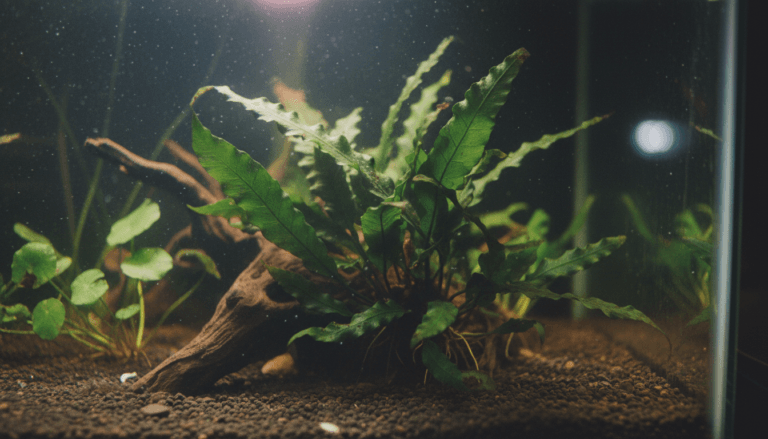
Substrate: fine gravel or sand with some leaf litter. Driftwood, smooth rocks, and abundant plants (Echinodorus, Cryptocoryne, Vallisneria) create naturalistic zones. A layer of Indian almond leaves or oak leaves can release tannins and provide fry shelter. Avoid sharp decor that can damage delicate fins.
Lighting
Intensity: moderate (50–150 μmol/m²·s). Duration: 8–10 hours daily. Provide patches of shade with floating plants like Salvinia or Riccia so fish can escape bright light. Too-strong illumination can stress colors or encourage algae that hides the fish.
Water changes
Frequency: weekly. Percentage: 20–30%. Regular partial changes maintain stable chemistry and dilute nitrates. In heavily stocked or heavily planted systems, small weekly swaps are preferable to large infrequent changes.
Lid or cover
Sunset Platy can jump occasionally, especially when startled or during aggressive surface feeding. A tight-fitting lid or screened cover is recommended to prevent escapes.
Social behavior and group size
Minimum group size: 6 individuals. Social structure: schooling with loose hierarchies; males display to females but are not intensely territorial. Keep a higher ratio of females to males (2–3 females per male) to reduce persistent male harassment.
Additional behavioral care tips
Provide frequent micro-hiding spots for timid females and fry, rotate feeding types to maintain interest, and avoid long periods of silence in the tank — visual movement and plant motion keep fish active and healthy.
Compatibility
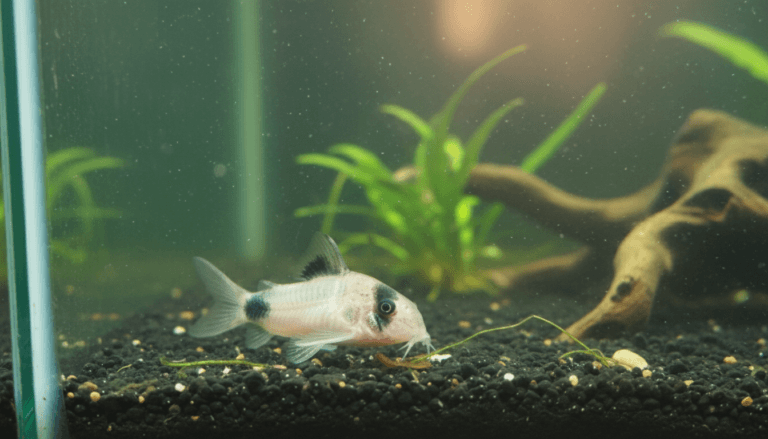
Sunset Platy is an agreeable community member. Suitable tankmates include neon tetras, rasboras, Corydoras catfish, peaceful gouramis, and dwarf shrimp. Avoid large, aggressive cichlids, fin-nipping barbs, or predatory species that view platy fry as staple food. When mixing with other livebearers, expect hybridization with similar Xiphophorus or Poecilia species — keep species separation in mind if preserving pure lines is important.
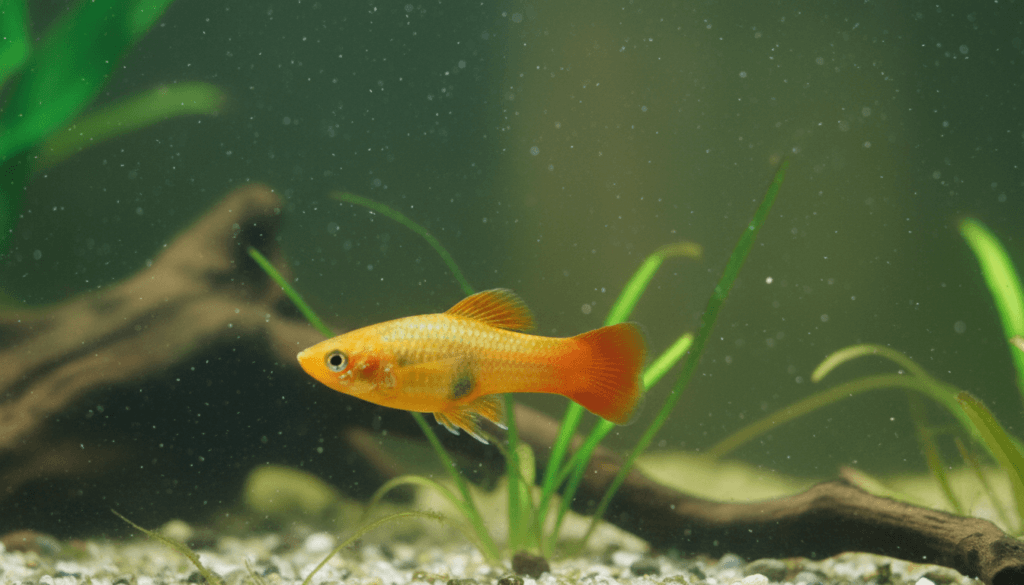
To minimize conflicts, pair Sunset Platy with species that occupy different vertical zones: bottom-dwelling catfish, midwater tetras, and top-dwelling hatchetfish or gouramis work well. Watch for bullying in small tanks; even peaceful fish can become pushy when space is limited. Seasonal changes in behavior are common — during breeding peaks, males become more persistent, so extra cover and increased female numbers help balance social stress.
Feeding the Sunset Platy
Sunset Platy accepts a wide variety of foods and benefits from a mixed diet for deep, stable color. Offer high-quality flake or pellet staples designed for omnivores, then rotate with live or frozen items like brine shrimp, daphnia, and bloodworms. Vegetable matter is essential: blanched zucchini, spinach, spirulina flakes, and soaked lettuce help maintain health and enhance orange and red pigments.
Feed two small portions per day rather than one large meal to reduce waste and maintain water quality. Occasional color-enhancing supplements rich in carotenoids (astaxanthin, beta-carotene) can intensify sunset hues, but overuse of supplements is unnecessary and sometimes harmful. For fry, provide crushed flakes, infusoria, or powdered commercial fry food until large enough for baby brine shrimp and finely chopped feeds.
Watch feeding behavior: Sunset Platy often raids the surface and midwater levels, so place flake or pellet food floating or slowly sinking. Remove uneaten food after a few minutes to keep nitrate levels down. A diverse diet not only improves color but reduces aggression stemming from nutritional stress.
Reproduction
Sunset Platy is a prolific livebearer with simple breeding requirements, which makes it ideal for aquarists who want visible fry production without complex spawning rituals. Females retain eggs internally and give birth to fully formed fry. Gestation lasts about 24–35 days depending on temperature and condition; warmer temps speed development but stress adults if too high.
To encourage healthy broods, provide dense plants or spawning mops where fry can hide immediately after birth — without shelter, most fry will be consumed by adults. If preserving a line, separate pregnant females into a breeder box or dedicated nursery tank a few days before expected delivery. Larger females produce more fry, while well-fed mothers yield brighter offspring. Sexing is straightforward: males with a gonopodium and slimmer build; females larger and rounder.
Selective breeding for color yields dramatic sunset shades in a few generations but requires attention to genetics. Avoid crossing with closely related platy types unless hybrids are acceptable. Keep records of pairings, maintain a larger breeding group to reduce inbreeding, and choose the most intensely colored breeders to push the sunset palette forward.