Scarlet Badis: Secrets to Keep and Breed Successfully
General information
Scarlet Badis remain a favorite among hobbyists who enjoy tiny, colorful, and behaviorally rich fish. Scarlet Badis are micro-predatory dwarf fish native to South Asia that reward careful keepers with vibrant displays, subtle social dynamics, and intriguing feeding quirks. If this species is on the shopping list, know that success hinges on matching natural conditions and patience with live-food training. The following sections break down everything from subtle sexing cues to precise tank-building steps, giving actionable, practical directions for a thriving micro-biotope.
Appearance
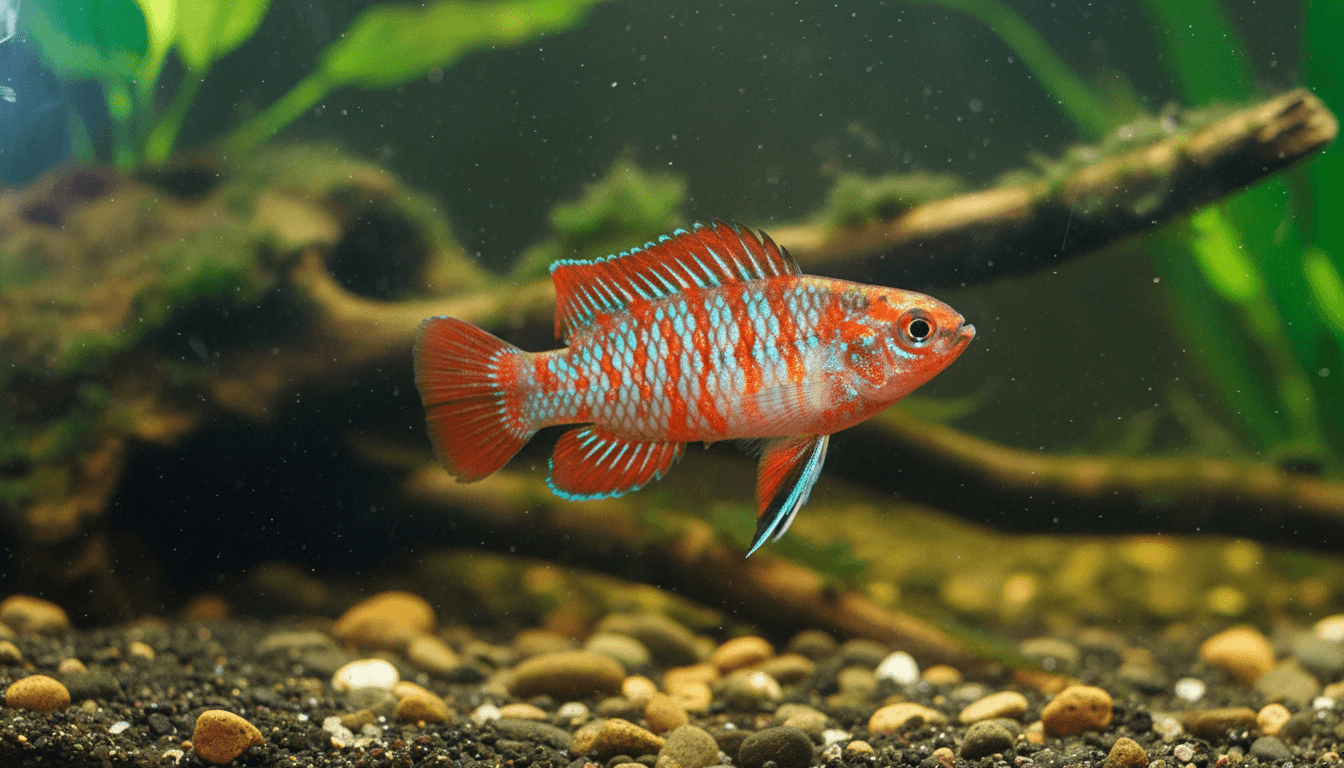
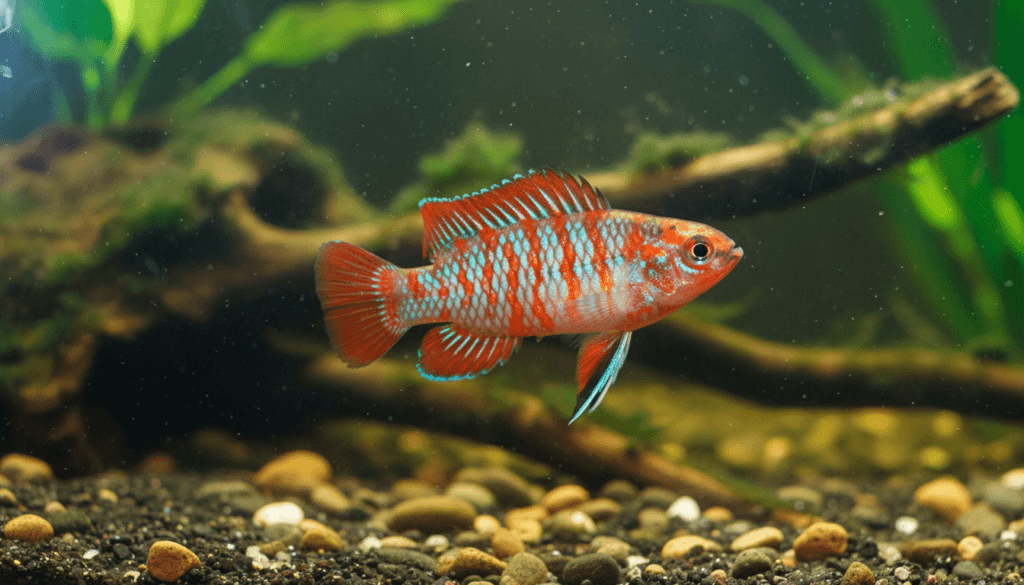
Scarlet Badis display compact, laterally compressed bodies with a short, slightly upturned mouth adapted for sucking tiny prey. Males show blazing red and orange patches across the head, dorsal area, and flanks during courtship and heightened mood; these colors can intensify to a near-neon red in prime specimens. Females are typically brownish to olive with a delicate series of vertical bars and a less intense iridescence, making them easy to distinguish once a few individuals are observed together.
Unique markings to note: males often present a dark lateral spot near the caudal peduncle and faint blue spotting on the lower sides when calm. Color can shift dramatically with mood, health, or water chemistry; a rested male in soft, acidic water will often be most vivid. Scar patterns and small fin filament variations are common between wild-caught and selectively bred lines — luxury traits that make collecting different localities appealing.
Habitat
Wild Scarlet Badis inhabit slow-moving, heavily vegetated streams, seepages, and oxbow lakes across northeastern India, primarily Assam and adjacent drainages. Substrates are typically soft with abundant leaf litter, submerged twigs, and dense tangled plants providing complex vertical and horizontal cover. Water is often tea-stained from decaying organic matter, soft, and mildly acidic—conditions that contribute both to their coloration and health.
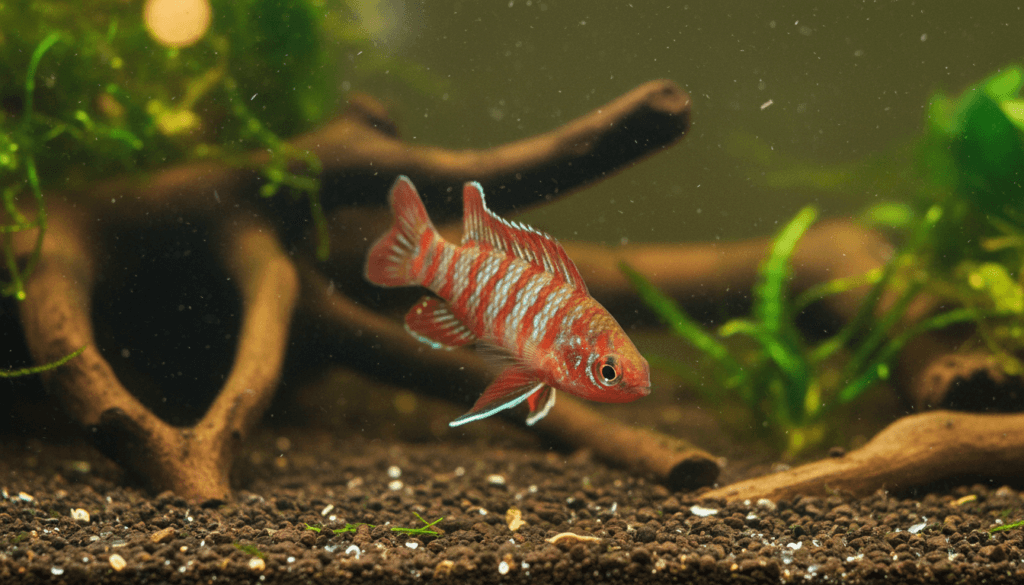
Replicating a micro-biotope means focusing on low light, abundant microhabitats, and stable, gentle water movement. Small crevices formed by driftwood and rock, floating plant shade, and patches of dense stem or rosette plants emulate their natural environment, helping shy behavior to fade as fish find comfort zones where they can forage properly.
Сare and maintenance
Water parameters
Keep temperature between 22–26°C (72–79°F) for best coloration and activity. Aim for a pH of 6.0–7.0; slightly acidic water often brings out richer reds. General hardness (GH) should be low to moderate: 0–8 dGH is acceptable, with soft water (0–4 dGH) preferred for breeding. Consistency is more important than hitting a single number; stable, well-buffered conditions reduce stress and help fish reliably feed.
Tank size
Minimum volume depends on stocking plan. For a single male plus a couple of females, a practical minimum is 20–40 liters (5–10 US gallons). For a small colony — the recommended approach for observing natural social behavior — choose 40–80 liters (10–20 US gallons). Length matters more than height: aim for a footprint where length exceeds height, for example 45–60 cm length over 25–35 cm height. The horizontal territory allows males to establish visual boundaries and gives shy fish room to retreat without vertical stress.
Filtration and water flow
Use gentle filtration. Sponge filters are ideal because they provide biological filtration while producing minimal current and protecting fry. Hang-on-back filters can work if baffled to reduce flow; place an airstone or pre-filter sponge over the intake. Preferred flow intensity is low: a slow, laminar current that mimics marginal stream movement rather than strong, turbulent flow. Regularly check for dead zones where detritus accumulates; light circulation helps maintain water quality without stressing fish.
Substrate and decor
Fine sand or smooth small-grain gravel replicates natural bed material and helps with leaf litter decomposition. Add aged driftwood, flat stones, and a scattering of Indian almond leaves or oak leaves to create tannin-rich microhabitats — this produces the characteristic tea-stained water many aquarists find beneficial. Dense planting is crucial: bunches of Cryptocoryne, Anubias, Java fern, and small stem plants create cover and feeding zones. Include crevices and small caves built from rock stacks or terracotta tubes where males can claim and guard territories.
Lighting
Low to moderate lighting is recommended to keep plants healthy without overstressing fish. Aim for 6–8 hours per day with gradual ramp-up and ramp-down if possible. Floating plants or a canopy of plants reduce direct light and create shaded hunting lanes, encouraging natural foraging behavior and reducing male aggression sparked by intense illumination.
Water changes
Perform regular maintenance with partial water changes: 20–30% weekly is a safe baseline for most setups. For densely stocked or smaller tanks, a slightly higher weekly change of 30–40% helps maintain stable chemistry. Use dechlorinated, temperature-matched water; if aiming for softer water, mix reverse osmosis (RO) or distilled water with tap water and recondition while monitoring pH and GH to avoid rapid swings.
Social behavior and group size
Scarlet Badis are not schooling fish in the classic sense. Males are territorial and will defend small patches, but with careful stocking it is possible to maintain one male with multiple females (1 male : 2–4 females) or a group of several females without a male present. Minimum group size depends on management goals: for observation and breeding, a single male with two to three females is common; for a peaceful community of females, a group of four to six females reduces stress and displays more natural social interactions.
Additional behavioral care tips
Pay attention to feeding behavior: Scarlet Badis may reject dry foods initially. It is advisable to keep a ready supply of live microfoods and to plan periodic live feedings to maintain condition. Males may flare fins and display vivid color during courtship and territorial disputes; such episodes are normal but prolonged chasing demands careful observation — reduce stocking density or add extra cover if aggression becomes prolonged. When introducing new tankmates, use visual barriers and rearrange decor to disrupt established territories temporarily.
Compatibility
Compatibility planning should favor small, peaceful species that occupy different water columns. Suitable tankmates include tiny rasboras, peaceful shrimp (if predation risk is acceptable), and micro-catfish such as Corydoras pygmaeus in larger tanks. Avoid larger, boisterous species that outcompete for live food or stress Scarlet Badis with constant pursuit.
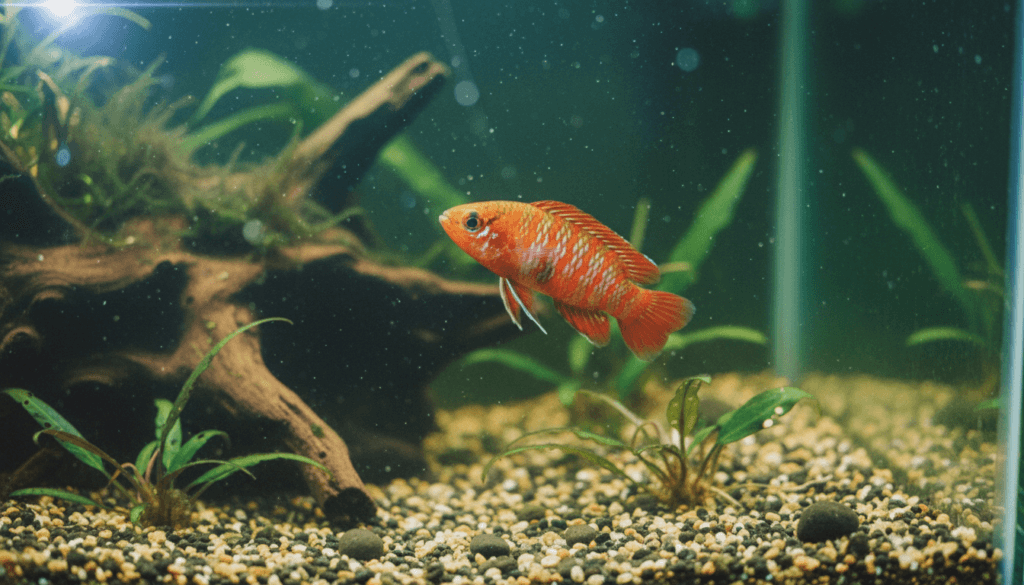
Avoid fin-nippers and fast mid-water feeders; Scarlet Badis are methodical, sit-and-wait hunters that rely on stealth. Bottom-dwelling snails can coexist peacefully and contribute to detritus control, while certain dwarf rasboras share similar water preferences and feeding rhythms, creating appealing micro-communities. Always watch early interactions and be prepared to separate incompatible pairings.
Feeding the Scarlet Badis
Feeding is perhaps the most important factor in keeping Scarlet Badis vibrant. These fish are micropredators designed to hunt tiny live prey, so an exclusively flake-based diet usually leads to poor coloration and weight loss. Live foods such as micro-worms, daphnia, cyclops, baby brine shrimp, and vinegar eels should form the core of the diet. Offer 2–3 small feedings daily, each small enough that food is consumed quickly to simulate natural eating patterns.
Training towards frozen or prepared foods is possible with persistence: start by serving live foods alongside high-quality frozen options like freshly hatched Artemia and frozen daphnia. Use feeding tweezers to place food near favored hiding spots; this reduces competition and helps shy individuals find the food source. For long-term health, vary the menu and add vitamin-enriched feeds or gut-loaded live prey to ensure a balance of nutrients and carotenoids that enhance red pigmentation.
Feeding tips that produce results: rotate live cultures to keep food supply fresh, maintain a small refugium for copepods, and seed tanks with harmless microfauna (infusoria) so fry have immediate food upon hatching. Avoid overfeeding to prevent water quality dips — tiny tanks demand strict portion control.
Reproduction
Breeding Scarlet Badis is rewarding but requires careful water and feeding regimes. Courtship begins with male displays: flaring fins, head-down postures, and vibrant color intensification. Courtship often takes place in shallow, shaded areas near a plant leaf or rock crevice. Females deposit eggs singly or in small clutches on the underside of leaves or in secluded crevices, after which the male may guard the site vigorously.
For successful spawning, lower GH and pH slightly towards the soft, acidic end of the preferred range and raise temperature by a couple of degrees to stimulate spawning activity. Condition brood stock on live foods for several weeks beforehand to maximize egg quality.
Egg care: after spawning, males tend eggs but may become overly aggressive; some aquarists remove the female to a holding tank to reduce stress. Eggs typically hatch within 3–7 days depending on temperature. Fry are initially tiny and require foods like infusoria, freshly hatched Artemia, or microworms. Keep filtration gentle — sponge filters seeded with beneficial bacteria are excellent.
Unusual breeding notes: males may perform small “retreat displays,” nudging hiding females or leading them to the chosen egg site. Not all pairs will spawn readily in community tanks; a dedicated breeding tank with peat or leaf litter and a carefully managed microfauna population increases success rates. Rearing requires patience — growth is gradual, and juveniles benefit from isolated conditions with plentiful small live prey until large enough to accept frozen nauplii.
Scarlet Badis offer a compelling blend of size, color, and behavior that reward deliberate caretaking. Keep stocking low, emphasize live feeding and gentle water movement, and create a structurally complex, dimly lit environment. That combination will coax out the best color, reduce stress, and make it possible to observe fascinating social and reproductive behaviors that few other microfish display so vividly.