Leopard Frog Pleco Care: Diet, Tank, Breeding
General information
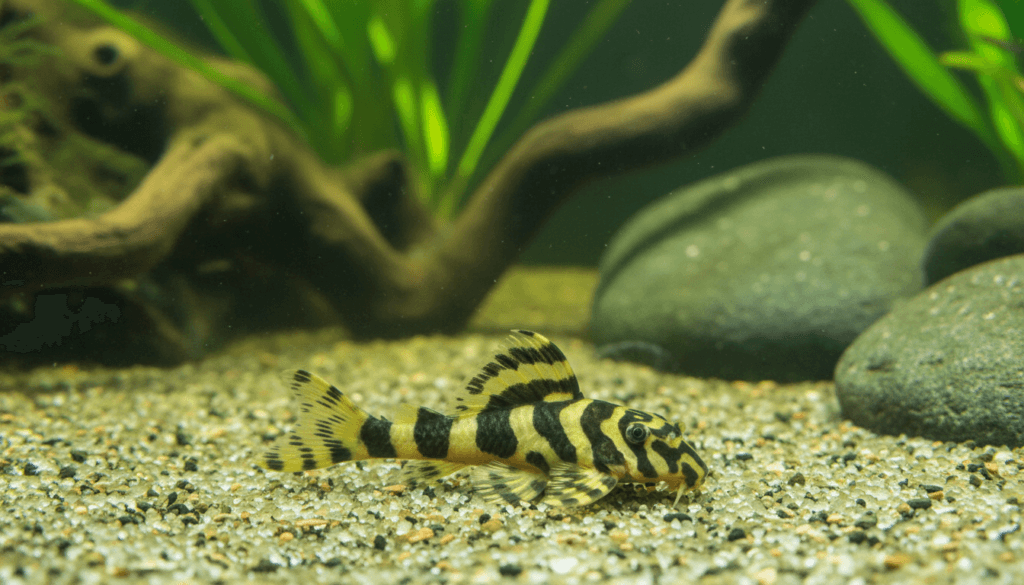
The Leopard Frog Pleco (scientific name: Peckoltia compta) is a small, attractively patterned loricariid catfish prized for nano- and medium-sized aquariums. You will notice that this species combines a striking spotted pattern with compact size and a willingness to eat algae and prepared foods, which makes it useful in tanks where a modest algae-control helper is desired. Despite the common name suggesting a “frog,” this is a true pleco (family Loricariidae) that prefers caves, wood, and subdued light.
Appearance
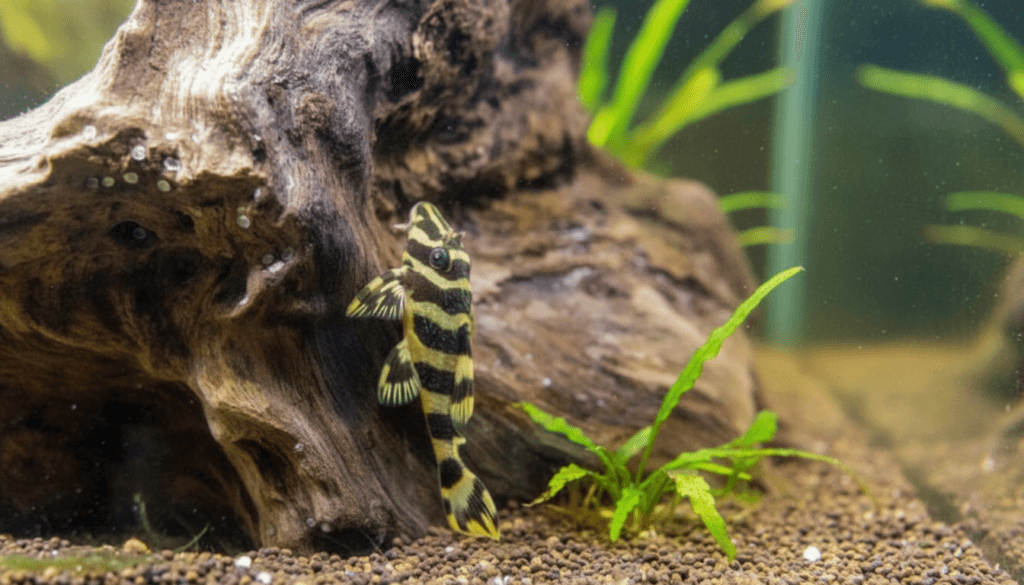
Leopard Frog Pleco shows a high-contrast pattern: dark brown to black base color with round to irregular cream or orange spots across the body, head, and fins. Adult length typically reaches 10–13 cm (4–5 inches) total length for healthy specimens. The body is flattened ventrally, armored with bony plates, and equipped with a ventral sucker mouth adapted for scraping and rasping. Sexual dimorphism is subtle: males can develop slightly broader heads and small odontodes (bristle-like dermal teeth) on the pectoral fin spines and along the cheeks when mature, while females often have rounder, fuller bellies when gravid.
Habitat
In the wild, Peckoltia compta inhabits clear to slightly tannic rivers and tributaries with a moderate current, submerged wood, rock overhangs, and plenty of leaf litter. These plecos hide during daylight in caves and under roots, becoming more active at dusk and night. Water is often oxygen-rich and well-filtered by flow; clarity can be high with soft to moderately hard chemistry depending on local geology. Recreating this setup in the home aquarium reduces stress and encourages natural behaviors such as cave spawning and grazing on biofilm.
Сare and maintenance
Water parameters
| Temperature | 24–28 °C (75–82 °F) |
| pH | 6.0–7.5 |
| General hardness (GH) | 2–12 dGH |
Keep chemistry stable. Sudden swings in pH or temperature are stressful; aim for a maximum change of 0.2 pH units and 1–2 °C during routine maintenance. If tap water is very hard or alkaline, use reverse osmosis (RO) water mixed with tap water to reach target values and remineralize with a trace-mineral product rather than strong buffering agents.
Tank size
| Minimum volume | 80 liters / 20 gallons |
| Recommended dimensions | Length ≥ 90 cm (35 in) over height; prefer length over height to allow horizontal territory |
Although adults are under 13 cm, this species benefits from horizontal swimming space and multiple cave sites; a 20-gallon long (or 80–100 L) is the realistic minimum for a single breeding pair or a small group. For groups of 3–5 fish, move to a 120–200 L (30–50 gallon) tank to reduce competition for caves and grazing spots.
Filtration and water flow
Choose a filter that provides biological capacity and moderate flow. A canister filter with spraybar or a powerhead can create a steady, moderate current (surface turnover 6–8× tank volume per hour) while maintaining oxygenation. Add a sponge prefilter on the intake if fry presence or gentle suction protection is needed. Avoid extremely high flow directly into cave entrances—provide quieter eddies near hides so fish can rest without fighting current.
Substrate and decor
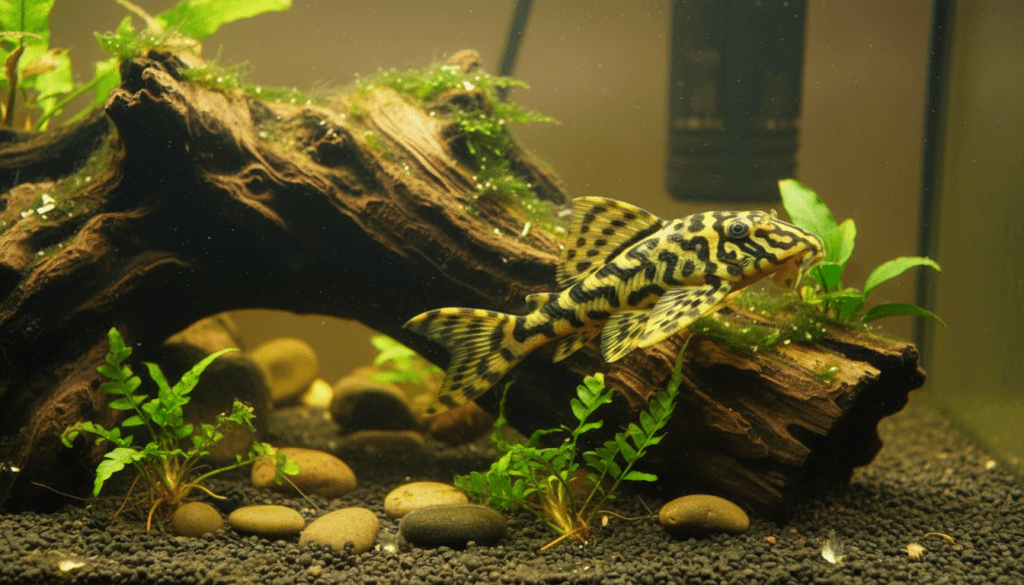
Substrate should be fine sand or smooth rounded gravel to protect barbels and ventral surface. Include multiple horizontal and vertical pieces of driftwood; leave some pieces thick enough for juvenile and adult plecos to rasp on. Provide several caves: natural rock caves, inverted clay pots, and cork bark. Add smooth rocks to create overhangs and crevices; stack carefully and silicone-seal unstable stacks. Scatter Indian almond leaves (Terminalia catappa), oak leaves, or dried Quercus sp. leaves to simulate leaf litter and promote microfauna growth used as supplemental food.
Lighting
Low to moderate light intensity suits this species. Aim for 6–8 hours of LED lighting per day with a dimmable fixture or use floating plants like Salvinia natans or Pistia stratiotes to create shaded pockets. Too-bright illumination pushes the pleco into permanent hiding and promotes nuisance algae, while moderate shade encourages natural grazing cycles.
Water changes
Perform 25–40% water changes weekly. Maintain stable temperature and chemistry during changes by matching replacement water parameters to the tank using a heater and pre-mixing RO water with remineralizer if needed. For planted tanks with frequent feeding, trending toward 30% weekly keeps nitrates in check without removing beneficial biofilm food sources.
Social behavior and group size
Minimum group size: 1–3. Social structure: semi-territorial cave dwellers. Leopard Frog Pleco is not a strict schooling species. Kept singly, territorial disputes are minimal; in small groups, establish multiple cave systems to reduce aggression. In tanks with limited hides, expect occasional displays or chase behavior between males competing for caves—this rarely escalates to serious injury when space and caves are adequate.
Additional behavioral care tips
- Rotate and add new caves periodically to reset territorial boundaries without causing prolonged fighting.
- Provide driftwood not only for hiding but because some loricariids digest wood-derived fiber; include it even if gut content is supplemented with pellets and vegetables.
- Observe activity windows: increased grazing occurs at dusk; feed heavier near evening to match natural feeding rhythm.
- Use gentle filtration intake guards to prevent suction injuries to juvenile plecos.
Compatibility
| Tankmate | Compatible | Note |
|---|---|---|
| Cardinal tetras (Paracheirodon axelrodi) | Yes | Small, peaceful midwater schooling fish; bright colors contrast well with pleco |
| Corydoras spp. | Yes | Bottom-dwelling but peaceful; different microhabitat reduces conflict |
| Rams / Apistogramma (dwarf cichlids) | Yes | Keep watch during breeding seasons; choose peaceful strains and provide territories |
| Large aggressive cichlids (Angelfish adults, African cichlids) | No | May harass or eat small plecos or outcompete for food |
| Large predatory species (Oscars, Arowanas) | No | Predation risk due to size disparity |
| Shrimp (Caridina, Neocaridina) | Usually yes | Small shrimp can coexist if plenty of hiding spots exist; pleco may nip or eat weak or molt shrimp |
Feeding the Leopard Frog Pleco
Feeding should be varied. Offer a base of high-quality sinking wafers formulated for herbivorous/omnivorous plecos plus fresh vegetable matter. Specific recommended foods: sinking algae wafers (Hikari Algae Wafers), spirulina-based tablets, and blanched vegetables such as zucchini, cucumber, spinach, and sweet potato. Provide occasional protein-rich treats such as frozen bloodworms or mysis shrimp 1–2 times per week.
Include driftwood in the tank; many loricariids rasp on wood for fiber and gut health—offer a piece about 1.5–3 cm thick per adult. Feed once daily for adults; juvenile fish benefit from 1–2 feedings per day. Remove uneaten vegetable pieces after 24 hours to prevent ammonia spikes. Monitor body condition: a slightly rounded belly with firm musculature is normal; a hollow or sunken belly indicates underfeeding and may require increased feeding frequency or better-quality food.
Reproduction
Leopard Frog Pleco is a cavity spawner. To encourage breeding, provide multiple suitably sized caves: terracotta tubes, half logs, or PVC pipes (diameter 5–7 cm for adults). Use a separate breeding tank of at least 40–80 L with soft, slightly acidic water (pH 6.0–6.8) and a modest temperature increase to 26–28 °C to stimulate spawning. Reduce flow but maintain high oxygenation with gentle circulation.
Sexing is easiest when fish are mature: males typically develop denser odontode growth on pectoral-fin edges and along the head, whereas females appear rounder when carrying eggs. Clutch sizes vary with individual fish; clutches can contain roughly 10–50 eggs depending on female size. Males guard the entrance and fan eggs until hatching; eggs hatch in roughly 7–10 days at 26–28 °C. Once fry are free-swimming, provide microfoods such as powdered spirulina, crushed wafers, and infusoria; include soft wood for grazing as they develop into juveniles.
FAQ
Q: How big does a Leopard Frog Pleco get?
A: Expect 10–13 cm (4–5 inches) total length when fully grown.
Q: Can Leopard Frog Pleco live alone?
A: Yes; solitary keeping is acceptable. If housed with conspecifics, provide multiple caves to prevent competition.
Q: Does this pleco eat live plants?
A: Generally not heavy plant eaters; they prefer biofilm, algae, and vegetables. Soft-leaved plants like Cryptocoryne can be occasionally nibbled; robust stems and floating plants are safer choices.
Q: What is the best way to sex Leopard Frog Pleco?
A: Look for mature males with thicker heads and small odontodes on pectoral fins and cheeks; females tend to have rounder bellies when carrying eggs. Definitive sexing is easiest at maturity and during spawning behavior.