Ludwigia palustris Care Guide: Tips for Aquariums
General information
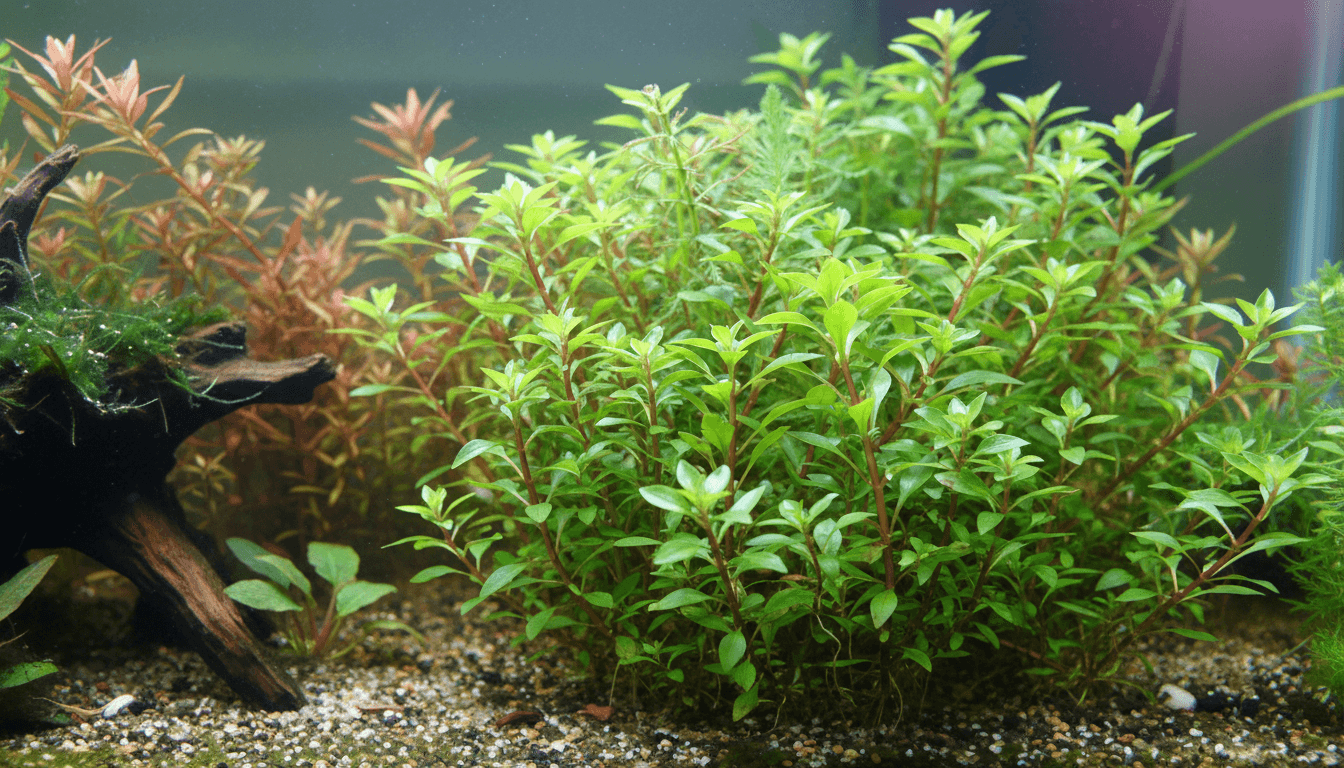
Ludwigia palustris is a flexible, stem-style aquarium plant that adapts to fully submerged or emersed growth and is valued for fast midground coverage, color variation, and straightforward propagation. The focus keyword Ludwigia palustris appears here because knowing the exact species helps pick the right care plan. This plant is native to wetlands and slow-moving waters across parts of North America and Eurasia and is used in aquascapes ranging from simple community tanks to detailed biotope builds.
Appearance
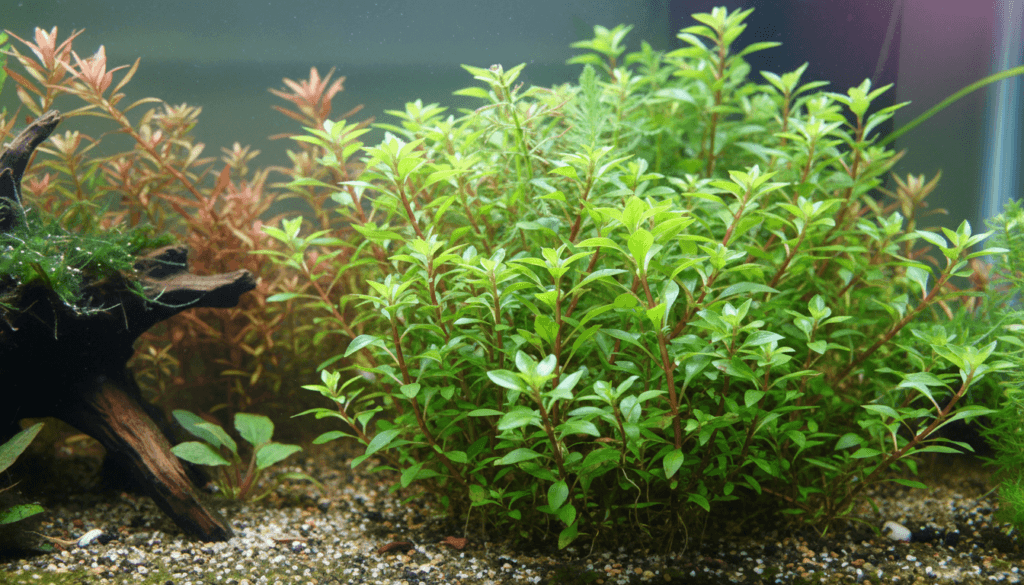
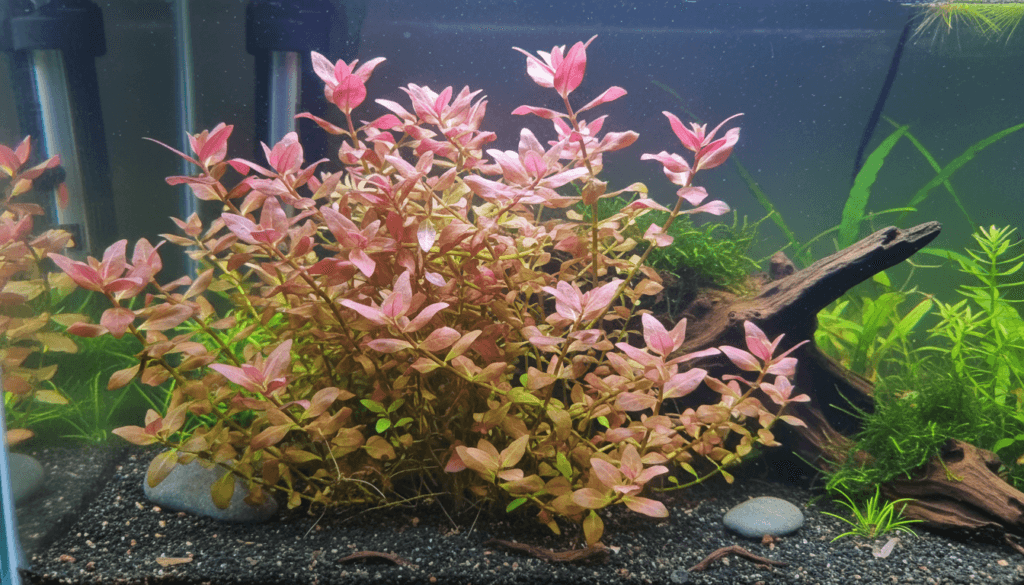
Expect thin, opposite leaves on square stems. Leaf size commonly ranges from 5 mm to 25 mm depending on growth form. Under low-light aquarium conditions the leaves are typically green and small; under intense light and strong nutrient regimens leaves can develop bronze to reddish hues on the upper surfaces. Stems can reach 15–40 cm before trimming; growth form varies from compact, creeping shoots to tall upright stems depending on how often cuttings are removed.
When grown emersed (above water) leaves are frequently broader and darker green. Small, four-petaled flowers appear on emergent growth in natural settings or paludariums; underwater flowering is uncommon.
Habitat
Native habitat includes marsh margins, slow rivers, and seasonally flooded fields. It tolerates variable water levels and soft to moderately hard water, and it survives periods of emersion when water recedes. In aquaria, it performs best when conditions mimic shallow, well-lit margins: stable temperatures, steady lighting, and accessible nutrients. Because it naturally occupies edges, it does well as a midground or background stem that can be trimmed into denser hedges.
Care and maintenance
Water parameters
| Parameter | Value |
|---|---|
| Temperature | 18–28°C (64–82°F) |
| pH | 5.5–7.5 |
| General hardness (GH) | 2–12°dGH |
| Tank size | From 10 L (nano) up to large aquaria; 40 L+ recommended for extensive hedges |
These ranges are broad because Ludwigia palustris tolerates variable conditions. Growth rate and leaf coloration correlate strongly with light, nutrient availability, and CO2 rather than precise pH within the acceptable band.
Substrate
Ludwigia palustris is a stem plant that draws nutrients from the water column and roots but benefits from a nutrient-rich substrate. Recommended options:
- Active aquarium soils such as ADA Aqua Soil Amazonia or Fluval Stratum for ongoing root nutrition.
- Inert substrates like fine gravel or sand combined with root tabs (e.g., Osmocote or Seachem Flourish Tabs) placed near stems every 8–12 weeks.
- Substrate depth 3–5 cm is sufficient; thicker layers are okay for stability but not required for stems.
For emergent or paludarium setups, use a loamy, moisture-retentive soil layer capped with gravel to prevent clouding.
Lighting
Lighting is one of the strongest levers for appearance and growth. Aim for moderate to high light:
- Intensity: roughly 30–50 µmol·m−2·s−1 at plant level (mid-range planted-tank lighting).
- Duration: 8–10 hours daily. Shorter photoperiods can slow growth and reduce red pigmentation.
- Spectrum: full-spectrum LED lights around 5,000–7,000 K deliver natural color and promote healthy photosynthesis.
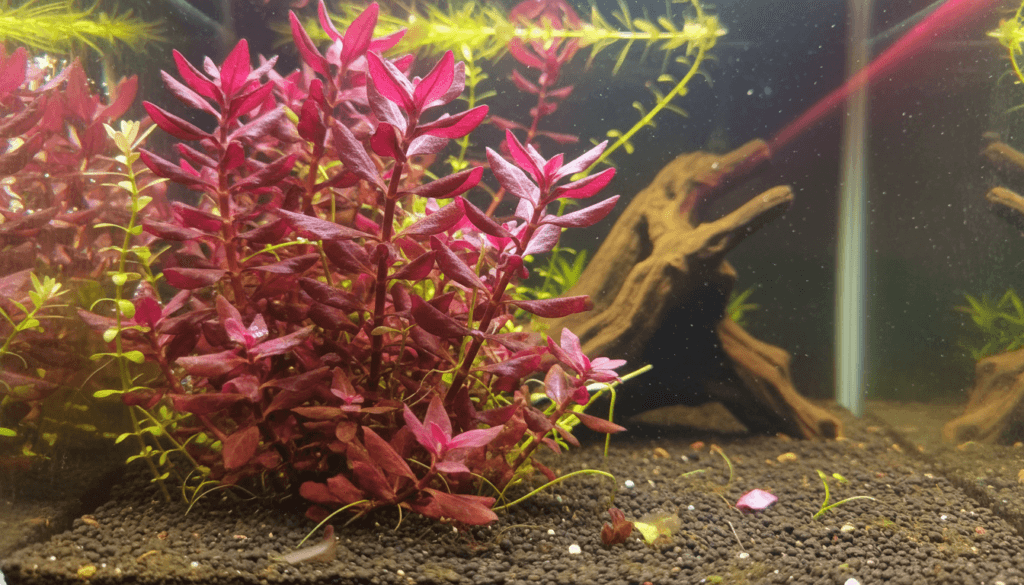
Under low light, expect leggy stems and green leaves; under high light, stems remain compact and show better color. Increase light gradually over several days to avoid algal blooms.
CO2 supplementation
CO2 is beneficial but not strictly required. With no CO2, Ludwigia palustris will grow more slowly and remain greener. Adding CO2 to reach 15–25 mg/L (approximately 20–30 ppm) supports faster, denser growth and enhances red/bronze coloration when paired with strong light and good iron levels. If using CO2, stabilize injection and monitor pH and KH to avoid swings that stress livestock.
Fertilization
Balance between macronutrients and micronutrients keeps stems productive and colorful. Specifics:
- Macronutrients: nitrate (NO3), phosphate (PO4), potassium (K). Target ranges often used: NO3 10–30 ppm, PO4 0.5–2 ppm, K 10–20 ppm.
- Micronutrients: iron (Fe), manganese (Mn), boron (B), molybdenum (Mo), zinc (Zn), copper (Cu), cobalt (Co). Iron at 0.05–0.2 ppm supports red pigmentation; avoid excessive copper in tanks with invertebrates.
- Dosing schedule: choose a method that fits the tank. Options include:
- Comprehensive weekly dosing: add a balanced macro/micro dose once per week, followed by a 30–50% weekly water change if using high-dose EI-style fertilization.
- Daily/light dosing: smaller doses of liquid macros and micros spread over 5–7 days to maintain steady nutrients (useful in planted tanks with livestock).
- Root tabs: place every 8–12 weeks for additional potassium and micronutrients when using inert substrates.
Use products such as Seachem Flourish (micros), Seachem Flourish Excel (carbon supplement), and a macro mix or commercially labeled NPK fertilizers for consistent results. Adjust dosing based on plant growth, algae levels, and water test results.
Water changes
Routine water exchange prevents nutrient imbalances and refreshes trace elements. Recommended schedules:
- Standard: 25–40% weekly water change for most planted tanks.
- Heavy dosing/EI method: 50% weekly water changes to reset nutrients after larger weekly doses.
- Smaller tanks or high-bio-load setups: 20–30% twice weekly for tighter control of nitrate and phosphate.
Temperature-match replacement water and treat tap water for chlorine/chloramine. Regular changes also help limit algal outbreaks when increasing light or nutrient input.
Placement in the aquarium
Ludwigia palustris functions best as a midground to background stem plant. Typical placements and uses:
- Background: plant in groups of 6–12 stems to create height and vertical texture.
- Midground: trim regularly to form low hedges or broken vertical lines in Dutch or Iwagumi-influenced layouts.
- Foreground accents: use only with very short trimming and high light to maintain compact growth.
Propagation is visual and simple: regular tip-cutting produces bushier growth and creates new stems to replant. Remove the bottom 2–4 cm of leaves when planting cuttings so roots develop faster.
| Tankmate | Compatible | Note |
|---|---|---|
| Small tetras (e.g., Neon, Cardinal) | Yes | Generally peaceful, won’t damage stems |
| Rasboras (e.g., Harlequin) | Yes | Good for planted community tanks |
| Dwarf shrimp (Neocaridina, Caridina) | Yes | Benefit from cover; avoid copper-based fertilizers |
| Corydoras catfish | Yes | Bottom-dwellers; won’t uproot stems if substrate compact |
| Goldfish | No | Active nibblers, uproot and eat soft-stem plants |
| Large cichlids | No/Conditional | May uproot or eat plants; use in species-only setups cautiously |
Reproduction
Vegetative propagation is the standard method in aquaria and the fastest way to expand coverage. Steps for stem propagation:
- Cut healthy tip sections 5–12 cm long with clean scissors.
- Remove the lowest 1–2 pairs of leaves to expose nodes.
- Plant directly into substrate or let cuttings float until roots form; planting accelerates root contact and reduces drifting.
- Trim tops regularly to encourage lateral branching and bushier hedges.
Sexual reproduction (flowering) happens more commonly on emersed growth where small, four-petaled flowers are produced. Pollination in nature is by insects; underwater flower formation and seed set are rare in closed aquaria. For deliberate seed production, an emersed paludarium or temporarily drained tank with insect access is required.
FAQ
How fast does Ludwigia palustris grow?
Growth rate ranges from moderate to fast. Under high light, CO2 supplementation, and regular fertilization, stems can lengthen 2–4 cm per week. Under low-light, growth slows to a few centimeters per month.
Does Ludwigia palustris need CO2?
CO2 is not strictly required but strongly beneficial. Expect denser, faster growth and more intense coloration with CO2. Non-CO2 setups will still succeed if light and nutrients are managed conservatively.
How to encourage red or bronze coloration?
Increase light intensity to the recommended 30–50 µmol·m−2·s−1 range, ensure adequate iron (micronutrient) availability, and provide balanced macronutrients. Slightly lower nitrate relative to available iron often helps pigments appear. Avoid sudden changes; acclimate plants slowly to stronger conditions.
Will snails or shrimp eat Ludwigia palustris?
Most common aquarium snails (e.g., Nerite, Mystery) and shrimp (Neocaridina, Caridina) do not actively consume healthy Ludwigia palustris leaves. Snails may graze on soft, decaying tissue or scrape biofilm from leaves. Avoid copper-based plant treatments if keeping shrimp.