Kohaku Swordtail Guide: Care, Tank Setup, Breeding
General information
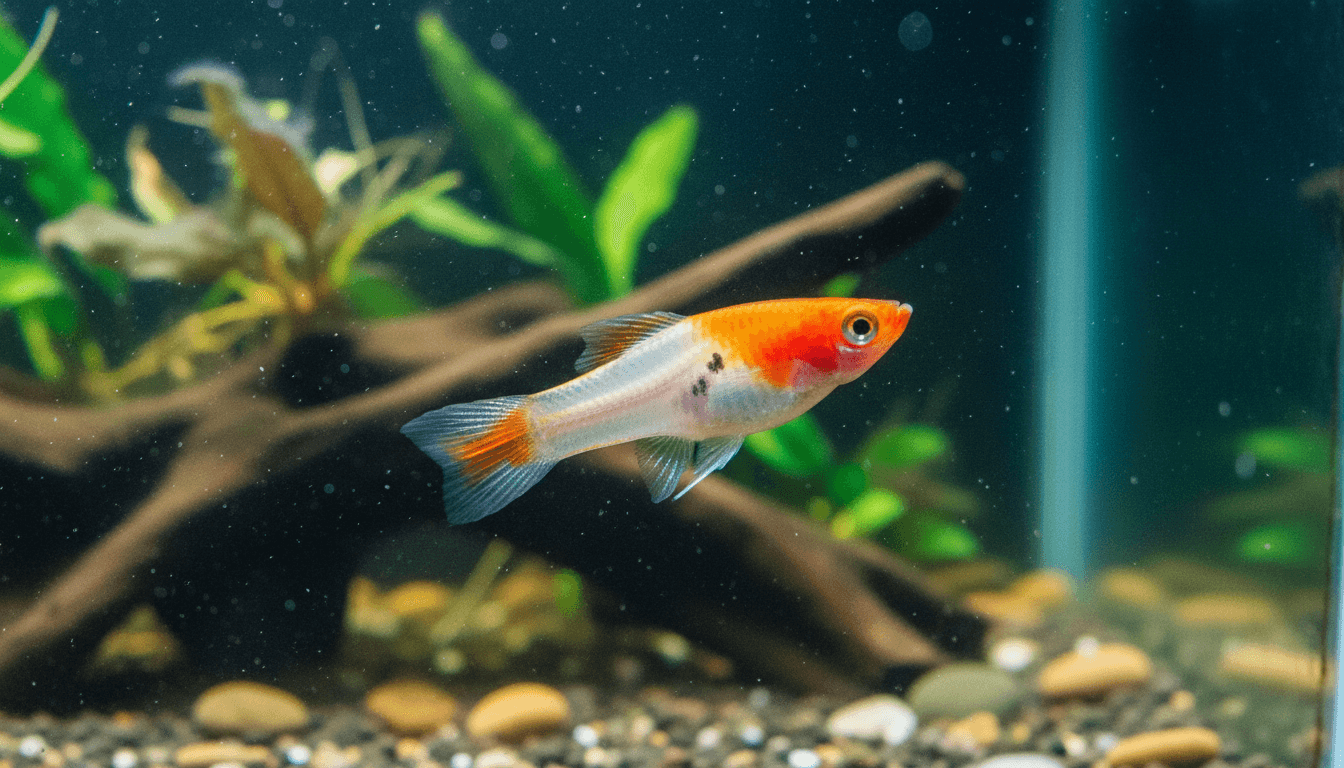
If a splash of koi-like red and white swimming across the mid-water column appeals, the Kohaku Swordtail is a standout choice for colorful, lively community tanks. The Kohaku Swordtail arrives as a color morph of classic swordtails, named for the koi term “Kohaku” — white body with vivid red patches — combined with the elongated male tail extension that gives the group its common name. You will notice that this variety blends the dramatic sword with a clean, high-contrast palette that reads well against plants and darker substrates.
This guide covers practical, actionable steps to keep Kohaku Swordtail healthy and visible at their best. Expect to learn precise water numbers, tank layout advice that reduces stress, feeding schedules that promote color and fertility, plus breeding tricks that actually work in a small home setup. Many aquarists prize the Kohaku Swordtail for both display value and reproductive vigor; this makes them ideal for hobbyists interested in livebearer behavior and selective breeding.
Appearance
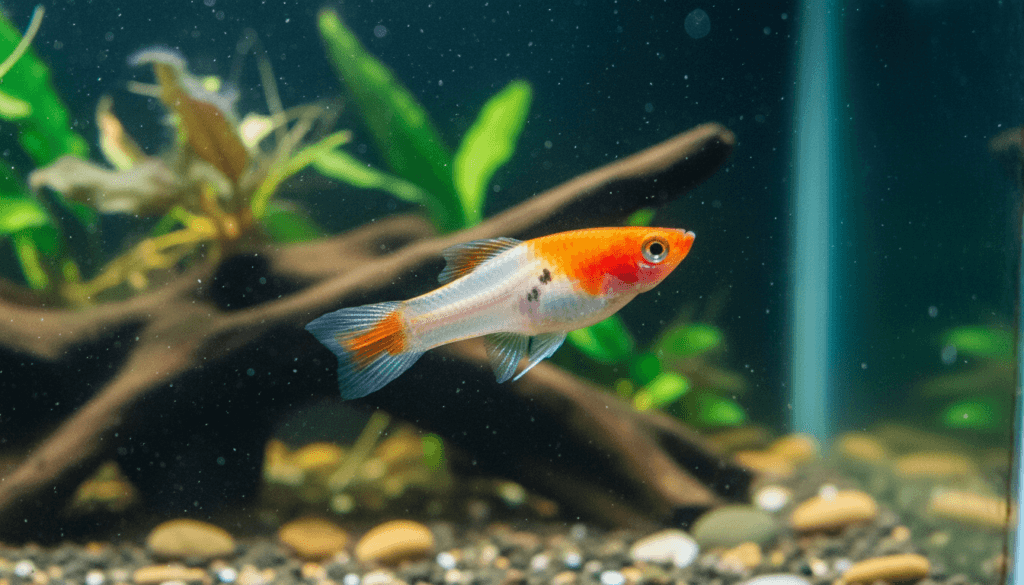
The Kohaku Swordtail’s signature look is a bright white base interrupted by saturated red patches that can range from a soft orange to true vermilion. Males display a long, sword-like extension on the lower lobe of the caudal fin; the length varies by strain but often measures one-third to half the body length. Females are larger-bodied, rounder at the belly, and usually lack the dramatic sword, though hybrid crosses sometimes yield females with partial extensions.
Scale texture is smooth and reflective — reds tend to show more intensely under neutral to slightly warm lighting. Body shape follows the typical Xiphophorus pattern: a streamlined, slightly compressed form with active, constant swimming behavior. Fin damage shows up quickly against the white background, so regular observation makes it easy to spot early signs of aggression, fin rot, or clamping.
Habitat
Kohaku Swordtail originates from the same general environments as other swordtails: warm, moderately hard, slightly alkaline rivers and streams with vegetated banks. In the aquarium, they prefer a planted layout with open mid-water swimming lanes. Simulating their native habitat means combining fast-growing stem plants with floating cover and submerged leaf litter or root tangles to create microhabitats for fry and shy individuals.
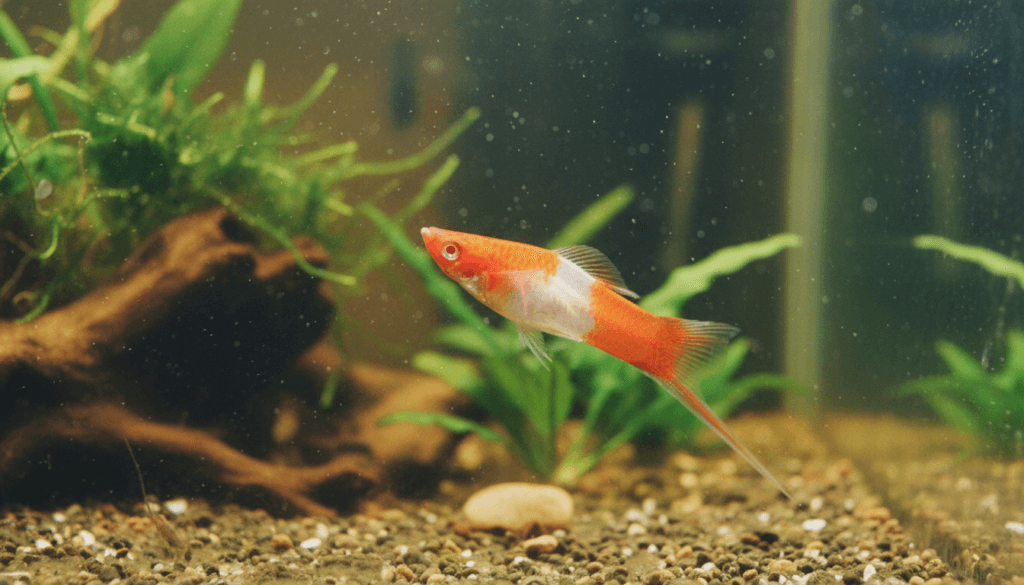
Water movement in a Kohaku Swordtail tank should be noticeable but not turbulent; these fish appreciate oxygenation and circulation that keeps detritus from settling but also need calmer pockets where they can rest. Substrate can be sand or fine gravel to mimic riverbeds, with rocks and driftwood used sparingly to break sightlines and reduce stress during aggressive displays.
Сare and maintenance
Water parameters
Temperature: 22–28°C (72–82°F). pH: 7.0–8.0 is ideal. General hardness (GH): 8–15 dGH. Maintain stable conditions; sudden shifts of more than 0.5 pH or 2°C can trigger stress. If tap water is soft, supplement with a commercial mineral mix to keep GH in the mid-range.
Tank size
Minimum volume: 75 liters (20 gallons). Recommended dimensions: length should exceed height; aim for a tank where length is at least 90 cm (36 in) and height around 30–45 cm (12–18 in). The horizontal swimming space prevents territorial skew and reduces fin-nipping in longer setups.
Filtration and water flow
Filter type: hang-on-back (HOB) or canister with mechanical and biological stages. Preferred flow intensity: moderate—enough to create gentle surface agitation and continuous water turnover without creating strong currents that send fry or shy fish into constant retreat. Sponge pre-filters are advised if breeding in the main tank to protect fry.
Substrate and decor
Substrate: fine gravel or sand. Add driftwood and smooth rocks to create visual structure, but keep large open swimming lanes. Dense plantings of Vallisneria, Ludwigia, and stem plants provide cover; floating plants like duckweed or frogbit create shaded zones. Leaf litter (Indian almond leaves) is a low-cost way to add tannins and microfauna that fry feed on.
Lighting
Suggested intensity: moderate (20–40 PAR at mid-water depending on tank height). Duration: 8–10 hours daily. Provide shading through floating plants or taller marginal plants if colors seem faded — strong, direct light can wash out the red patches. A timed cycle helps maintain routine and minimize stress.
Water changes
Frequency: weekly. Percentage: 25–40% per change depending on stocking levels. Larger weekly changes help keep nitrate below 20 ppm and reduce likelihood of fungal or bacterial outbreaks. When making changes, match temperature and parameters to avoid shock.
Lid or cover
Yes — the fish jumps regularly. Use a tight-fitting lid with small ventilation gaps to prevent escapes; foam or mesh over equipment outlets helps stop curious jumpers from leaving the tank during feeding frenzies.
Social behavior and group size
Minimum group size: 6 (with at least 2 females per male). Social structure: semi-schooling with clear male-to-male displays. Keeping a higher ratio of females helps dilute male harassment and reduces stress. Males form loose hierarchies rather than strict territories in spacious tanks.
Additional behavioral care tips
Rotate tank décor slightly during maintenance to break up dominance patterns and provide new exploration points. Offer visual barriers (plants, rocks) to reduce constant sighting of rivals. During breeding, females may become reclusive; providing dense moss or Java fern allows fry to occupy safe zones. Avoid housing with fin-nippers that target the extended sword.
Compatibility
Choosing tankmates for a Kohaku Swordtail should prioritize peaceful or semi-aggressive midwater swimmers that tolerate similar water chemistry. Good companions include small to medium tetras (e.g., Cardinal, Ember), rasboras, platies, and bottom-dwelling catfish like Corydoras. Fast, boisterous species that chase will stress Kohaku Swordtail; large cichlids and aggressive barbs are poor matches.
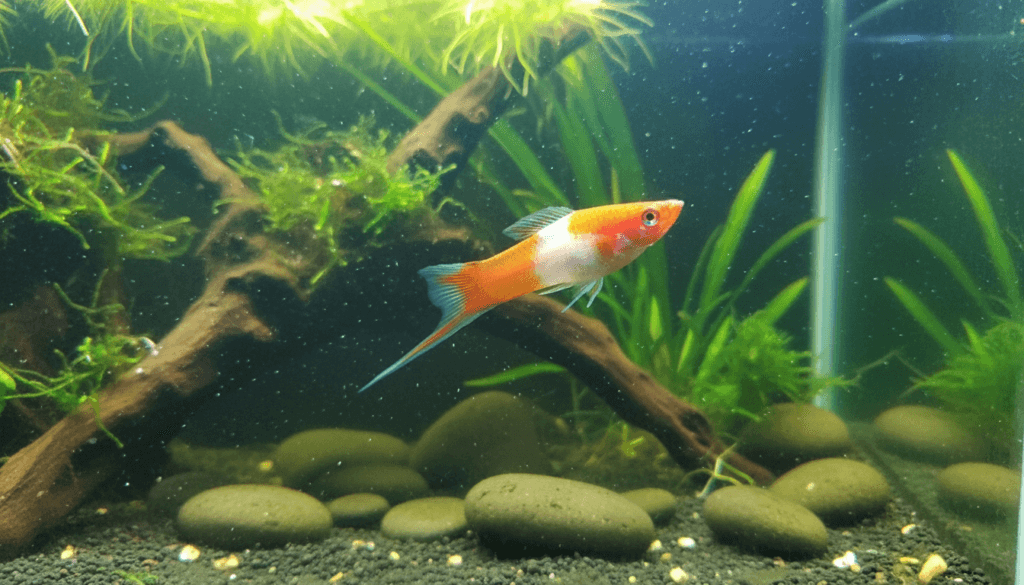
When assembling a community, match activity levels and avoid species that compete for the same vertical space when the tank is small. Livebearers such as platies and mollies usually mix well and sometimes hybridize — keep genetic control in mind if maintaining true Kohaku Swordtail coloration is a priority. Shrimp and snails serve as algae control and microfauna; however, very small shrimp may be eaten by hungry males or opportunistic juveniles.
Feeding the Kohaku Swordtail
The Kohaku Swordtail is omnivorous and thrives on a varied diet. Offer high-quality flake or pellet food as a staple, complemented by regular portions of frozen or live foods like daphnia, brine shrimp, and bloodworms to enhance color and condition. Vegetable matter is crucial: blanched zucchini, shelled peas, and spirulina-based pellets keep the digestive tract functioning smoothly and support vibrant white and red hues.
Feed frequency should be twice daily in small portions that are consumed within two minutes. Once per week, provide a fasting day to help clear the digestive system. For color enhancement, small amounts of carotenoid-rich foods (krill or specialized color pellets) a few times weekly will deepen reds without overloading the diet. During breeding or conditioning for fry, switch to higher-protein live foods to increase fecundity and fry survival rates.
Reproduction
As livebearers, Kohaku Swordtail reproduce readily in home aquaria. Males court females with lateral displays and quick chases; the male’s gonopodium is used to fertilize internally. Gestation typically lasts 21–30 days depending on temperature and diet. Females can produce broods ranging from 20 to 80 fry, with larger, well-conditioned females producing more young.
Superfetation — overlapping pregnancies producing fry at different stages — is common and can complicate brood tracking. To maximize survival, provide dense planting or a breeding mop where fry can hide, or move the pregnant female to a breeder box or separate rearing tank a few days before expected birth. Feed newly born fry infusoria and powdered fry food for the first week, then gradually introduce newly hatched Artemia and crushed micro-pellets.
Selective breeding of Kohaku Swordtail focuses on clean, symmetrical red patches and minimal speckling on white areas. Keep careful records of pairings; because color patterns can be polygenic, line-breeding for Kohaku clarity requires patience and occasional outcrossing to retain vitality. Remember that the sword trait is largely Y-linked — most reliably passed from father to son — so plan male lineages when selecting for long, well-formed swords.
Finally, monitor for common livebearer issues: pregnant females can suffer from dropsy or constipation if diet is poor; regular high-quality food and routine water changes prevent most reproductive problems. If fry survival is low, check for predation and water quality first, then adjust food particle size and increase hiding places. Successful breeders often find that small tweaks in lighting, plant density, and schedule produce dramatic improvements in fry counts and parental health.