Aphyosemion Australe: A Colorful Killifish Guide
General information
Aphyosemion Australe is a charismatic African killifish prized for vivid color, peaceful temperament, and surprising adaptability. If new to killifish, this species offers a friendly introduction: hardy enough to tolerate a range of conditions yet delicate in social dynamics and breeding needs. Many aquarists keep Aphyosemion Australe as a showpiece in planted tanks, nano systems, or targeted biotope displays because of compact size, bright males, and intriguing behavior.
Appearance
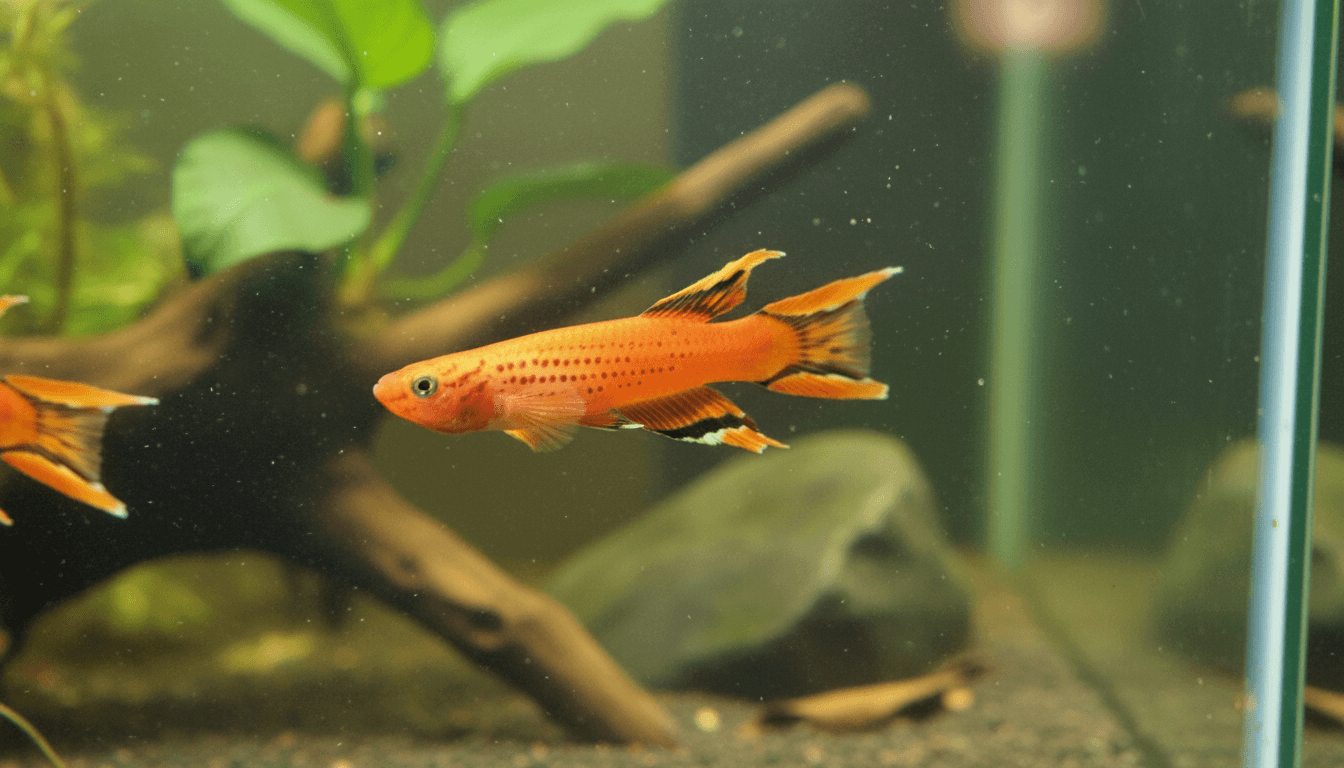
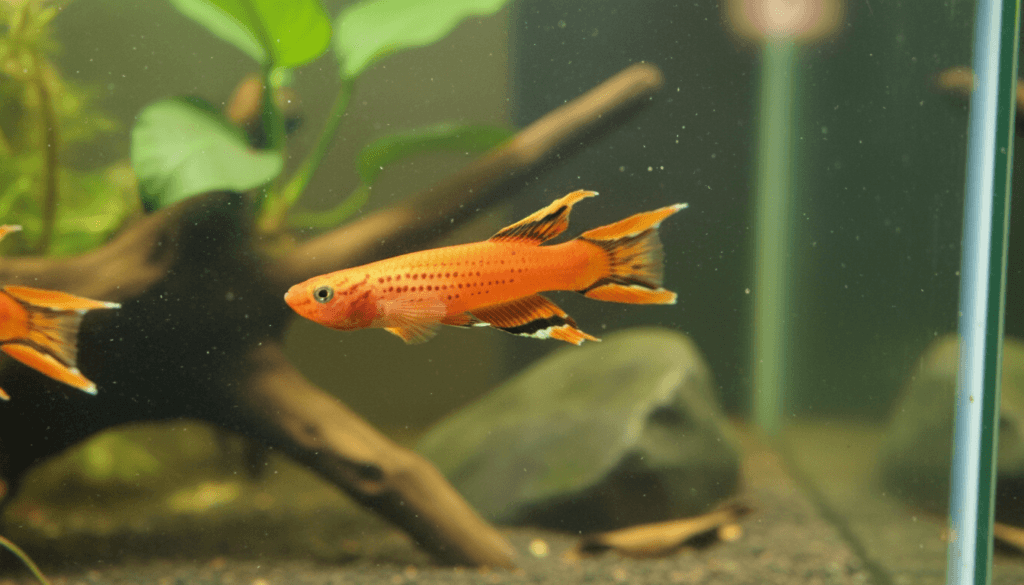
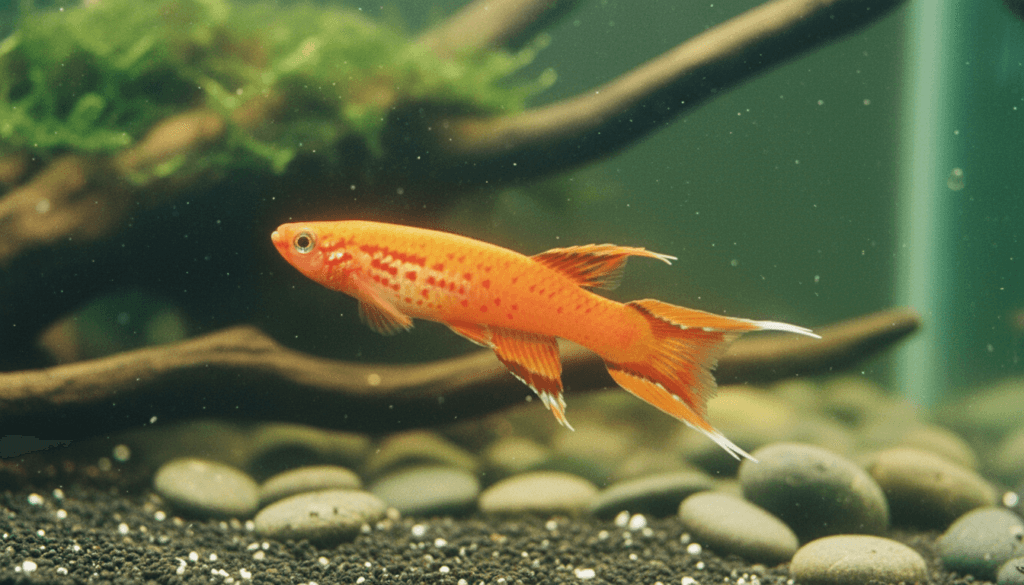
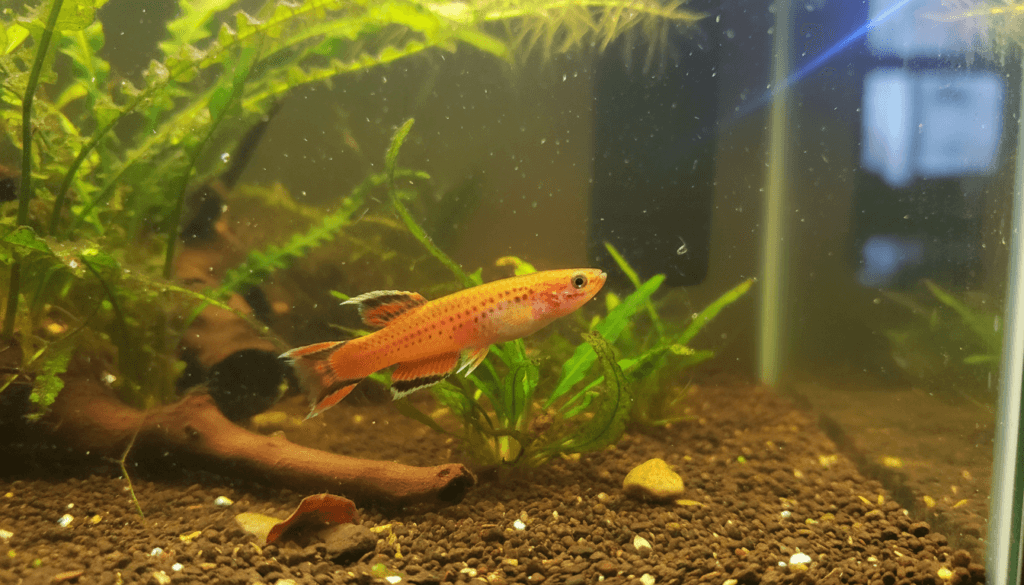
Aphyosemion Australe exhibits sexual dimorphism that is unmistakable — males are the living punctuation mark of a tank: elongated fins, a lyre-shaped caudal in some strains, and intense reds, oranges, blues, or metallic sheens depending on captive-bred variety. Females carry more subdued hues with fine spotting and a rounded finnage, making them excellent contrast to males. Selective breeding has produced forms like lyretail and golden strains, so color intensity can vary.
Habitat
Native to West African freshwater streams and pooled areas in Gabon and nearby regions, Aphyosemion Australe thrives in shaded, tannin-stained waters with abundant leaf litter and vegetation. Natural habitats are calm, often with soft substrates and floating plant cover that reduce direct sunlight. Mimicking these conditions in the aquarium — lower light, dark substrate, and plenty of hiding spots — helps reduce stress and brings out wild-type posturing.
Сare and maintenance
Water parameters
Temperature: aim for 20–24°C (68–75°F). Aphyosemion Australe tolerates small fluctuations but sudden swings cause stress. pH: slightly acidic to neutral, between 6.0 and 7.5. General hardness (GH): soft to moderately hard, roughly 3–12 dGH. For breeding, slightly softer, more acidic water often stimulates spawning; for everyday maintenance, stable mid-range values keep fish in robust condition.
Tank size
Minimum volume: 40 liters (about 10 US gallons) for a pair or small trio. Recommended: 60–80 liters (15–20 US gallons) for a lively group and comfortable swim space. Favor tanks that are longer than tall — at least 60 cm (24 in) in length over a 30–35 cm (12–14 in) height — because Aphyosemion Australe prefers horizontal territory with surface cover and midwater swimming lanes.
Filtration and water flow
Filter type: sponge filters are ideal. They provide gentle biological filtration and microfauna for fry without strong suction. Canister filters or hang-on-back units work if the output is diffused. Preferred flow intensity: low. These fish come from slow-moving pools; strong currents force them to expend energy and can damage male finnage. Use spray bars, baffles, or position outlets to create soft, laminar flow.
Substrate and decor
Substrate: fine sand or dark, smooth gravel enhances coloration. Add peat in a filter chamber or use leaf litter to recreate tannin-rich conditions and encourage natural spawning behavior. Provide driftwood and smooth rocks for visual structure and hiding spots. Heavy planting with stem plants, floating plants, and dense patches of Java moss or Cryptocoryne gives females retreat space from males and creates microhabitats for fry. A small layer of dried Indian almond leaves or oak leaves works wonders: they release tannins, lower pH marginally, and supply egg-laying materials and micro-invertebrates.
Lighting
Intensity: low to moderate. Duration: 6–8 hours daily. Strong, direct lighting can stress Aphyosemion Australe and encourage algae on leaves that then forces frequent maintenance. Floating plants such as Salvinia or Frogbit provide dappled shade that calms fish and helps males display colors more vividly without aggression. During breeding, slightly reduced light mimics rainy-season overcast conditions that trigger spawning.
Water changes
Frequency: weekly or biweekly depending on stocking and filtration. Replace 20–30% during routine maintenance. For heavily planted tanks or lightly stocked groups, 15–20% may suffice. When conditioning for breeding, perform more frequent, slightly larger changes (30–40%) using water that matches tank temperature and chemistry to avoid shock and to simulate seasonal rain influx.
Social behavior and group size
Social structure: Aphyosemion Australe is not a true shoaling fish. Males can be territorial and display to each other intensely. Minimum group size: a small harem works best — one male with two to three females — or keep multiple females with a limited number of males to spread aggression. In community settings, a ratio of one male to multiple females reduces male harassment. Avoid housing several dominant males in cramped tanks; they will establish pecking orders and inflict fin damage.
Additional behavioral care tips
Provide abundant cover and visual barriers so subordinate fish can retreat. Rotate decor occasionally to break fixed territories and reduce chronic bullying. Watch for fin-nipping as a sign of overcrowding or insufficient cover. Nighttime behavior: these fish rest near the surface or among floating plants — leaving dim lighting for a short time during near-dusks helps observe subtle courtship displays. For long-term health, maintain stable routines rather than frequent dramatic changes to layout, temperature, or stocking.
Compatibility
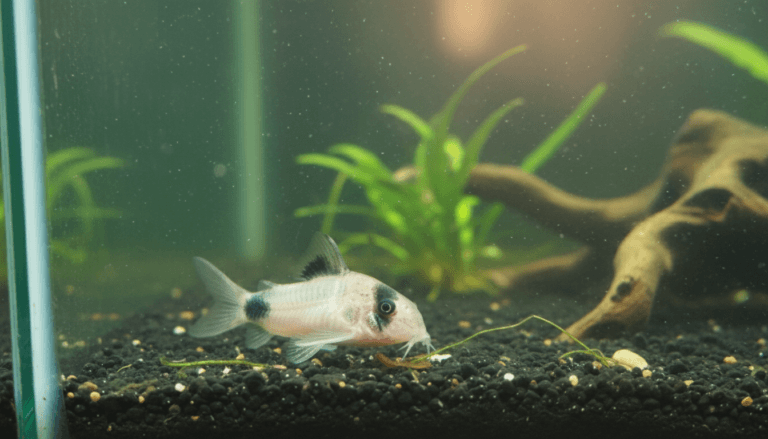
Choose tankmates that are peaceful, small, and occupy different water columns. Good companions include small rasboras, micro-rasboras, peaceful dwarf tetras, and snails. Avoid large, boisterous species, fin-nippers (like tiger barbs), and aggressive cichlids. Bottom-dwelling species such as Corydoras can coexist if the substrate is fine and there are ample hiding spots. Because Aphyosemion Australe spends time near the surface and midwater, pairing with bottom-focused species reduces encounter competition.
Feeding the Aphyosemion Australe
Aphyosemion Australe thrives on high-protein diets. Live and frozen foods will produce the best colors and breeding responses: daphnia, Artemia (brine shrimp), blackworms, and micro-worms are top choices. Pellets and high-quality flakes are acceptable for staple feedings if supplemented with frequent live/frozen meals. Feed small portions 1–2 times daily to avoid polluting the water — these fish have small mouths and prefer frequent, modest feedings.
- Staple diet: quality micro pellets or flakes, given sparingly.
- Conditioning: a varied rotation of live/frozen foods like daphnia and Artemia 2–3 times per week.
- Fry food: infusoria, liquid fry foods, microworms, and later newly hatched brine shrimp.
Unusual tip: keeping a small, established culture of daphnia or microworms dramatically raises fry survival and reduces stress when conditioning adults — live food is also a natural stimulant for breeding behavior in Aphyosemion Australe.
Reproduction
Reproductive style: substrate spawner with eggs adherent to fine-leaved plants or spawning mops. To breed Aphyosemion Australe successfully, set up a dedicated breeding tank with dense Java moss, spawning mops, peat bags, or leaf litter. Maintain slightly cooler temperatures near 20–22°C to encourage gamete development and reduce fry metabolic stress during the early stages.
Pairing and strategy: use a harem approach — one male with multiple females — or set up several trios to increase fry yield while minimizing male fixation on a single female. Watch for elaborate male courtship: quick lateral displays followed by gentle nudges near moss or leaf litter where spawning occurs. After eggs are deposited, adults generally do not guard them; removing adults or transferring the spawn material to an incubator will protect eggs from predation.
Egg care and incubation: eggs typically hatch in 10–21 days depending on temperature and water chemistry. Keep incubation water clean and gently aerated; peat or moss containers should remain moist but not heavily oxygenated if using a dry peat incubation technique used by annual killifish — though Aphyosemion Australe is non-annual and survives regular wet incubation. For wet incubation, leave eggs in slightly tannin-stained water at stable temperatures and watch for fungal growth; perform small water changes or use mild antifungal precautions if necessary.
Raising fry: upon hatching, feed infusoria for the first week to 10 days, then transition to microworms and newly hatched Artemia. Move fry to progressively larger tanks as they grow to prevent stunting — a 10–20 liter nursery works well for the first stages. Expect sexual dimorphism to appear in as little as 8–12 weeks in optimal conditions; males will develop brighter hues and extended fins with good nutrition and water quality.
Selective breeding notes: because captive lines include many color forms, keep records of pairings to avoid accidental mixing of strains if maintaining pure lines. For hobbyists interested in developing color morphs, consistently select the most vibrant, healthy breeders and maintain water conditions that support strong color expression — stable mineral content, regular feedings of live foods, and low-stress environments.
Final practical pointers: house Aphyosemion Australe in tanks that emphasize horizontal swimming space and surface cover; manage male-to-female ratios to prevent chronic harassment; condition with live foods to trigger colors and spawning; and provide peat/leaf litter or moss for natural spawning substrate. Those steps will deliver an active, colorful display and high chances of successful breeding for this elegant African killifish.