Apistogramma Borellii: Complete Care & Breeding
General information
Apistogramma Borellii is a compact South American dwarf cichlid prized for its personality, hardiness, and surprising adaptability to a range of aquarium setups. You will notice that this species blends bright splashes of color with a curious, interactive temperament — traits that make it a favorite for both novice and experienced hobbyists. Originating from Paraguay, Argentina, and southern Brazil, Apistogramma Borellii occupies small streams and tannin-stained waterways, which influences many practical husbandry choices for the home tank.
Apistogramma Borellii is often sold under several common names, including Borelli’s dwarf cichlid and sometimes under local or trade variants that group similar-looking Apistogramma together. Because the genus contains many subtle variants and geographically distinct forms, precise identification can be tricky; look for the classic red-orange highlights on the flanks and the black lateral markings when confirming species. Hobbyists who keep riverine biotopes will appreciate how well Apistogramma Borellii integrates with leaf-litter setups and subdued lighting.
Beyond looks, Apistogramma Borellii stands out for a combination of ease of care and fascinating behavior: complex courtship, territory establishment, and measurable personality differences between individuals. Expect active day-time behavior with periods of skulking among cover. For anyone planning a community aquarium, this species delivers interest without demanding extreme water chemistry or rare foods.
Appearance
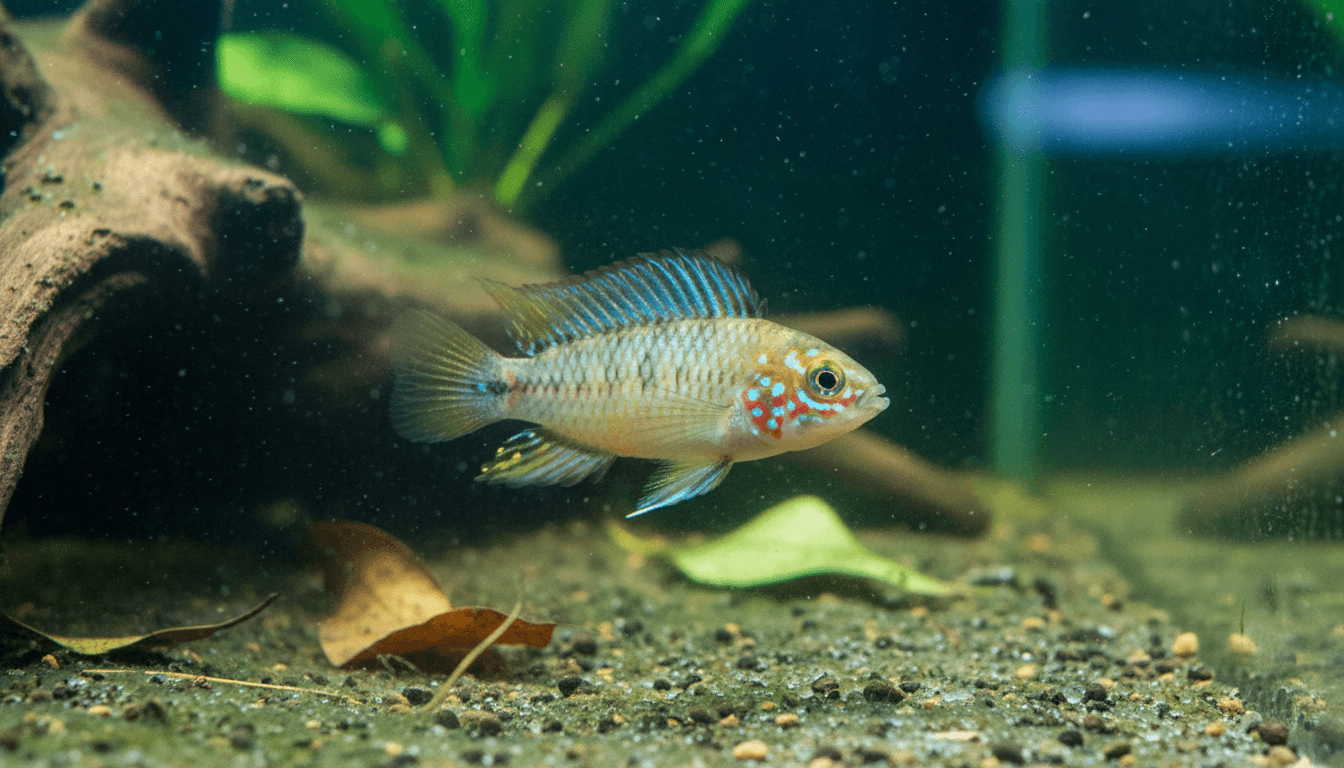
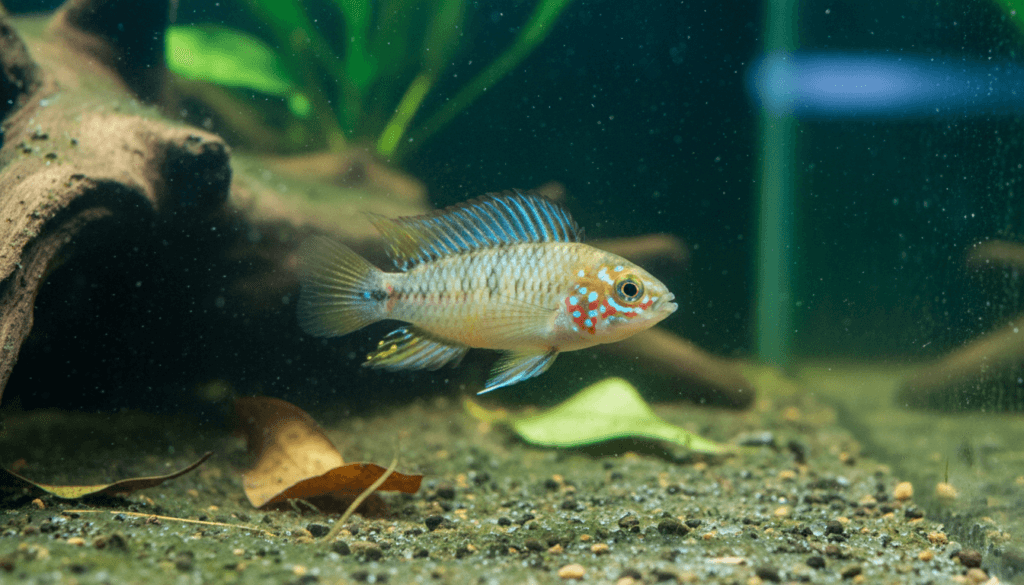
Apistogramma Borellii displays a relatively squat, elongated body with a slightly rounded dorsal profile and a flattened ventral area — a silhouette familiar to many dwarf cichlid enthusiasts. The base coloration ranges from pale beige to warm yellow-orange, but sex, mood, and breeding condition dramatically shift hues. Males often carry richer reds and extended finnage, while females show more intense vertical banding and a brighter belly when gravid.
Apistogramma Borellii also shows distinctive black lateral markings: a horizontal stripe along the midline and a patch near the operculum are common, but population variants may have broken bars or additional spots. Fin shapes are not exaggerated compared with larger Apistogramma species, but the dorsal and anal fins of males may elongate and develop subtle filamentous tips during courtship. Juveniles tend to have more pronounced banding that fades as adult colors develop; this ontogenetic change is useful to identify young fish without confusing them with related species.
Unusual visual quirks include occasional iridescent blue flecks on the cheeks and a soft sheen on the scales when fish are held in very low-stress conditions. When stressed, colors can drain quickly; conversely, a stressed-looking fish that suddenly brightens during feeding is normal and signals a quick mood shift rather than illness.
Habitat
Apistogramma Borellii occupies slow-moving tributaries, marginal pools, and shaded backwaters where leaf litter, submerged roots, and low light create a dappled, sheltered environment. Natural water is often soft to moderately hard and slightly acidic to neutral, with abundant tannins that give a tea-colored appearance. Recreating these conditions in the aquarium enhances color display and reduces stress.
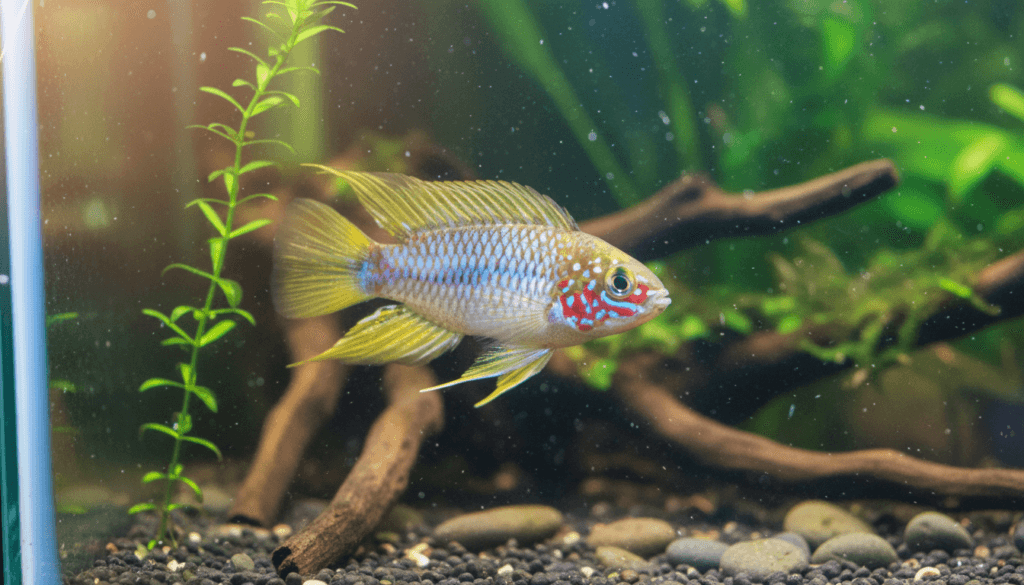
Microhabitats favored by Apistogramma Borellii include the edges of root mats and the undersides of driftwood overhangs; spawning often takes place inside small cavities or beneath submerged leaves. Wild populations may also use shallow, vegetation-rich margins during flooding season, so seasonal changes in tank structure (adding floating plants or ephemeral cover) can stimulate natural behaviors. In planted tanks, they frequently patrol the lower and middle levels, using dense stem plants and moss as cover.
Сare and maintenance
Water parameters
Temperature: 22–28°C (72–82°F). pH: 6.0–7.5, with 6.2–7.0 ideal for vibrant breeding coloration. General hardness (GH): 2–12 °dGH. Apistogramma Borellii tolerates a moderate range, but stable conditions matter more than pushing extremes. Slightly acidic, soft water replicates native habitats and can improve reproductive activity, though many strains bred in captivity accept neutral pH and moderate hardness without issues.
Tank size
Minimum volume: 60 liters / 15 gallons for a pair. Recommended dimensions: length > height (e.g., 90 cm long by 30–45 cm high or 36″ by 12–18″). Apistogramma Borellii is a horizontal territory-holder rather than vertical, so longer tanks give better territory separation and a more natural layout. For a harem or small group, move up to 100–150 liters (25–40 gallons) to reduce aggression and provide more micro-territories.
Filtration and water flow
Filter type: sponge filter, canister with quiet outflow, or hang-on-back with pre-baffle. Preferred flow intensity: low to moderate. Apistogramma Borellii prefers gentle circulation; strong currents cause hiding and stress. Sponge filters are excellent for fry rearing and provide biological filtration with minimal flow. If using a stronger filter, deflect the outflow with spray bars or plant placement to create calm pockets.
Substrate and decor
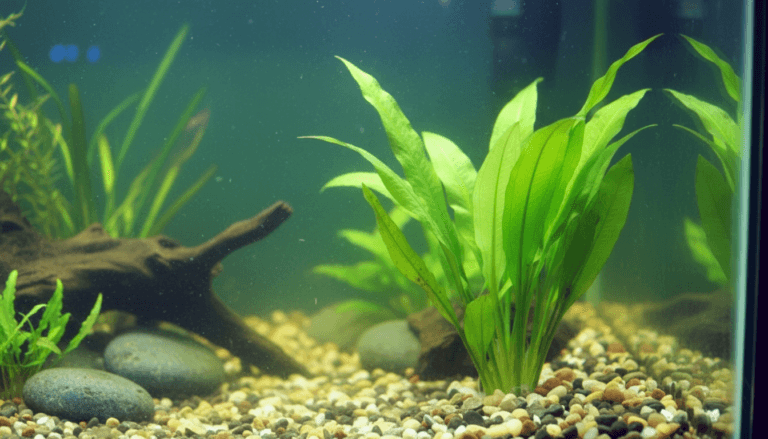
Substrate: fine sand or smooth gravel. Driftwood, rocks, plants, and leaf litter are essential decor elements. Provide clay pots, broken terracotta, or natural cavities for spawning. Leaf litter (Indian almond leaves, oak, or beech) lowers pH slightly and creates microfauna rich feeding zones. Ensure driftwood is securely placed to avoid collapse into hiding spots. A mixed-scape of bare sand patches and dense cover mirrors river margins where these cichlids forage and rest.
Lighting
Intensity: low to moderate. Duration: 8–10 hours daily, with at least a couple of dim hours in the morning or evening to mimic dawn/dusk. Shade is beneficial; floating plants, overhanging wood, or tall background plants diffuse bright light and reduce stress. Avoid intense full-spectrum lighting unless balanced with heavy planting and shaded retreats.
Water changes
Frequency: weekly. Percentage: 20–30% each change. Regular small water changes maintain water quality without destabilizing pH or temperature. During breeding or when raising fry, increase changes to 30% twice weekly to keep nitrate levels low and support rapid growth.
Lid or cover
Apistogramma Borellii is not a powerful jumper but can make short bursts when startled. A tight-fitting lid or cover with ventilation is recommended, especially in shallow tanks or rooms with drafts. Covers also help maintain humidity when using leaf litter and floating plants that slightly raise local humidity and reduce surface evaporation.
Social behavior and group size
Minimum group size: keep as a pair or small harem (1 male to 2–3 females) in at least 100 liters to reduce male-on-male fights. Social structure: semi-territorial with strong female attachment to nesting sites. Apistogramma Borellii males establish broader home ranges while females fiercely defend brood cavities. Avoid housing multiple dominant males in small tanks; visual barriers or rockwork can reduce aggression between males in larger aquaria.
Additional behavioral care tips
Provide multiple hideouts and replicate natural substrate variation to reduce stress and encourage expression of natural behaviors. Keep the bottom layer slightly silted with leaf litter to allow natural foraging. Rotate decor during non-breeding periods to enrich the environment, but avoid abrupt full rearrangements when broods are present. Observational feeding routines and quiet tank placement will make fish more responsive and reduce skittishness.
Compatibility
Apistogramma Borellii does well with peaceful, small to medium-sized tankmates that occupy different levels of the aquarium. Good companions include small tetras (e.g., Hyphessobrycon spp.), Otocinclus catfish, small Corydoras species, and peaceful rasboras. Avoid large, boisterous characins and fin-nippers like some barbs; those stress Apistogramma Borellii and can trigger chronic hiding or color loss.
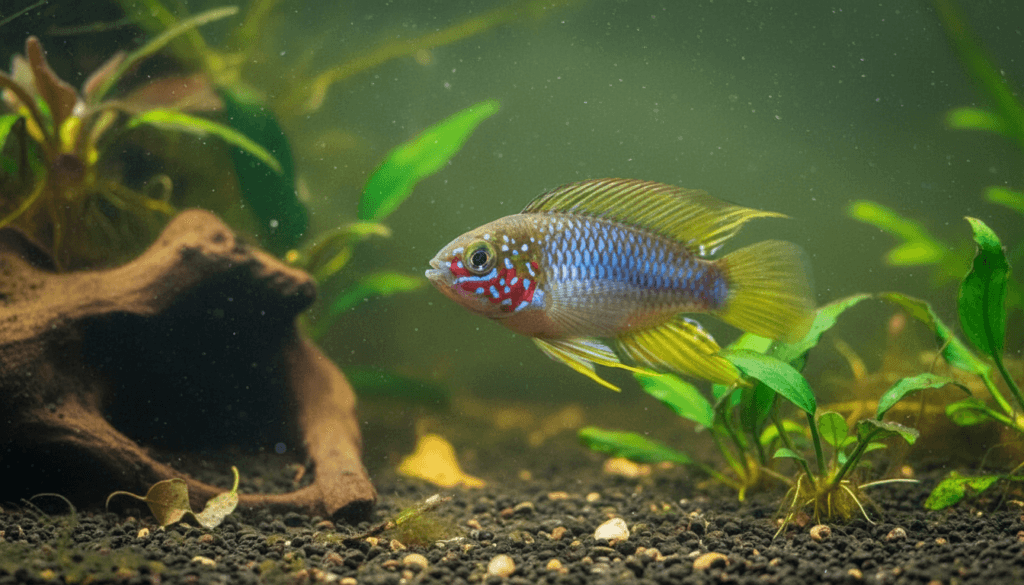
Aquarists often pair Apistogramma Borellii with bottom-dwelling snails and shrimp only if the cichlid population is well-fed and not overly territorial during breeding. If shrimp are a priority, choose robust populations of Amano or other larger shrimp species and provide abundant hiding places. When designing a community, aim for slow-moving, non-aggressive fish that won’t outcompete Apistogramma Borellii for food or harass nesting females.
Feeding the Apistogramma Borellii
Apistogramma Borellii thrives on a varied diet centered on high-protein items. Staple foods include high-quality frozen or live daphnia, brine shrimp, mosquito larvae, and glassworms. Sinking micro-pellets and finely crushed carnivore flakes complement live foods and supply vitamins. Rotate between frozen, live, and formulated diets to prevent nutritional gaps and sustain vibrant coloration.
Feeding strategy: a small amount 1–2 times daily, with occasional fast days to mimic natural feast-and-famine cycles. During breeding, increase feeding frequency and offer richer items like freshly hatched brine shrimp or quality cyclops alternatives to promote egg quality and fry survival. Avoid overfeeding; Apistogramma Borellii is prone to fatness in crowded, overfed tanks which can reduce spawning frequency and increase disease susceptibility.
Reproduction
Apistogramma Borellii is a cave spawner with interesting pair-bonding dynamics. Courtship includes color intensification, fin displays, and the male shepherding the female toward chosen cavities. Provide spawning caves such as inverted pots, bamboo segments, or deep rock crevices. Slightly acidic, softer water and higher water temperatures near the upper end of the recommended range often trigger spawning.
Fry rearing benefits from gentle filtration (sponge filters), microfoods, and protected nursery zones with abundant infusoria and newly hatched brine shrimp. Females typically guard the eggs and fry vigorously, while males patrol larger territories. It is common to remove the male only if he becomes excessively aggressive toward the female or if tank size does not allow proper territory spacing. Apistogramma Borellii fry are active eaters and respond quickly to small live foods — consistent feeding in the first two weeks strongly improves survival rates.